How soft power with brute force can isolate Eritrea’s destabilising regime and secure American leadership in the Horn and beyond.
By Robel Tedros
‘America has no permanent friends or enemies, only interests,’ observed Henry Kissinger. The People’s Front for Democracy and Justice [PFDJ], Eritrea’s ruling and only party, which emerged from the EPLF led by President Isaias Afwerki, is actively courting influential lobbyists to align itself with the Trump administration’s America First foreign policy. Yet its destabilising ambitions and totalitarian practices stand in stark opposition to U.S. values and interests, necessitating a recalibration of policy to counter its influence and safeguard stability in a volatile world.
The PFDJ has been erroneously lauded as a stable partner in the Horn of Africa. Yet beneath its charade lies a system built on totalitarianism, destabilisation, and exploitation. By mischaracterizing the PFDJ’s nature and strategy, U.S. containment policies have allowed it to flourish, transforming Eritrea into a hub of repression and regional disruption. It is time to redefine U.S. policy with a sharper lens and adapt strategies that recognise the true nature of the PFDJ – It is time for U.S. policy to unequivocally define the party for what it is—a regime operating with the tactics and objectives of a terrorist organisation.
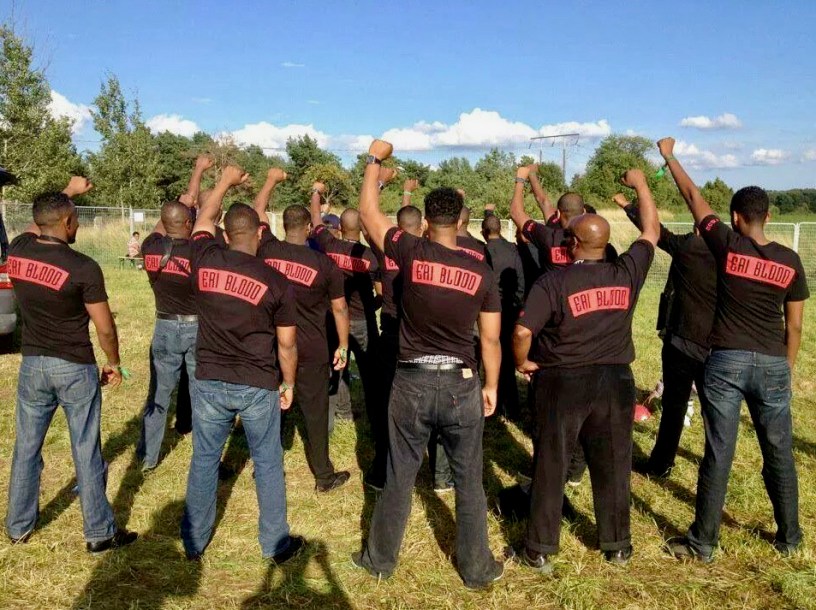
The PFDJ’s Modus Operandi: A Regime Built on Terror and Chaos
Eritrea’s ruling regime operates as a disciplined, totalitarian machine that wields power akin to a terrorist organisation. The PFDJ manipulates state structures while projecting an image of governance. Its actions during the Tigray War showcased its broader ambitions: war-driven territorial expansion, totalitarian control, indoctrination of populations, and resource exploitation. These tactics reflect its domestic governance, where citizens endure indefinite military conscription, forced labour, and systemic repression.
The regime’s survival hinges on transforming Eritrea into a money-making enterprise. Through a system of forced labour, it exploits the population while engaging in illicit activities such as refugee smuggling and tacit involvement in organ trafficking. Human Rights Watch has documented that Eritrean refugees are often kidnapped, tortured, and extorted during trafficking (Human Rights Watch). Meanwhile, the UN Monitoring Group has highlighted how Eritrea’s state-controlled enterprises dominate its economy, extracting resources like gold through forced labour, in the Bisha mine (UN Security Council Report, 2015).
Beyond its borders, the Eritrean regime extends its economic influence into black markets across Africa. In South Sudan, Eritrean-linked companies control up to 90% of infrastructure firms in critical sectors such as water and electricity. Projects like the $289 million Ezra power plant in Juba exemplify this economic entrenchment (Ezra Group Report). Similarly, in Uganda, Eritrean regime-linked individuals have invested over $3 billion as of 2024, embedding themselves in sectors like real estate, construction, and energy (Nile Post).
The Diaspora as a Financial Weapon and Victim of Transnational Repression
The PFDJ regime has weaponised its diaspora by coercing Eritreans abroad to pay a mandatory 2% “rehabilitation and reconstruction tax.” Noncompliance results in denial of consular services and threats against families back home. According to the UN Monitoring Group, these funds, which circumvent international sanctions, are funnelled into the regime’s informal economy (UN Security Council Report, 2015).
This practice has drawn international condemnation. In Sweden, violent riots at Eritrean cultural events revealed the extent of the PFDJ’s coercive influence. Swedish former Foreign Minister Tobias Billström pledged to halt the tax, labelling it “pure blackmail” (Swedish Radio Report, Martin Plaut). Similarly, in Norway, studies found that noncompliance led to harassment and threats, with families in Eritrea often targeted (Norwegian Ministry Report). In the Netherlands, a government-funded report estimated that the tax generates over $100 million annually through informal channels (Netherlands Foreign Ministry Report).
Anti-American Propaganda: A Tool of Indoctrination and Regional Destabilisation
The PFDJ’s anti-American propaganda is central to its regional strategy. Disseminated through national television and multilingual outreach in Tigrinya, Amharic, Oromo, and Arabic, the propaganda seeks to undermine U.S. credibility and discredit democratic values across the Horn of Africa.
The totalitarian leader Isaias Afwerki has expanded this rhetoric onto global platforms, such as the BRICS summit in Russia, where he called for a new world order led by Vladimir Putin. However, Afwerki’s appeals misunderstood the summit’s focus, which was to rally support for Russia amid the Ukraine conflict. Eritrea, the only African nation to support Russia’s invasion at the UN, received grain aid from Moscow in return, signalling placation rather than genuine alignment (Sputnik, 2023).
Afwerki has also courted China, urging Beijing to lead a new world order. However, China’s strategic focus in the region is firmly aligned with Ethiopia due to its economic and political significance. Afwerki’s lobbying reflects a regime driven by the whims of a single leader, lacking institutional checks and balances. Eritrea’s foreign policy, shaped entirely by one man’s ambitions, highlights its governance vulnerabilities, which stand in stark contrast to the institutional dependencies of liberal democracies.
The Strategic Game: Wing Chun, Not Chess
As the global order tilts toward volatility, each actor employs strategies shaped by their worldview. While Americans prefer chess and the Chinese favour Go (weiqi), the PFDJ prefers Wing Chun, a martial art focused on incapacitating opponents by targeting nerve points. By fragmenting neighbours such as Ethiopia and Sudan, Eritrea ensures a chaotic regional environment where no single actor can challenge its influence. This deliberate survival strategy has turned Eritrea into a ghost nation, marked by depopulation and institutional collapse.
The PFDJ regime thrives on chaos. Its interference in Ethiopia has deepened divisions, particularly in Tigray, where it capitalised on the civil war to weaken the region and assert its influence. The regime’s hired propagandist, Thomas Mountain, has openly advanced the PFDJ’s new policy objective: regime change in Ethiopia. Eritrea has provided support to the Fano Amhara militias, exacerbating tensions against the Abiy administration. Simultaneously, the Ethiopian government faces mounting pressure from Oromo fighters, further threatening the country’s fragile stability.
This multi-front destabilisation risks pushing Ethiopia into further disarray. Should these pressures culminate in full-scale conflict, the resulting humanitarian crisis could be catastrophic, triggering a mass exodus of refugees to Europe and destabilising the broader Horn of Africa. In Sudan, the PFDJ has similarly exploited ongoing instability to entrench its influence, ensuring chaos remains a key survival strategy for the Eritrean regime. If left unchecked, the regime’s actions will continue to fuel regional fragmentation and global instability.
U.S. Policy Failures: A Tale of Missteps
U.S. policy toward the PFDJ regime has suffered from two core failures: inconsistency and underestimation. Democrats have relied on harsh sanctions and containment, while Republicans have often shown undue leniency toward Isaias Afwerki’s regime. These approaches, rooted in a superficial understanding of the PFDJ, have proven inadequate. Sanctions alone have been insufficient to curb the regime’s ambitions, and containment policies have failed to address its transnational activities.
Moreover, the tendency to view Eritrea as a small, insignificant African nation has allowed the regime to operate unchecked. This bias, stemming from a broader underestimation of Africans, overlooks the regime’s sophisticated network of power, influence, and repression. The PFDJ’s success in acting through seemingly non-state actors such as community centres and private businesses while maintaining the guise of a weak African state, reflects a Foucauldian model of decentralised power that traditional policy frameworks struggle to counter.
The Case for Soft Power with Teeth
What the U.S. needs is a recalibration of its strategy—a form of soft power with teeth that strikes at the PFDJ’s nerve points while bolstering democratic movements in the region. Eritrea offers a unique case study for this approach. Just as Chile became a successful case study for free market economic policies, Eritrea can become the proving ground for soft power backed by brute force to manage rogue regimes in a volatile world.
Enhanced containment must be the foundation of this strategy. The PFDJ should be redefined as a terrorist organisation, to enable a crackdown on its global operations. Embassies that function as tools of repression and financial hubs should be shut down, and diaspora paramilitary operatives, known as 4G, must be identified and sanctioned. These operatives, governed by embassy staff, engage in intelligence gathering, propaganda, and transnational repression, including violence against pro-democracy activists in Europe and Africa. A Swedish report estimates that over $400 million annually is extorted from the diaspora to fund the regime’s activities. Cutting off these revenue streams is essential to weakening the PFDJ’s grip.
Supporting Regional Stability: Tigray and Ethiopia
While containment addresses the regime’s external operations, supporting democratic stability in Tigray and Ethiopia is equally critical. The Biden administration’s weak enforcement of the Pretoria Agreement has allowed inter-elite bickering to fester, providing an entry point for the PFDJ’s influence. A firm U.S. hand is needed to resolve these disputes and ensure Tigray remains a beacon of democratic potential.
Ethiopia’s broader progress in political liberalisation, press freedoms, and economic reforms under Abiy Ahmed should also be reinforced. Despite ongoing conflicts, Ethiopia stands as a potential anchor for U.S. values in the region. By mediating between Amhara and Oromo factions and stabilising Tigray, the U.S. can counter the Eritrean regime’s attempts to fragment the Ethiopian state.
Conclusion: America First in the Horn of Africa
The PFDJ regime is not a stabilising force but a dangerous actor that manipulates U.S. policies to further its totalitarian agenda. Its actions threaten Ethiopia’s sovereignty, destabilise the Horn, and fuel a humanitarian crisis of global proportions.
By redefining the PFDJ as a terrorist organisation, adopting enhanced containment measures, and supporting democratisation in Tigray and Ethiopia, the U.S. can realign its strategy with its values and interests. An America First approach demands smarter choices – ones that isolate the Eritrean regime, empower Ethiopia, and secure U.S. leadership in a volatile region of the world.
References
1. Human Rights Watch. “I Wanted to Lie Down and Die.” Link
2. UN Security Council Monitoring Group Report, 2015. Link
3. Ezra Group Report. “Eritrea Invests $289 Million in South Sudan Power Plant.” Link
4. Nile Post, 2024. “Over 300 Eritrean Investors Set for Second Diaspora Conference.” Link
5. Martin Plaut Swedish Radio Report. “The Swedish Government Wants to Halt the Tax on Eritreans.” Link
6. Norwegian Ministry Report. “The 2% Tax for Eritreans in the Diaspora.” Link
7. Netherlands Foreign Ministry Report. “Eritrean Diaspora Tax Collection Practices.” Link
8. Sputnik, 2023. “New World Order’ Needed, Where Everyone Can Work Together & Respect Each Other: Eritrean President” Link
 Martin Plaut