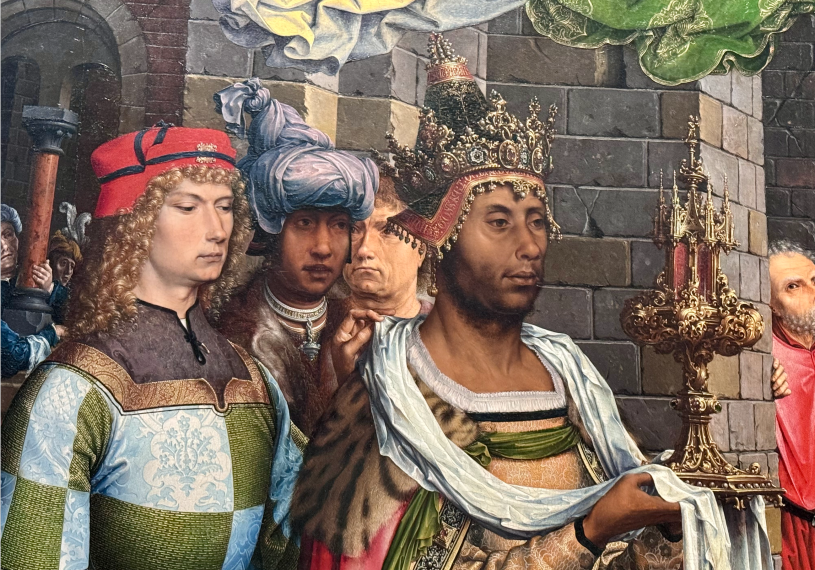

This painting of the African member of the Magi (or Three Kings worshipping Christ) – probably a depiction of an Ethiopian – was painted over 500 years ago. It was by the Dutch painter, Jan Gossaert (active 1508; died 1532).
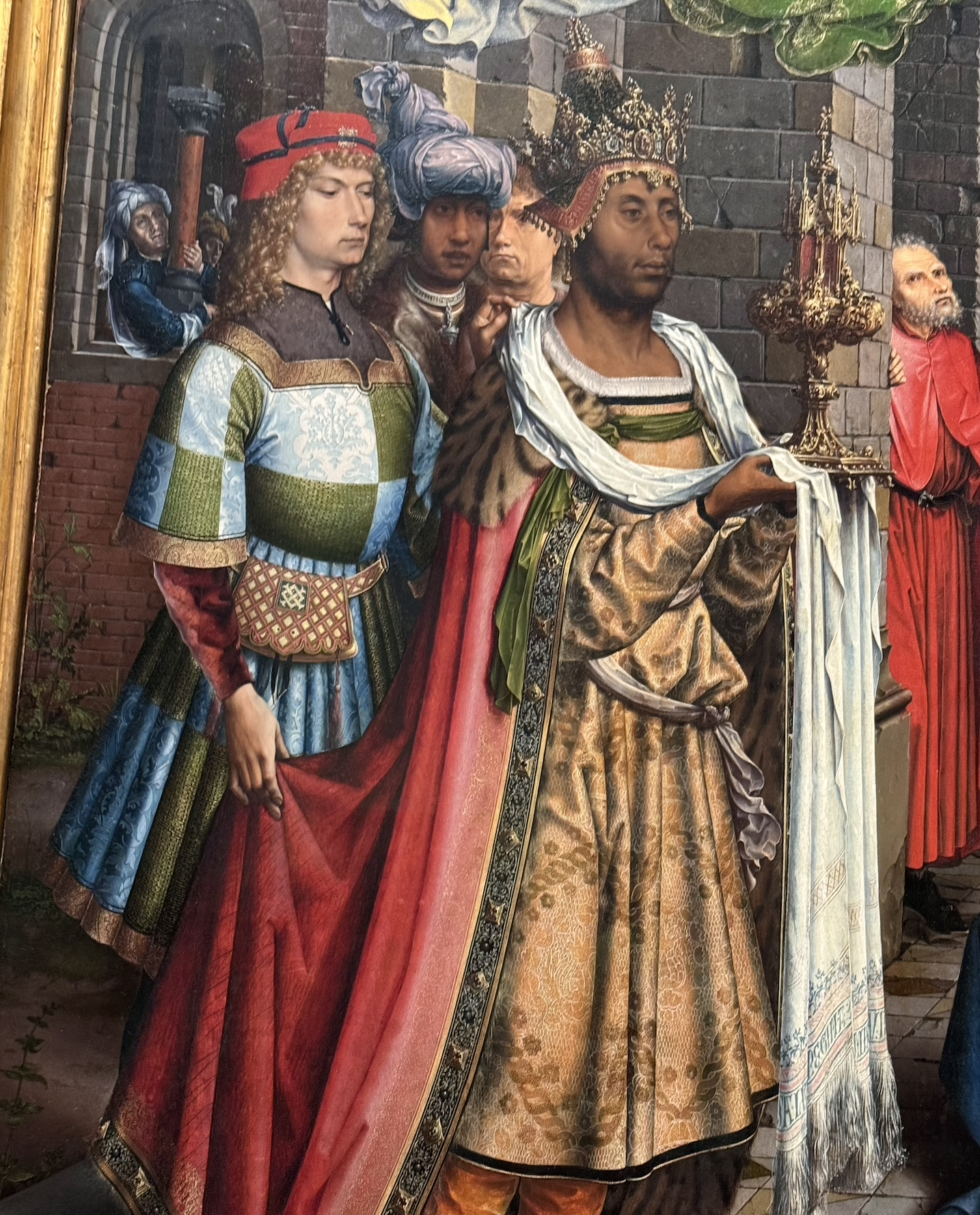
This is a detail from a large painting. But there is no question about the respect show to the king, who has a white servant carrying his cloak.
European art history has few depictions of Blacks before the 19th century.
Such images as do exist are overwhelmingly images of respect and individualisation.
Yet a further case of where the broad brush approach to history is simply wrong in the particular.
The larger painting, which hangs in London’s National Gallery, is magnificent and shown below. I hope you enjoy it.


 Martin Plaut
I am wondering from where did you get that mentions Africa and particularly Ethiopia? The painting which is depicting the Adoration of the Magi with a dark skinned face that doesn’t make him an Ethiopian.
In depictions of the Adoration of the Magi in Christian art, especially from the late medieval and Renaissance periods, one of the three kings is commonly shown as a Black African king—often identified as Balthazar. By the 15th century, European tradition increasingly associated Balthazar with Africa, and in some cases specifically with Ethiopia. This was influenced by biblical interpretations that linked the Magi to the three known continents—Europe, Asia, and Africa—and sometimes by references to ancient kingdoms such as Sheba or Seba, which were thought by medieval writers to refer to Ethiopia.
The Ethiopian connection is further echoed in certain traditions: the Ethiopian Orthodox Church has an ancient tradition identifying Balthazar with Bazen of Axum, an Ethiopian ruler. There is also a 16th-century Ethiopian book claiming that all the Magi were Ethiopian, though this is specific to Ethiopian legend rather than mainstream European iconography.
So, while the African king depicted in the Adoration of the Magi is most often intended to represent Africa broadly (sometimes as Ethiopia specifically), he is not always strictly “Ethiopian” in all artistic or theological traditions. The association with Ethiopia is a significant part of some historical and religious interpretations, especially from an Ethiopian or certain medieval European perspectives
your response seem to say: he is, he may be but again we are not sure or they may have made a mistake although for longer period than the West has embraced Christianity the Ethiopian Orthodox Church has taught this beliefs. The point is I suppose either you ‘know’ or you ‘believe’. We Ethiopians, when it comes to this matter, we choose to ‘believe’ as there is no certain way would ‘know’ minus this contestable summary you posited.
Believing is your right. I would not question it.
Ethiopia is mentioned in both the Old and New Testaments over 40 times.