Author: Professor Jan Nyssen
I’m pleased to share that a research article authored by a broad team has been accepted for publication (currently in press) in Environment and Planning E: Nature and Space — a peer-reviewed journal with an impact factor of 3.2. The paper presents a rare and long-term perspective on the environmental impacts of the Tigray war (2020–2022), grounded in nearly three decades of field-based research in the Dogu’a Tembien district.
Since 1994, our team has studied land degradation and ecological rehabilitation in this mountainous part of northern Ethiopia. When war broke out, we did not abandon the field: together with colleagues from Mekelle University, who carried out fieldwork throughout the war — often under intense personal risk — we continued to monitor the landscape. In several instances, our colleagues had to pause work upon hearing drones approaching. One of them was the first to enter a village after a massacre, where he encountered a deeply distressing scene.
After the war, we returned to 56 previously studied sites to carry out a systematic postwar assessment. This allowed us to conduct a rarebefore-and-after comparison of war impacts on land systems, using our own legacy data and observations spanning more than 25 years.
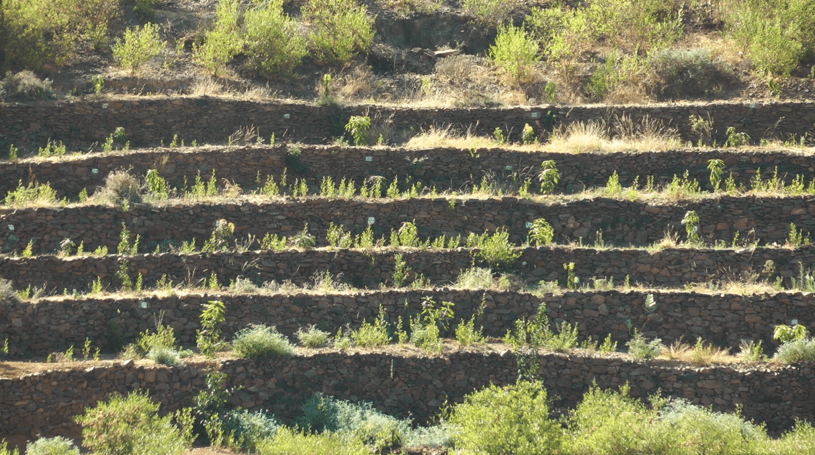
Our findings are both sobering and unexpectedly hopeful. In Dogu’a Tembien — a district that did not experience large-scale displacement — decades of farmer-led conservation efforts (terracing, reforestation, check dams) proved surprisingly resilient. While certain landscapes, especially in and downstream from battle zones, show clear geomorphic change, most soil and water conservation structures remained intact. Forest cover declined near roads but held up in more remote areas. Springs continued to flow, and irrigation even expanded in some locations, thanks to isolation from market pressures and off-farm employment.
That said, Dogu’a Tembien is not fully representative of the wider region. In many other districts of Tigray, particularly those hosting large numbers of internally displaced people (IDPs), environmental conditions have deteriorated much further. But this case shows what long-term ecological stewardship, co-produced by local communities and ecosystems, can make possible, even in times of collapse.
Our study contributes to broader debates about resilience under crisis. It also highlights the importance of long-term, embedded research and the courage of local scientists and communities who maintained environmental care through unimaginable circumstances.
Importantly, the article includes an Outlook section that may be of particular interest to those following the region’s political and institutional developments. It reflects on the postwar political fragmentation in Tigray and how this fragmentation undermines environmental governance. As rival factions focus on consolidating power, conservation and land management efforts are being deprioritized, and many community-based initiatives have already lapsed. The paper warns that without renewed political stability and institutional rebuilding, even the resilience observed in areas like Dogu’a Tembien could erode quickly — giving way to renewed degradation and open-access exploitation. The Outlook explores future scenarios and emphasizes the need to integrate political uncertainty into resilience thinking.
A preprint of the accepted version is available here via ResearchGate: https://www.researchgate.net/publication/394600337_Land_System_Resilience_Amidst_the_Ravages_of_War_Insights_from_Tigray_Northern_Ethiopia.
Abstract
The Tigray war in northern Ethiopia (2020-2022) had substantial environmental impacts due to fighting, blockade, and power outages. This study contrasts postwar observations at 56 sites with 26 years of legacy data on land degradation, a rare before-and-after analysis by the same research team, in Dogu’a Tembien, a district of Tigray that did not experience large influxes of internally displaced people. The qualitative repeat study used transect walks alongside group observations and discussions. Unlike the war and environmental catastrophe of the 1980s in Tigray, basic soil conservation interventions including stone bunds, check dams and forest conservation have served as buffers against the conflict’s repercussions.
However, notable geomorphic changes occurred in battlefield areas and downriver banks. Still, restoration efforts over the last 30 years have largely withstood degradation. Under challenging conditions, farmers have maintained most soil conservation systems. Many gullies remained stable, although some formed due to enhanced water channeling in the upper area. The conflict caused a decline in woody vegetation, but, away from the main roads, many forests remained in good condition. Farmer-led irrigation expanded, supported by good spring discharges, improved marketing conditions for local produce due to isolation, and the lack of off-farm work opportunities. We attribute this land system resilience not only to long-term conservation investments, but also to the co-production of resilience through social and ecological systems.
The intrinsic properties of the land (clayey, stony soils, stress-adapted vegetation, and reduced hydrological connectivity) helped buffer degradation. Meanwhile, communal land ethics, informal institutions, and local stewardship practices persisted despite the collapse of state support, echoing long-standing tenure traditions. In some areas, however, these systems frayed, revealing the spatial and social contingency of resilience. Our findings contribute to land resilience theory by showing how ecological durability and socio-political agency interact to shape land outcomes under crisis.
 Martin Plaut
Thank you to the team who is dedicated to helping the community and the study of environmental and deforestation issues in Tigray especially in this time no responsible governmental institutions to assist the community in Doug’a Tembein region of Tigray