
The UN’s official agency for deciding whether a famine is taking place, the Integrated Food Security Phase Classification System (IPC) has now designated Gaza a famine situation. “As of 15 August 2025, Famine (IPC Phase 5)—with reasonable evidence—is confirmed in Gaza Governorate.”
Yet in June 2021, when Tigray was battling Ethiopia and Eritrea for its very existence, completely surrounded and denied food or essential aid, the UN refused to come to the same conclusion, despite tens of thousands facing starvation.
This is what the IPC said at the time:
“Considering the evidence available at the time of the analysis, the FRC concluded that the IPC classification conducted by the country IPC Analysis Team is plausible, with regards to both the severity and magnitude of the acute food insecurity situation. Although the data does not support a Famine classification, there is clear evidence to support the Analysis Team findings that roughly 400,000 people are acutely food insecure in IPC Phase 5 (Catastrophe) between July and September 2021. This is in addition to the four million people in Crisis or Emergency (IPC Phase 3 or 4) located in Tigray region and neighbouring zones of Amhara and Afar regions.”
Note the classification of IPC Phase 5. In Gaza it is designated a “famine situation”. In Tigray IPC Phase 5 was designated a “catastrophe”. Why the difference?
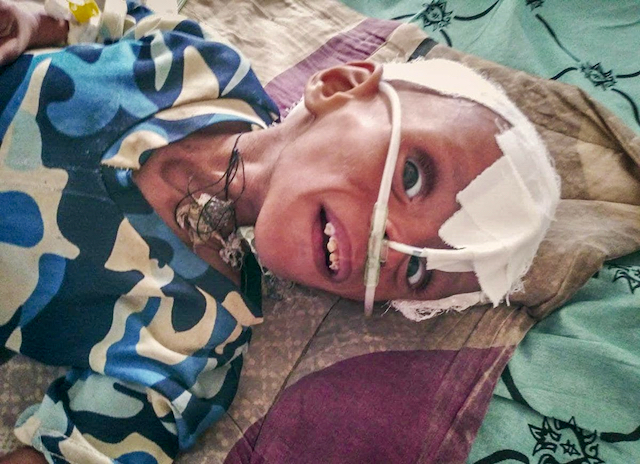
Why was this decision taken?
This is what the IPC said at the time.
“Going forward, the Famine Review Committee (FRC) estimated a medium to high Risk of Famine in three out of four scenarios described in the report, including in the short-term (July – September) in the worst-case scenario. The FRC highlighted that, whether or not an actual Famine classification is determined is, in many ways, besides the point, given the already evident extreme human suffering and humanitarian needs.”
Here is the essence of the decision, it was seen as “beside the point“. Can you imagine these words being used in the case of Gaza, tragic as it is? Of course not.
We must never forget that the UN and its agencies are essentially political. The Ethiopian government, a key African player on the international stage, is highly sensitive to the use of the term “famine” given the country’s history. It would have put huge pressure on the IPC.
It is hard to see this decision as anything other than a failure of judgement by the UN experts.
If a full-scale famine had been declared by the UN there would have been intense pressure on Addis Ababa to allow journalists to enter Tigray to witness the scale of the starvation. It never happened. As a result, tens of thousands died, as the world turned its gaze away from the suffering of the Tigrayan people.

 Martin Plaut
The core reason for not declaring the famine in Tigray was that the Biden’s administration was supporting the genocidal dictator Abiy Ahmed the prime minister of Ethiopia at the time and the Biden’s administration wanted to continue siege in Tigray