By Nebiyu Daniel Meshesha Nebiyu a former Ethiopian diplomat. He served at the Ethiopian embassies in Nairobi and Washington D.C.
Two years after the Pretoria deal, hailed as a significant step towards restoring security and stability in Tigray and other regions of Ethiopia, the Global Peace Index 2025 ranked Ethiopia among the countries at the epicenter of rising conflicts. Though it couldn’t catch international media’s attention, conflicts in the Amhara and Oromia regions have continued claiming the lives of many, and civilians are paying the price of war by day. In addition, the tension with Eritrea over the Ethiopian government’s claim to access to the sea put the region on an uncertain path.
TPLF’s internal divisions and its repeated claim that the Federal Government is trying to destabilize the Tigray region, along with the Federal Government’s allegation that TPLF, together with the Eritrean government, seeks to destabilize Ethiopia, indicate that the Pretoria peace deal has largely remained unimplemented. Also, as the period before the 2021 election, relations between the Federal government and the TPLF are likely to worsen in the coming weeks and months, given the TPLF’s status ahead of the June 2026 national election. TPLF spokesperson Michael Asgedom recently stressed a ‘need to return to the agreement (Pretoria) and reinstate TPLF’s legal status’ before the election. The Ethiopian National Electoral Board revoked TPLF’s legal status in May 2025.
While it is imperative for the Ethiopian government and the TPLF to work for peace and avoid returning to a senseless war, considering the deep-rooted mistrust between them, the international community must increase its engagement by taking concrete steps to support the peace process and justice and accountability prevail.
The Tigray war
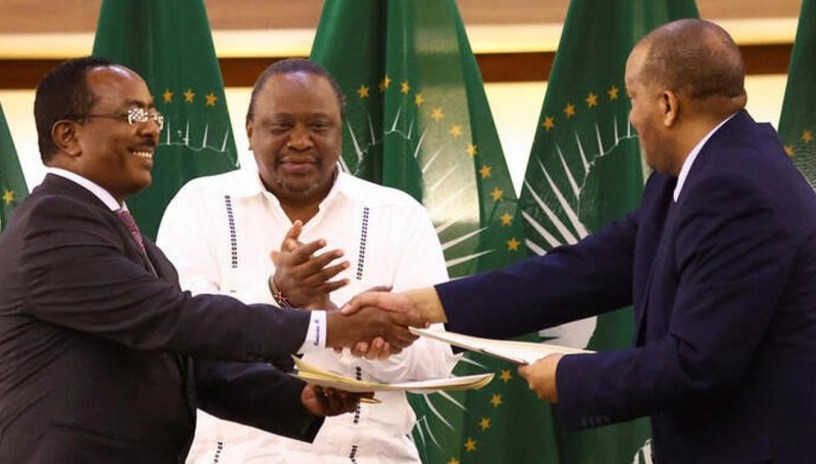
The two-year Tigray war stopped through the African Union (AU) led peace process in November 2022 in Pretoria. Based on Article 11 of the Pretoria Agreement, the AU established the Monitoring, Verification and Compliance Mission (AU-MVCM) to ensure the Implementation of the peace deal. Two years after the AU mission launched, however, many of the key processes under the agreement, such as Disarmament, Demobilization and Reintegration (DDR) and the resettlement of internally displaced persons, among others, remained far from implementation and even became major sources of tension between the Federal Government and TPLF. Though experts on the ground did their best for making sure the implementation process took place smoothly, the AU did not have the mechanism for enforcing the implementation, which left every step in the process to fully depend on the will of the parties. Moreover, the AU and the conflicting parties failed to effectively use the huge potential of local communities, particularly civil society groups to promote peace and support the implementation process. Though, the political division within TPLF might have an impact , there were only two Strategic Reflection Meetings held since the implementation of the agreement began, with the latest meeting took place on October 18/2024. All these factors indicate there was a need for some sort of strong monitoring and verification, as well as an enforcement mechanism. In this regard, for instance, coordinating with the UN under Joint United-Nations- African Union Framework for Enhanced Partnership in Peace and Security would better speed up the implementation of the agreement in such a highly fragile context.
Though regional organizations held the primary responsibility to respond, the Tigray conflict was a threat to international peace and security. This gave the UN an opportunity to apply its resolutions to deter similar future challenges. In this regard, the conflict, for instance, raised questions about implementing the Responsibility to Protect established in the 2005 World Summit outcome document, particularly paragraphs 138 and 139. The central message of these paragraphs was to prevent atrocities like those in the Balkans and Rwanda that happened in the 1990s. Additionally, the situation highlighted the UN Security Council’s role in enforcing its resolution 2417(2018) that condemned the use of starvation and denial of humanitarian access, which was adopted unanimously by the members.
The UN’s Role
Amidst the threat to regional peace and security, atrocities perpetrated and significant humanitarian crises, the UN Security Council was unable to hold regular public meetings and pass a specific resolution on the conflict. Ostensibly, that was a failure to uphold the Responsibility to Protect. Furthermore, while the scale of partnership between the AU and the UN during such an urgent situation was expected to reach a higher level, in finding possible policy options and implementation, no tangible and practical initiatives were taken to prevent further damage – until the November 2023 peace deal stopped the war.
Despite the UN Security Council’s inaction, the UN Human Rights Council adopted a resolution on December 17/2021, to establish an international commission of human rights experts on Ethiopia (ICHREE). However, the commission faced difficulties investigating, as the Ethiopian government refused to cooperate. Nonetheless, its final report found that all parties in the conflict in Ethiopia have committed atrocities that amount to war crimes in Tigray, Amhara, Afar, and Oromia regions.
Amidst high anticipation of international scrutiny and follow-up legal implications to the perpetrators, including the political and military leadership of all conflicting parties, the ICHREE mandate ended prematurely, which significantly contributed to the current situation of Ethiopia and the Horn of Africa.
Steps towards a more peaceful future
First, the hopes of hundreds of thousands of victims and survivors, including IDPs, who were expecting prompt justice, have remained unfulfilled. Though so much public relations works were made by the government about the local remedy to redress their pain through locally based ‘transitional justice’, no concrete steps have yet been taken.
Secondly, the lack of establishing domestic and international accountability played a role in the continuation of conflicts and atrocities in Ethiopia that experts were warning about. After the Tigray war stopped, new fighting between the Federal government and the Amhara armed group – Fano, and the intensification of a conflict with the Oromo armed opposition group – Oromo Liberation Army, have continued claiming human lives and incurring material damages. Sadly, atrocities, including sexual violence, continued to take place in the current conflicts. In addition to being the direct victims of the conflict, millions of civilians continue to suffer in these two regions in various forms, such as restricted movement, lack of basic social services, widespread kidnappings, etc. Directly affecting the future generation, millions of children are unable to go to school. Signifying the growing concern of the international community, forty two countries issued a joint statement to the UN to express their concern about the deterioration of the human rights situation and violence, including in areas of conflict in the Amhara, Oromia, and Tigray regions.
Thirdly, though, there were no enforcing mechanisms for the implementation of the Pretoria Agreement, such as the UN-led enforcement mission or the UN-AU hybrid mechanism; having an international scrutiny for the atrocities committed would have indirectly contributed to the agreement being better implemented. Continued international scrutiny would encourage the parties to implement the deal, as the world had a better opportunity to closely watch how committed the parties were to working for peace.
With regard to regional implications, if there were a solid international scrutiny of the Ethiopian conflict with strong legal implications, it would have given a stern warning to conflicting parties, such as in the Sudan, from continuing to plunge their country into a devastating civil war and committing genocide .
In general, following the untimely end of the international probe, developments in Ethiopia, such as the intensification of conflicts and human rights violations, and ineffective local-based transitional justice, urge the international community to consider establishing an entity similar to the International Commission of Human Rights Experts on Ethiopia. In this regard, as Getachew Reda, a former TPLF official and Tigray Interim Government president, and currently an advisor to Prime Minister Abiy Ahmed, in his recent interview on Al Jazeera – Head to Head- put it rightly, there is a need to have ‘an international component to the quest for justice.’
Thus, as ICHREE in its final report indicated, if there was any international component constituted, it should probe atrocities committed in Tigray, Afar, Amhara, and Oromia regions, including atrocities committed in the current conflicts. In addition, the AU has the responsibility to urge the Ethiopian government to swiftly implement the national transitional justice policy based on Article 10(3) of the Pretoria agreement that requires the government to implement the policy consistent with the Ethiopian constitution and the African Union Transitional Justice Policy Framework. It should also find ways, considering the current TPLF status, to hold the Strategic Reflection Meetings. Doing so can greatly help defuse the present and potential tensions among the parties.
Finally, Ethiopian partners should use their leverage to encourage the Ethiopian government to genuinely work for and cooperate with the international community on establishing accountability for war crimes and human rights violations across Ethiopia. Resuscitating accountability, strongly supported by the international community, will help Ethiopia and the Horn of Africa secure durable peace and stability.
 Martin Plaut
This is a well-written and insightful article, truly worth reading. It is imperative to promote justice, accountability, and the peaceful transition of political power in Ethiopia. The wounds inflicted upon the Ethiopian people can only be addressed through timely and impartial justice. I fully concur with the recommendations put forth by the author.