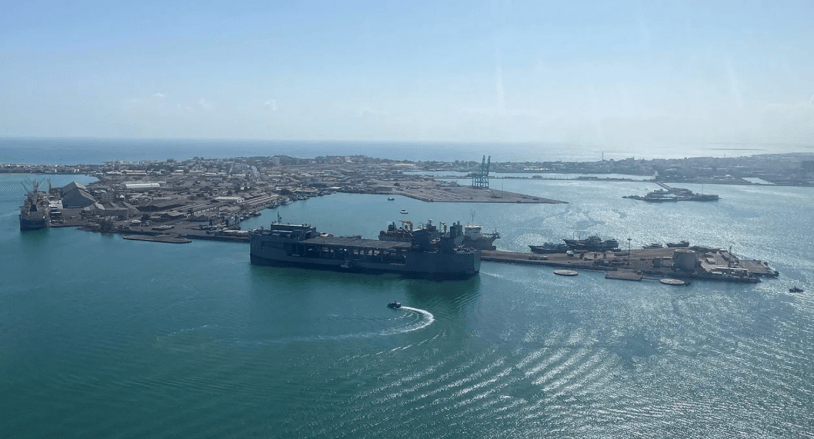
Foreign investment did not destroy Eritrea’s ports. Afwerki’s isolationism did—and now he uses “Port Imperialism” propaganda to disguise that failure.
Sep 15, 2026
I am appalled—and frankly embarrassed—to see people on social media echoing Eritrean Foreign Minister Osman Saleh’s phrase “port imperialism”—a cynical propaganda narrative promoted by the dictator himself.
But what does “port imperialism” actually mean? Is it a serious concept grounded in history and political economy—or a propaganda label designed to smear legitimate foreign investment and engagement as “imperialism”?
A port is simply a gateway connecting ships, roads, railways, warehouses and markets. In the age of AI, automation and advanced logistics, its value lies not in dockside labor but in how efficiently, reliably and cost-effectively it connects an economy to global markets.
Countries and companies compete fiercely for port access and investment. China operates major overseas ports from Piraeus to Hambantota, Gwadar and Djibouti. India’s Adani Ports controls Haifa Port and is developing Colombo’s Western Container Terminal. Turkey has invested heavily in Somalia, while the UAE’s DP World has built a vast network across strategic maritime corridors, especially the Red Sea and Gulf of Aden.
These investments serve both commercial interests and broader strategic goals. What matters is what the investment brings to the host country: better infrastructure, more trade, jobs, logistics, connectivity and economic growth.
Calling foreign investment “imperialism” simply because the investor has strategic interests is dishonest and corrupt politics dressed up as protecting sovereignty. Ordinary Eritreans pay the price—in lost jobs, neglected infrastructure, isolation and opportunities deliberately denied.
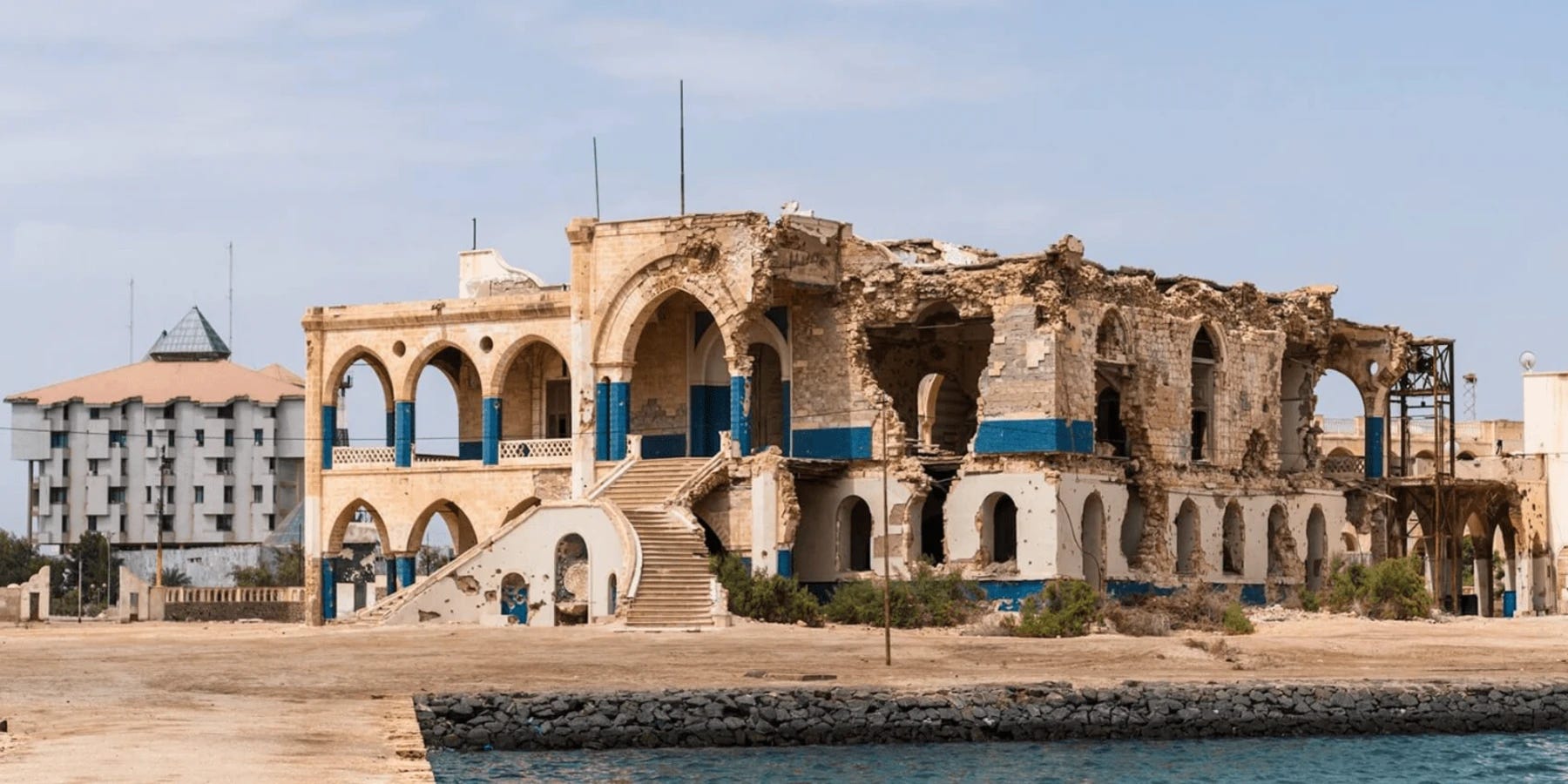
Look at Eritrea’s two ports. Massawa and Assab have been major Red Sea gateways for generations. Assab was already a functioning maritime base when the Rubattino Shipping Company acquired the bay in 1869, while modern commercial infrastructure in Massawa was developed under Italian rule in the late 19th century.
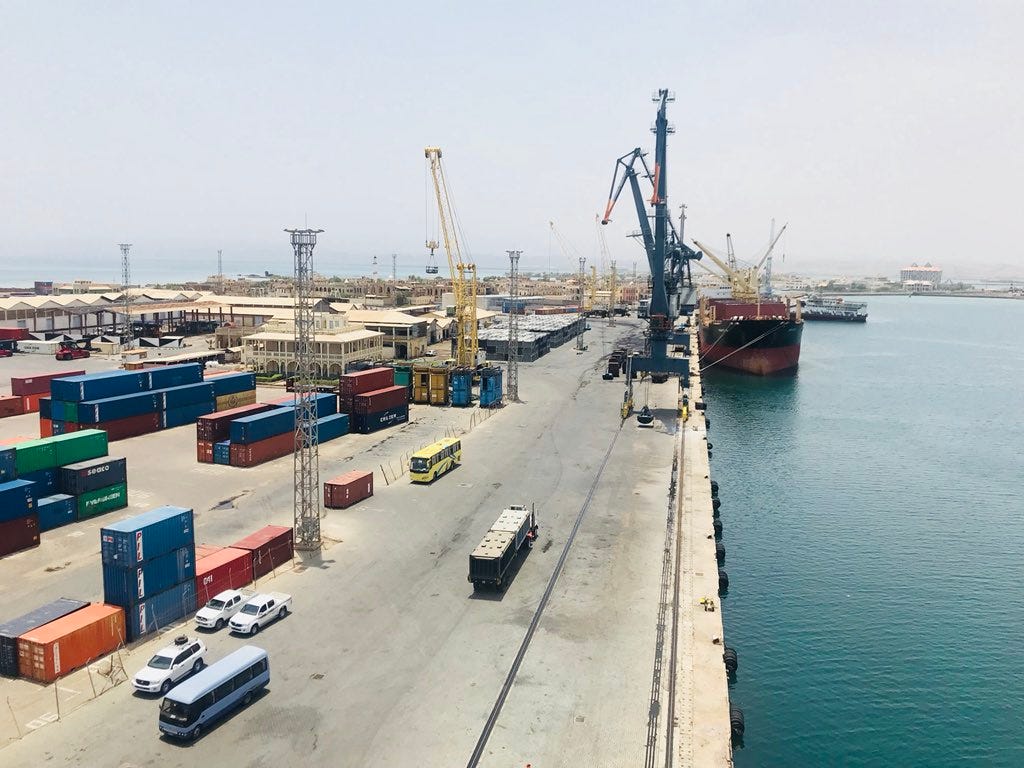
Assab was handling more than 1.3 million tons of dry cargo annually by the mid-1980s and more than 2.8 million tons of total cargo in 1986/87. By 1997, 2.3 million tons passed through the port. Massawa handled roughly 470,000 tons in 1986/87 and later reached 780,000 tons. These were functioning commercial gateways serving not only Eritrea but Ethiopia and the wider region.
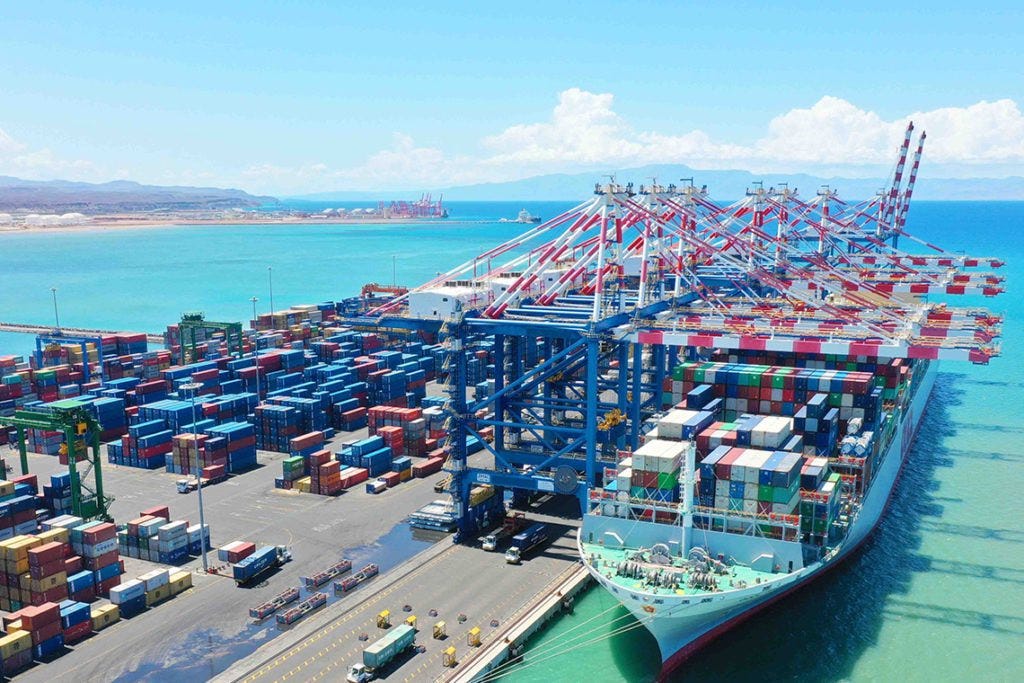
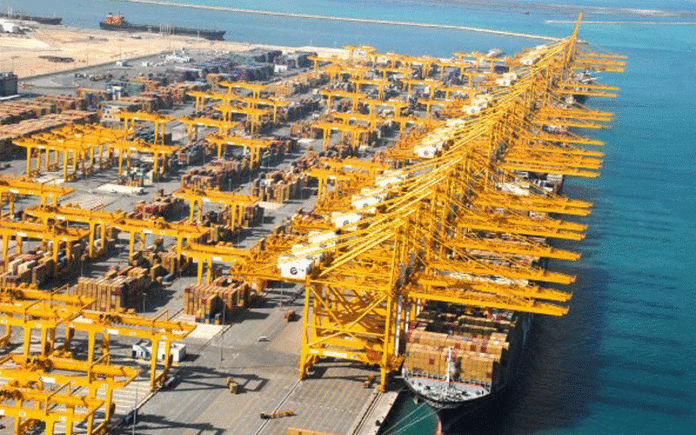
The contrast with neighboring Djibouti is stark. Assab and Massawa have nearly two centuries of commercial history behind them; Doraleh has barely two decades. Yet while the dictator has allowed Eritrea’s historic ports to decay, Djibouti built the modern Doraleh Container Terminal in 2009, with capacity for up to 1.8 million TEUs a year and more than 1.23 million TEUs handled in 2024. Djibouti built infrastructure, trade and connectivity. The Eritrean dictator built political rhetoric.
Consider Berbera. Since DP World secured its concession in 2016, foreign investment has helped transform the port from a neglected facility into a modern commercial and logistics hub. Whatever strategic interests the UAE may have in Somaliland, the results are concrete: container capacity has reached 500,000 TEUs a year, with a 17-meter draft and a 1,050-meter quay. That is what investment can do: build infrastructure, expand trade and turn a port into an economic asset.
Now look at Assab. After independence, Afwerki could have turned it into a national, regional and global commercial hub. Instead, he turned it into political leverage against Ethiopia. Following the border war, he used the port as a weapon to pressure the late Meles Zenawi to dismantle the federal system Isaias opposed.
Meles refused to make Ethiopia’s sovereignty and economic lifeline dependent on the dictator’s political demands. He shifted Ethiopia’s trade to Djibouti and built alternative routes. It is the same demand Afwerki is making today against Abiy Ahmed.
Meles famously told Afwerki to “use your Red Sea to water your camels.” Today, even the camels have little reason to stay. Assab is effectively nonfunctional, while in Massawa, releasing a container can take three months—an extraordinary failure for a port that should be competing for regional trade.
Afwerki could have transformed Assab and Massawa into thriving coastal cities, industrial centers and commercial gateways serving mainly Eritrea, but also Ethiopia and the wider region. He did the opposite. Build was replaced by destruction. Development was replaced by isolation.
This is the central contradiction in Afwerki’s “port imperialism” narrative. The dictator has failed to turn Eritrea’s extraordinary maritime geography into economic development while condemning foreign investment in ports elsewhere.
Decades of neglect
The failure extends far beyond the ports. Eritrea’s electricity system tells the same story. Hirgigo began with four 22-MW generators in the late 1990s and was later expanded by 46 MW to 134 MW. Today, three original units are dead, one runs at just 25%, and the two newer units operate at full capacity—leaving only 51.5 MW functioning. Even Asmara is in the dark.
The same is true of water and basic infrastructure. The water network is broken, even water tankers struggle to find fuel, and basic sanitation is failing. Hospitals are dysfunctional, have no physicians, no medicine and are filthy. Roads have fallen into disrepair, the private sector has virtually disappeared, and infrastructure meant to support trade, industry and daily life has been allowed to decay.
Look at Asmara’s airport, built in 1922 and opened to commercial aviation in the 1930s—one of Africa’s earliest aviation facilities. After more than three decades of Afwerki’s rule, it stands as a monument to poverty, neglect and decay. Eritrea does not even have a functioning national airline or a single aircraft of its own.
And look at Ethiopian Airlines—not to make a comparison, but to expose the irony. The dictator and his cronies deride the airline, ignoring the reality that its growth has been driven by investment and financing. Ethiopian Airlines operates more than 200 domestic flights a day, connecting cities across the country, alongside a vast international network.
In Eritrea, people cannot even rely on the roads to travel from one part of the country to another. The consequences are painfully real. When a family member dies, relatives living in another part of the country may not even be able to travel to attend the funeral. This is not an abstract infrastructure failure. It is the daily reality of a country whose basic transport system has been allowed to decay.
And the irony is staggering. When the Eritrean dictator travels abroad, other countries provide the planes. Egypt flies him to Egypt. Saudi Arabia flies him to Saudi Arabia. China flies him to China. Russia flies him to Russia. Ethiopia flies him to Ethiopia. It is a national humiliation, they call this sovereignty.
Yet this same dictator attacks Ethiopia for depending on foreign investment to build and expand Ethiopian Airlines—a national carrier that connects Ethiopian cities with hundreds of domestic flights and links the country to the world.
Afwerki has allowed all of them to decay. He allowed even the Italian-built roads to deteriorate, allowed the airport to wither and left Assab and Massawa largely useless ghost cities. After more than three decades of independence, Afwerki has turned this extraordinary geographic advantage, more than 1,200 kilometers of coastline, into an economic wasteland.
This is not simply a failure to attract foreign investment. It is the product of a political and economic system that has deliberately isolated Eritrea from the global economy. For the dictator, isolation is sovereignty. He hides behind “sovereignty” to avoid agreements and commitments with the outside world—West or East, bilateral or multilateral, in trade, investment or anything else.
For three decades, the dictator has hidden behind one excuse after another: “American domination,” “hegemony,” and the “unipolar world order.” Now he has found a new vocabulary: “UAE port imperialism” and alleged “Israeli control.”
“Port imperialism” is not an explanation. It is a slogan. It shifts attention away from the real question: why has Eritrea’s economy collapsed? Instead of explaining decades of failure, it blames foreign interference for the absence of development.
The question is not why foreigners want to invest in ports. It is why Afwerki has destroyed Eritrea’s own.
The same worldview shapes the dictator’s posture toward the wider Red Sea crisis. He treats the Red Sea less as an economic corridor to generate trade and prosperity than as a stage for anti-Western politics—rejecting U.S., Israeli and Emirati engagement while aligning politically with Iran and the Houthis.
Eritrea’s tragedy is not that foreigners are investing in ports elsewhere in Africa. It is that Afwerki turned Eritrea’s own ports into instruments of political hostility while leaving them economically irrelevant.
As I write this, I cannot describe the pain I felt. It was heartbreaking to look at what has happened to my country and its people—a country blessed with extraordinary history, geography and potential, yet denied dignity, opportunity, security and a decent life.
I know the dictator-worshippers will shout. They always do when reality becomes too painful to face. They do not care about our demography, our dignity, our economy, our security, our well-being or our suffering. They care only about defending the dictator, no matter the cost.
“Port imperialism” is cynical propaganda, not a serious concept grounded in history or political economy. It is especially hollow coming from a dictator who has controlled extraordinary port assets for decades and failed to develop them.

