By Siraj Ahmed
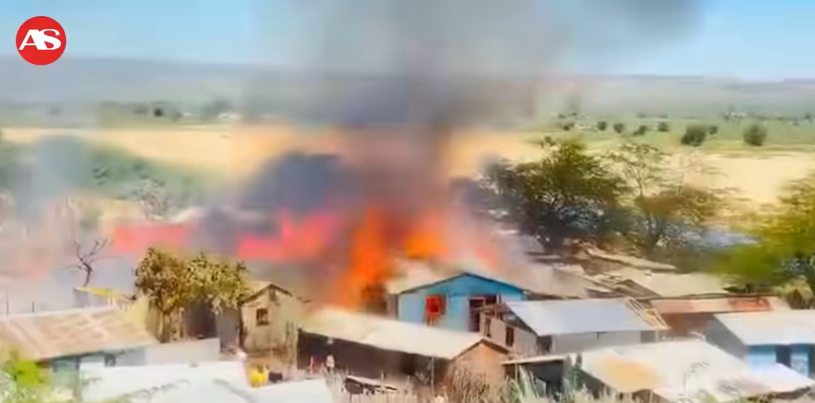
On June 22, 2026, I wrote about the invisible walls we have built in our minds, walls that make us see our neighbors as rivals rather than people with whom we share a common history and future. Today, what is happening in Moyale brings me back to that same question: why are we still killing one another when we have every reason to live together in peace?
When I think about Moyale, I do not see only a border between Ethiopia and Kenya or a dividing line between communities. I see families, ordinary people trying to make a living, children who deserve to grow up in peace, and neighbors whose lives have been connected for generations. Every time violence breaks out, it is these people who pay the highest price, while the grievances that caused the conflict often remain unresolved.
Long before the modern borders of Ethiopia, Somalia, and Kenya were established, people across this region moved in search of water and grazing land, traded with one another, built families, and maintained social and cultural ties across the land. Colonial powers later formalized many of the boundaries that divided these communities, and successive governments inherited them. But our history did not begin with those borders, and our relationships should not end because of them.
Somalis have deep historical roots in this region, and we will continue to be part of its future. We should never have to deny our history, identity, or connection to this land to prove that we can live peacefully with others. At the same time, recognizing our own rights does not mean denying the history, identity, or rights of our Oromo neighbors. Their existence is not a threat to ours, and ours should not be a threat to theirs.
So why are we killing each other? What are we really gaining when families lose their loved ones, children grow up with trauma, and people are forced to flee the places they call home?
We cannot continue to blame colonialism for every problem we face today. Colonial borders have contributed to regional divisions, but our present choices also matter. The way our leaders govern, the way disputes are handled, and the way communities respond to injustice can either prevent violence or make it worse. We must be honest about that responsibility.
If there are grievances over land, administration, identity, or political representation, they must be addressed through dialogue, fair investigations, and the rule of law. If crimes have been committed, those responsible must be held accountable. But accountability is not collective punishment, and justice is not revenge. No innocent person should suffer simply because they belong to a particular community.
I am equally concerned about the words we use when these incidents occur. Before the facts are established, people rush to blame entire communities, spread unverified claims, and encourage anger. Social media can turn a local dispute into a much wider confrontation. We must stop allowing those who benefit from division to convince ordinary people that their neighbors are their enemies.
The people of Moyale do not need more hatred. They need security, truth, justice, and leaders willing to sit together and resolve the problems that put lives at risk. They need to know that their children can go to school, their families can travel safely, and their livelihoods will not be destroyed by another outbreak of violence.
I believe we must also look beyond the immediate crisis. Our communities have much more to gain from cooperation than from endless confrontation. Trade, education, shared infrastructure, access to markets, and peaceful relations across borders can improve people’s lives in ways that political slogans never will. We can protect our identities and respect the borders that exist today while making sure those borders do not become excuses for hostility.
I return to the point I made in my earlier article: the greatest barriers are often the ones we build in our own minds. A border can separate two administrations, but it should not prevent us from recognizing one another’s humanity. Our differences are real, and our history includes conflict as well as cooperation. But none of that makes violence inevitable.
Somalis will remain part of this land. Oromo people will remain part of this land. Neither community needs to disappear, surrender its identity, or live in fear for the other to have a future. The challenge is to build a society in which everyone’s rights and dignity are respected.
I want the next generation to inherit something better than suspicion, revenge, and recurring conflict. I want our children to remember Moyale not as a place where neighbors turned against one another, but as a place where people eventually chose dialogue over violence and justice over revenge.
Our ancestors lived across this region long before today’s political boundaries. We cannot simply return to the past, nor should we romanticize it. But we can learn from the connections that sustained our communities and build a better future from them.
The question is not who belongs on this land. The question is whether we have the wisdom to share it peacefully.
Our shared land should not become our common grave. It should be the foundation on which we build a future of dignity, security, and peace for everyone who calls this region home.
Siraj Ahmed
Minnesota

