By Yohannes Woldemariam November 28, 2026
When I published “Who Owns the United Nations?” on November 18, my concern was not simply the candidacy of Lana Nusseibeh. It was the danger of allowing financial influence and geopolitical bargaining to override the principles upon which the United Nations was founded. Developments since then have made the question even more urgent.
On November 25, The Guardian’s editorial board called on Britain to maintain its opposition to the Emirati candidate. This followed an intervention by nearly 70 British parliamentarians who questioned her credibility in light of her previous dismissal of allegations connecting the United Arab Emirates to atrocities in Sudan. These interventions are welcome, but why have the objections of Sudanese people themselves not commanded comparable attention?
The war in Sudan has produced one of the most devastating humanitarian catastrophes of our time. Millions have been displaced, communities destroyed, and women subjected to systematic sexual violence. United Nations investigators and human rights organizations have documented grave atrocities committed by the Rapid Support Forces. Evidence of external assistance to the RSF, including alleged Emirati military and logistical support, has been accumulating for years. The UAE continues to deny these allegations. Nusseibeh, in her capacity as a senior Emirati diplomat, was among those who publicly defended her government’s position.
In her November 26 interview with The Guardian, Nusseibeh sought to distinguish her present candidacy from her previous role as a government representative. She indicated that she would support United Nations investigations and accountability mechanisms if appointed. Yet when questioned about more recent allegations concerning Emirati involvement in Sudan, she declined to address them substantively.
Of course, representing a government and serving an international institution are different responsibilities. But the Sudanese are entitled to ask how someone who previously challenged allegations of Emirati involvement would respond to those same allegations as secretary-general. The issue is not her nationality but her credibility and independence. A leave of absence from government service does not, by itself, resolve these questions.
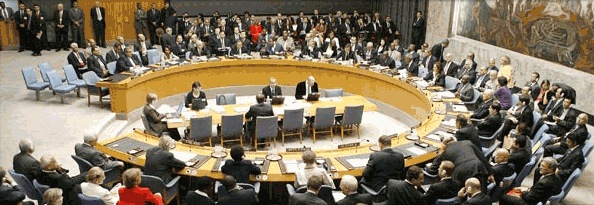
The November 20 Security Council straw poll reportedly gave Nusseibeh seven encouraging votes, with three permanent members opposing her candidacy. Britain, France and China reportedly opposed her, while the United States and Russia were supportive. Since the ballot was secret, these national voting positions have not been officially confirmed.
What is particularly interesting is the apparent convergence of Washington and Moscow. Two powers that disagree profoundly over Ukraine, European security and much of the international order appear capable of finding common ground over the candidate of a wealthy Gulf state. The UAE has cultivated extensive economic, military and diplomatic relationships with both. Its ability to maintain these relationships tells us something about the influence a relatively small but extraordinarily wealthy country can exercise in contemporary international politics.
We cannot establish from a secret ballot that financial considerations determined the votes. Nevertheless, the circumstances invite scrutiny of the relationship between economic influence and international accountability. How differently would a candidate from a poor African country be treated if that candidate’s government faced comparable allegations?
Perhaps more disturbing to me is the limited visibility of African governments in this controversy. Sudan is an African country. The consequences of its destruction extend into Chad, South Sudan, Egypt, Ethiopia, Eritrea and beyond.
Refugees are crossing borders into countries already struggling with their own economic and political difficulties. Yet much of the discussion about the suitability of the Emirati candidate revolves around the calculations of Washington, London, Paris, Moscow and Beijing.
Where is the African Union in all this?
Have African governments consulted Sudanese civil society, women’s organizations or representatives of displaced communities? What influence, if any, have these people had on the selection process?
In a recent interview with The Guardian in Nigeria, Nusseibeh emphasized the importance of African agency and pledged to give the continent greater prominence in the work of the United Nations. Such commitments deserve to be examined alongside her diplomatic record and the experiences of Africans affected by the foreign policy of the government she represented.
The growing economic and security relationships between African political elites and the Gulf monarchies cannot be ignored in this discussion. The interests of African governments and those of African populations do not always coincide. A government may benefit from Emirati investment or military assistance while the consequences of Emirati foreign policy are borne by ordinary people elsewhere on the continent.
Sudanese activists and human rights organizations have already spoken out against Nusseibeh’s candidacy. Their interventions deserve attention in their own right, not merely because British parliamentarians or a prominent European newspaper have arrived at similar conclusions. Why should African suffering require European validation before it becomes politically consequential?
There is also something profoundly anachronistic about the process itself. Under Article 97 of the United Nations Charter, the secretary-general is appointed by the General Assembly upon the recommendation of the Security Council. In practice, an organization representing 193 member states remains dependent on the acquiescence of five countries in selecting its secretary-general. Africa, with 54 member states, does not have a permanent representative on the Security Council. The distribution of power at the end of the Second World War, when much of Africa was still under colonial domination, continues to determine the political weight of the continent in an institution that claims to represent humanity.
The emergence of wealthy countries outside the traditional Western power structure has not necessarily improved this situation. There is a tendency to celebrate multipolarity as though it were synonymous with democratization. But what does multipolarity mean to a Sudanese refugee, if the additional centers of power are equally indifferent to her circumstances? The redistribution of influence among powerful governments does not necessarily translate into greater influence for vulnerable populations.
Much has also been made of the possibility of appointing the first woman secretary-general. That no woman has occupied the position in more than eight decades is an indictment of the institutional history of the United Nations. But I find it troubling that this legitimate aspiration could be invoked without adequate consideration of what Sudanese women have endured.
Women who have experienced rape, displacement and the destruction of their families are also entitled to representation and solidarity. Their suffering should not become an inconvenience in the pursuit of a historic appointment. There is no shortage of accomplished women in international diplomacy. Surely the United Nations can correct its historical exclusion of women without compromising its commitment to accountability.
On November 18, British parliamentarians introduced an Early Day Motion questioning Nusseibeh’s suitability for the position. The motion also drew attention to her diplomatic record concerning Yemen. This broadens the controversy beyond Sudan and raises questions about how the United Nations evaluates the previous conduct of those aspiring to lead it.
Even if Nusseibeh’s candidacy ultimately fails, I would not consider the matter resolved. The more fundamental question is how a candidate associated with a government facing such serious allegations became so politically viable in the first place. The question is not unique to the Emirates. It concerns an international order in which wealth and strategic importance can insulate governments from scrutiny that would be politically devastating for less influential countries.
The United Nations is already struggling with financial pressures, declining public confidence and its inability to prevent or resolve some of the world’s most destructive conflicts. The temptation to accommodate wealthy governments may be considerable under these circumstances. But an institution that compromises its principles to secure its financial and political survival risks losing the very justification for its existence.
For the Sudanese, the selection of the next secretary-general is not simply a diplomatic contest taking place in New York. It is a test of whether their experiences and demands for accountability have any meaningful place in the calculations of international diplomacy. Their country is being destroyed while governments negotiate over who should lead the institution entrusted with international peace and security.
The question I posed in my earlier article remains. When the interests of powerful governments conflict with the rights of vulnerable populations, whose interests prevail? The answer will tell us who really owns the United Nations.

