Prime Minister Abiy Ahmed’s latest military purchases could transform Ethiopia’s air power – and raise questions over how the debt-strapped country is paying for them.
By AFP , The Africa Report
Published on October 29, 2026 at 14:30 pm (GMT +1)Share
Ethiopia has announced a major purchase of Russian fighter jets and air-defence systems as its confrontation with neighbouring Eritrea threatens to spill into outright war.
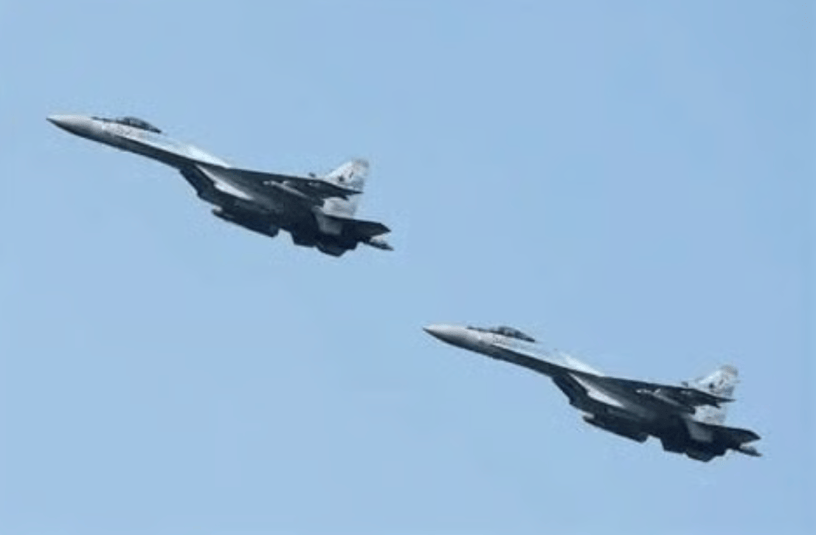
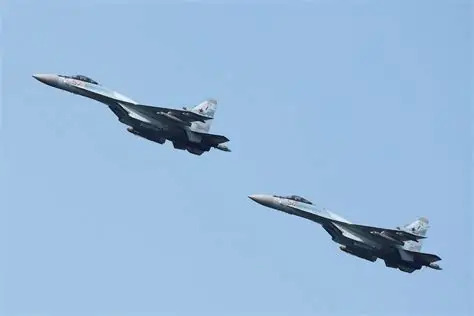
Speaking during the Russia-Africa summit in Moscow on Wednesday, 28 October, Prime Minister Abiy Ahmed said Ethiopia had acquired 12 Su-35 fighters, with four batteries of S-400 surface-to-air missiles to follow. He thanked Russian President Vladimir Putin for bringing forward the aircraft delivery by a year, calling the acquisition a means of deterring aggression.
But there is an important discrepancy. Russia’s state arms exporter, Rosoboronexport, told Reuters that only the first two jets had been delivered. Images released by Abiy’s office showed two Ethiopian-marked aircraft outside Moscow. Neither the arrival date of the remaining fighters nor the S-400 delivery timetable has been disclosed.
Building an air-power advantage
The deal marks a substantial advance in Ethiopia’s military modernisation. Addis Ababa took delivery of Russian Su-30 fighters and Turkish Bayraktar Akıncı attack drones in 2024, supplementing its existing Su-27 fleet and other foreign-made drones. This January, it displayed Russian Yak-130 trainers, which could prepare pilots to fly more advanced fighters.
Drones helped the federal army reverse rebel gains during the devastating 2020-22 Tigray war. The Su-35s and S-400s serve a different purpose: contesting control of the skies and defending strategic infrastructure against another state’s air force. Whether Ethiopia can integrate the systems, train crews and maintain them remains an open question.
Another open question: who is paying the bill? Abiy has disclosed neither the contract value nor its financing. As benchmarks, China agreed to pay more than $2bn for 24 Su-35s in 2015, while Turkiye contracted for four S-400 batteries at about $2.5bn in 2017. Those are not directly comparable prices, but suggest Ethiopia could be undertaking a multibillion-dollar commitment while restructuring its external debt under a $3.4bn IMF programme.
Could a Gulf backer be involved? The United Arab Emirates pledged $3bn in financial and investment support to Ethiopia in 2018, and the countries reaffirmed their strategic security partnership in January. Reuters reported in February that sources alleged Emirati funding of a camp in Ethiopia for Sudanese paramilitaries; Abu Dhabi denied involvement. There is, however, no public evidence linking the UAE to the Russian weapons purchase. Russian export credit, used in other arms deals, is another possibility.
The Eritrean confrontation
The timing compounds regional fears. Fighting resumed in northern Ethiopia in September between federal forces and a Tigrayan rebel alliance. Addis Ababa accuses Eritrea of backing the rebels, a charge Asmara denies. Ethiopia closed its embassy in Eritrea on 1 October and expelled diplomats; Eritrea severed ties.
Witnesses subsequently reported Eritrean soldiers in Adigrat, a northern Ethiopian town about 30km from the border. Eritrea denied the incursion. Ethiopian forces entered the town on 10 October, but fighting elsewhere in Tigray continues, further unravelling the 2022 Pretoria peace agreement.
READ MOREEgypt is trying to contain Ethiopia. Will it succeed?
The reversal is striking. Eritrean troops fought alongside Ethiopian forces against Tigrayan rebels during the previous war. Their alliance subsequently collapsed as Abiy renewed his demands for access to the Red Sea.
Eritrea, independent since 1993, fears Addis Ababa could seek to take the port of Assab by force. Ethiopian military and intelligence chiefs again raised maritime access this month.
Moscow has offered to mediate, and Abiy and Eritrean President Isaias Afwerki are both attending the summit. Yet no rapprochement has been announced. Russia is positioning itself as a peacemaker while helping one of the potential combatants assemble a far more formidable arsenal.
- AFP

