Museum will raise awareness of ‘forgotten’ Arab trade that Britain sought to eradicate.
Source: The Telegraph
Craig Simpsonin Nkhotakota, MalawiShow biography
Published 12 November 2026 3:43pm GMT
Across Africa, Britain has been called an oppressor and confronted with demands for slavery reparations.
But one nation is celebrating the British Empire as a liberator.
Malawi suffered from the brutality of Arab slavery, with its people captured by rival tribes and shipped to the Middle East, part of a 1,200-year-long traffic in human commodities that is often overshadowed by Europe’s transatlantic trade.
The country wants to tell the world about this forgotten slave trade – and how Britain ran a determined campaign to end it.
Malawi’s government is overseeing plans to build a museum dedicated to slavery, preserve mosques and markets linked to the trade, and have them inscribed as World Heritage sites to “send a message” internationally about this neglected chapter of history.
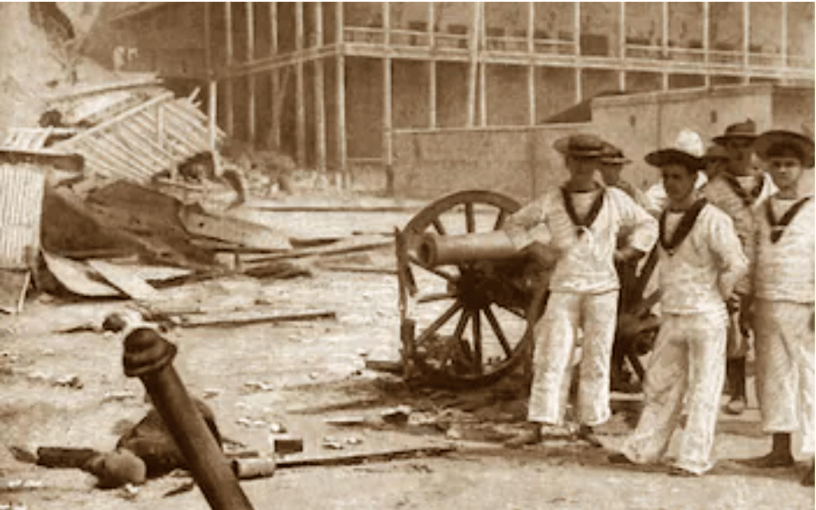
Through its department of museums, Malawi will also celebrate the British Empire by conserving ruined forts built by colonial forces to protect Africans from marauding slavers.
“Britain was not a coloniser; it was a liberator,” said Moses Mkumpha, who is working on the government-backed project to preserve colonial buildings.
“The monuments that we have, that we conserve, they are linked with the British. If you look at how the slave trade was ended in Malawi, we owe that to the British.”
Speaking in the capital of Lilongwe, Dr Oris Malijani, the project leader, told The Telegraph that Malawi’s plans would help to correct misperceptions about history, saying: “Slavery in East and Central Africa, it is almost forgotten; it is not discussed.”
“We need to tell the world about it,” he said.
The Indian Ocean Trade
The trade was once rife in the village of Nkhotakota, where today children cartwheel into the surf and boats rock gently offshore, their hulls filled with nothing more than an innocent bounty of fish.
From the 1840s until around five generations ago, vessels sailed to this outpost on Lake Malawi – and many more like it – in search of a far more terrible catch.

African slaves were seized by hunting parties, gathered in dusty stockades by the shore, and dispatched as human cargo by the sultanates of Arabia. It was a business described as the “trade of hell” by David Livingstone, the Scottish explorer and missionary, who witnessed it first-hand.
This trade was the latest expansion of slavery from the Islamic world, which extended caravan routes across the Sahara, and from trading posts established along the coast of East Africa, like the slave hubs of Mombasa and Zanzibar, controlled by the Omani sultanate.
According to the Institute of Commonwealth Studies, around 11 million people were transported from the African interior to the Arab world from around 800 to 1900.
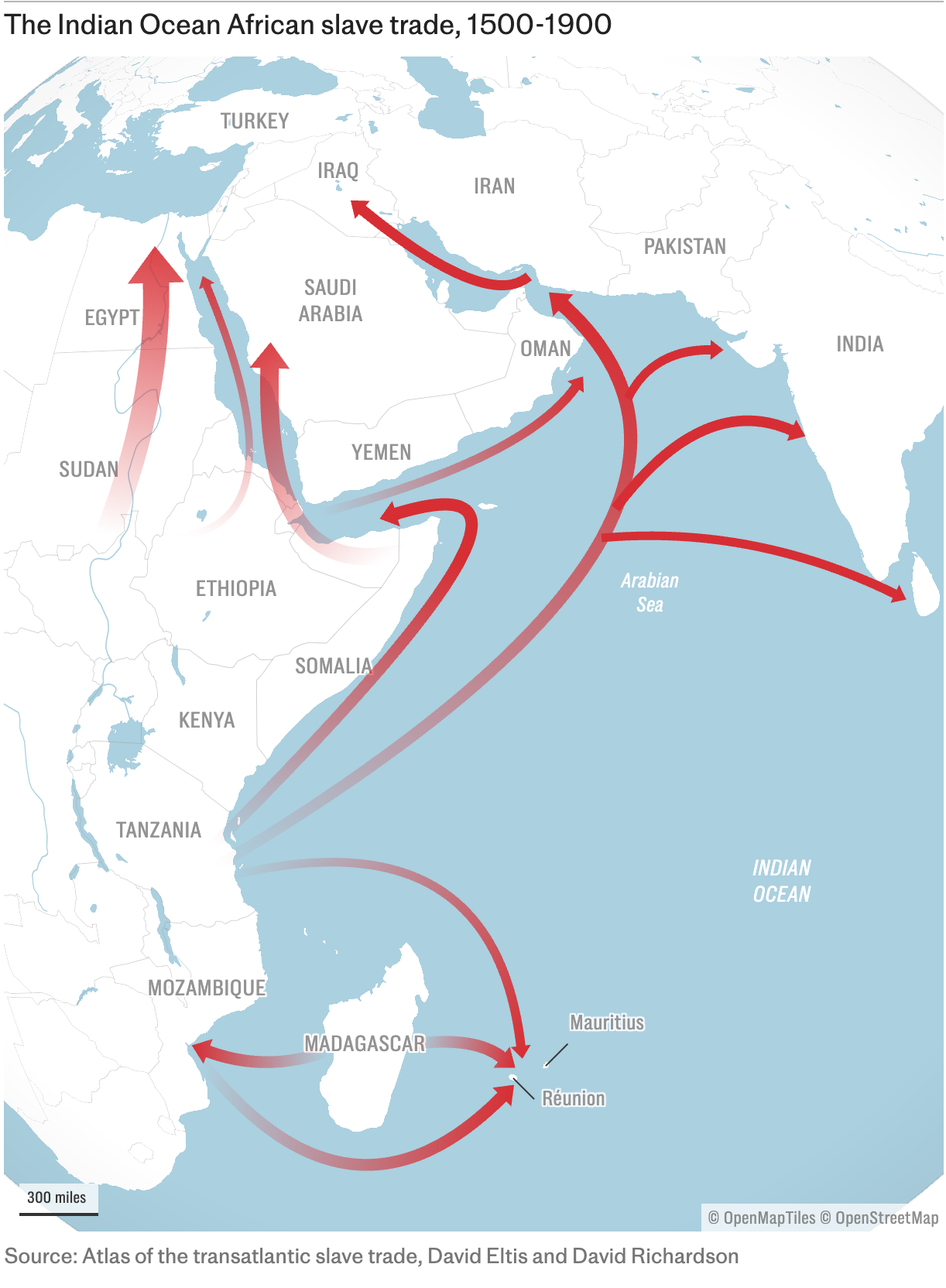
Unlike the transatlantic trade, more women were taken than men, mainly for domestic service and sexual slavery. On their journey to the coast to be trafficked, slaves were used as porters to carry large quantities of ivory for added profit.
Illicit slave markets persisted in the Arab world well into the 20th century, despite determined efforts by Britain to stamp them out at the cost of much blood and treasure.
However, Arab-led Saharan and Indian Ocean slave trades have been largely absent from postcolonial demands for apologies and financial reparations, a movement that has recently gained momentum.
The King described the transatlantic trade as a “shameful chapter of history” at a Commonwealth summit earlier this month. Britain has also been facing demands for financial compensation, with some independent reports setting the figure owed at £20tn.
Andy Burnham, the Prime Minister, has partly bowed to growing pressure from the Caribbean Community and the African Union organisations by offering talks on an official apology and forms of investment and debt relief.

The transatlantic trade enslaved 11 million Africans from around 1450 to 1900, created most of the black diaspora in the Americas, and creating much of the current racial politics in the West.
Institutions from the Church of England to the British Museum have lamented their financial connections to the transatlantic trade, and historic crimes have been used to justify “decolonising” curricula and removing public statues.
However, Britain ultimately worked to suppress this traffic, and to crush slavery around the world wherever the empire found it.
Mr Mkumpha said that in contrast to the debate around reparations from wealthy Western countries, the trade shipping African slaves to the Arab world had been neglected.
He said: “With the Atlantic slave trade, we overlook what role the Oman [sultanate] played in the Middle East. What was their role? When looking at the slave trade, it’s always more focused on the transatlantic [trade].”
‘Liberating’ Malawi
On the urging of Livingstone and subsequent missionaries, British forces intervened to curb the eastward trade of African slaves.
Livingstone, who journeyed across the land that would become Malawi, described “the Lake slave-trade” going on “at a terrible rate”, in a region filled with slaves and littered with the corpses of those killed in wars or famines.
After initial steps to protect Scottish missionaries working against the trade in the region, Britain declared it a protectorate in 1891, under the command of Harry Johnston, who promptly set about using troops and gunboats to dismantle slaving networks.
His campaign included the defeat of the self-declared “Sultan” Mlozi in 1895. The leader was executed, with his skull allegedly becoming the trophy of a British officer.
Meanwhile, on the coast, in 1896, Britain forced the Sultan of Zanzibar to give up slave-trading after a war lasting 45 minutes.

Johnston gave his name to Fort Johnston, now the town of Mangochi, which is one of several historical sites that will be submitted for Unesco status as part of a planned “slave heritage route”.
This will include other strongholds built to suppress slavers and cut supplies to Arab traders, including Fort Lister and Fort Mangochi in the south.
The recent willingness of the Labour Government to make amends for the transatlantic trade has been noted in Malawi, and it is hoped that Britain will help to conserve symbols of historical pride.
Mr Mkumpha said: “We need their help in terms of conserving them.”
This could come in the form of straightforward funding, but also technical support from British heritage experts and museums.
The museums department, which has limited capacity, will also seek to run research projects with universities that have access to archival material linked to Malawi.
Africans trading Africans
While raising the profile of the Arab-led trade and exploring how it was crushed, Malawi will also break new ground by stressing the often-overlooked fact that Africans were largely responsible for enslaving and selling fellow Africans.
Dr Malijani explained: “There is a misconception that slavery started at the coast, like the coast of Ghana for example, but the history of slavery did not start there at the coast.
“It began much closer inland, in African communities where people were captured. What about the African leaders that were involved in slavery?”
In the land that would become Malawi – after British rule as Nyasaland and subsequent independence in 1964 – the African leaders dealing in slaves were typically the Islamised Yao people, who made captives of the Chewa ethnic group.
On the beaches of Nkhotakota, modern-day Yao tribesmen mend their nets in the shadow of a crumbling mosque, which was built in the 19th century as part of the slaving outpost owned by Salim bin Abdallah, or “Jumbe”, a Swahili-Arab trader.
He promoted both slavery and Islam in the area, sent around 20,000 captives each year to the coast, and founded a dynasty of powerful slavers – all called Jumbe – which was finally defeated by the British in 1894.
“The mosque has been here many years, many years,” Ahamad Manich, a village elder, told The Telegraph. “There is no one who can afford to build it up. Maybe government.”

As well as the British forts, Malawi’s government plans to conserve, and seek Unesco status, for the mosque, the country’s first. Currently, its history is modestly explained by a sign in English, which flocks of curious children from the area appear unable to understand.
Heritage officials are planning to clear and excavate ground around the mosque where there was once a slave pen. It is currently a grassy wasteland used to pasture goats and dry “usipa” fish on wooden tables.
Other slave market sites in Karonga, Phalombe, and Mangochi will also form part of Malawi’s Unesco plans, which officials hope will “send a message to the international community”.
Nkhotakota itself has been chosen as the home for a planned slavery museum.
Tourism
Slavery sites have become tourist attractions in places such as Ghana, where coastal forts are sites of pilgrimage for some. However, Malawi wants to stress that slaves were transported by Africans in the interior, where traditional village life continues in many places.
“We only talk about coastal slavery, but what about the inland dimension, where the slaves came, their roots, the markets?” Dr Malijani said. “They lack international awareness.”

It is hoped that Malawi’s project will not only raise awareness of Britain’s role in suppressing the slave trade, but potentially will also lure tourists away from popular game parks such as Nkhotakota wildlife reserve and Liwonde national park.
This influx of cash could support poorer communities that were, generations ago, ravaged by the slave trade.
Government officials also hope that the project will prevent the Arab traffic in slaves from being overshadowed by a fixation on the European trade.
Villages such as Nkhotakota show that it was not only across the waters of the Atlantic that the horrors of slavery were visited on Africa.
And soon they will offer a clear reminder of the British Empire’s part in ending the cruelty of human bondage.

