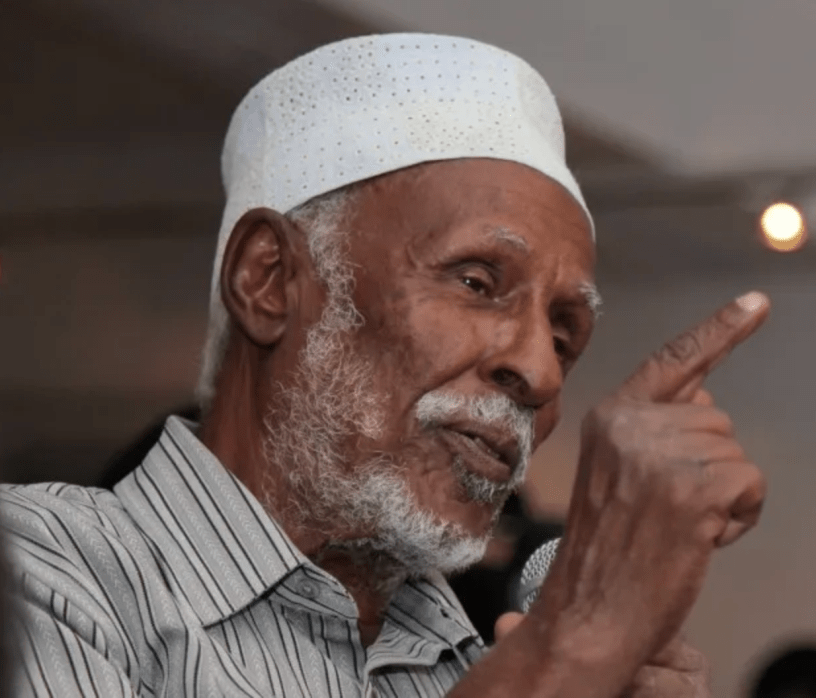
Source: Sahan: The Somali Wire
The Nation of Poets
The modern story of Somalia tends to be told through the narrow lens of conflict. As the ‘poster child’ of a failed state, depictions of Somalis have often been reduced to one of piracy and famine, driven by Hollywood films such as Black Hawk Down and Captain Phillips. As such, there has been a tendency to reduce the rich and nuanced Somali culture to one single narrative of chaos and violence – erasing the creativity and humanity of Somalis. Though internecine conflict and political instability have nevertheless dominated the lives of millions of Somalis since the 1990s, the nuance of poetry and art’s relationship to these issues can often be overlooked.
Somali culture is, at its core, an oral one where storytelling, poetry and song long predate the written word. In the 20th century, the Canadian novelist Margaret Laurence famously referred to Somalia as the “Nation of Poets,” a moniker that persists to this day. Indeed, it was not until the early 1970s that the Somali language was Latinised under the Siad Barre regime. Even so, the oral tradition remains at the heart of Somali identity, acting as a way to air grievances, rally clans, or call for reconciliation.
Throughout the colonial era, poets like Sayyid Mohamed Abdulle Hassan, also known as the British-coined ‘Mad Mullah,’ employed poetry to unite Somalis against the colonial presence. His celebrated poem “Koofil iyo Kolonyo” (Infidels and Colonisers) condemned the British for annexing Somali territories and rallied Somali communities to resist, calling for them to defend their land and dignity. The ‘gabay‘– one of the 6 forms of maanso (poetry) – continues to be used by clan elders to pass down their stories of war from one generation to the next. Later, during the Barre regime, Mohamed Ibrahim Wasame ‘Hadraawi’ – often called the Somali Shakespeare – also wielded poetry to critique his government’s oppression. “The Somali Republic,” where he openly criticised Barre’s authoritarianism and corruption, led to a 5-year prison sentence. His widely celebrated poetry continues to inspire Somalis at home and abroad.
Another form of oral resistance has come in the form of “buraanbur” – a type of poetic expression by Somali women accompanied by drums and a dance to challenge colonial legacies and patriarchal norms. Through these verses, Somali women have sought to confront male-dominated narratives that monopolise the rhetoric of conflict. During the colonial period, they also helped bridge the divide between the urban (reer beled) and rural (reer baadiye) communities in their collective resistance against foreign powers. Today, Somali women have also used poetry as a response to the loss of their autonomy during the ongoing civil war, showing that violence is not the only way to fight back. Diaspora poets like Warsan Shire, who is British-Somali born in Kenya, wrote, “To my daughters, I will say ‘when the men come, set yourself on fire'”, outlining the pain women feel universally in war.
For many in the Somali diaspora, art, poetry, and music have also served as forms of healing in the face of trauma and displacement. Through creative expression, diaspora Somalis have found ways to voice and contend with their exile. By writing and sharing their maanso, they can look to immerse themselves in Somali traditions. But it is often not straightforward, with many born in the diaspora grappling with dual identities, feeling neither wholly Somali nor entirely at home in their ‘new’ countries. Warsan Shire captured this internal crisis with her poem “Home”, where she writes, “no one leaves home unless home is the mouth of a shark” addressing the longing for a homeland that she may never know. These creative outlets have created a form of intergenerational dialogue that can connect diaspora youth to their heritage.
But these poetic confrontations also carry the power to escalate inter-communal antipathies, with the same verses that call for unity weaponised to reinforce clan loyalties and stoke rivalries. Historic inter-clan clashes and stories of heroism surrounding them are often memorialised through poetry, passed down through generations and re-accessed when violence sparks. Poetic exchanges between clans are also notable, with each side deploying metaphor and wit to praise their own clan’s bravery while mocking their opponents. And clan loyalties in the diaspora—sharpened by distance and nostalgia— can quickly resurface in creative spaces. For instance, a growing issue online is the glorification of clan militias as ‘freedom fighters’ by Somali diaspora youth. Social media platforms such as TikTok and YouTube are flooded with clan-centric content, including poets idealising warlords, rappers spitting verses with clan taunts, and influencers fundraising for militias under the guise of ‘supporting our brothers back home.’ Disconnected from the brutal realities of the armed conflict that displaced their families, some Somali youth can be drawn into a mistaken romance of fighting for one’s clan.
Though Somalia’s oral traditions are unique, utilising art, music and poetry to process trauma is a shared language among many diasporas shaped by conflict. It finds resonance in the experiences of other displaced communities in the Horn of Africa, including the Sudanese and Ethiopian diasporas. In Ethiopia, elements of the diaspora embrace art to process war trauma, with musicians like Tweodros Kassahun Germamo (Teddy Afro) using their platforms to inspire hope in national unity. On the other hand, Somali musical lyrics remain firmly entrenched in songs of love and romantic longing and are rarely political in nature.
In rural Somalia, elders still mediate conflicts through gabay, shoring up truces and peace deals over resources with cultural heft. The digitisation of these traditions via online platforms, particularly TikTok, is bringing a number of elements of Somalia’s oral history to the fore, for better and for worse. The differences between young female urban diaspora Somalis in Minnesota or Birmingham and an older Somali man in Luuq, say, have a radically different relationship to their homeland, ethnicity, and clan, and how these might be expressed in turn. But the Hollywood blockbusters that have reduced perceptions of Somalia to a warring dusty stretch of land on the Gulf of Aden are missing out; it is the richness and depth of oral Somali society that hold far greater richness.
The Somali Wire Team

