Source: Daily Friend
- Anthea Jeffery
- May 7, 2026
A Ministerial History Task Team appointed by Angie Motshekga – a former African National Congress (ANC) minister of basic education – has prepared a draft history curriculum with a clear anti-Western and anti-capitalist emphasis.
That ideological bias is evident in many aspects of the proposed curriculum. However, it is particularly pronounced in how the draft deals with the history of slavery in Africa.
The draft curriculum’s dominant theme is the need to focus far more strongly on the history of Africa. Much emphasis will thus be placed on ancient kingdoms established in Ethiopia, Mali and Great Zimbabwe, for example. Though pupils could clearly benefit from this, there will be little scope for increased understanding if the draft curriculum continues to exclude one of the most important developments of all: the extensive enslavement of Africans across the continent over some 5,000 years.
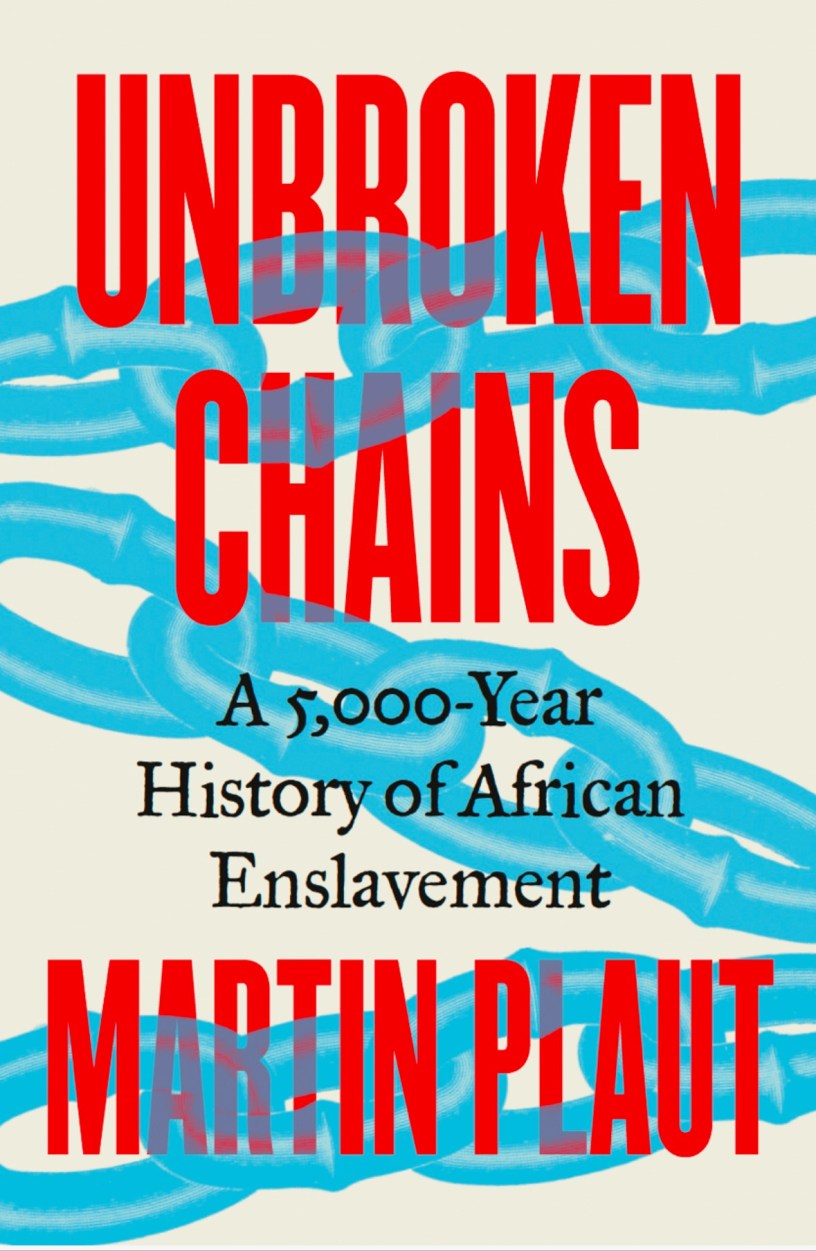
The story of slavery in Africa is a tragic one. It also dates from at least 2900 BCE, writes Martin Plaut in Unbroken Chains: A 5,000-Year History of African Enslavement, published in 2025. In the relatively short period from 650 CE to 1900, he adds, more than 41 million people are known to have been enslaved in Africa.
This total includes the 12.58 million Africans shipped across the Indian Ocean, as well as the 12.52 million sent across the Atlantic Ocean. In addition, 9.4 million Africans were captured and sent to slave markets via various Trans-Saharan routes, while some 4 million were enslaved in the Sokoto Caliphate (in what is now northern Nigeria) and 1.3 million were enslaved by the Ottoman Empire. Also relevant are the roughly 1 million whites who were captured in England and elsewhere in Europe by the Barbary Corsairs and brought back as slaves to North Africa. In addition, roughly 147,000 Africans were enslaved in Iran and some 300,000 in Ethiopia.
This list is far from complete, notes Plaut. Other evidence suggests that the total number of people enslaved in Africa over the millennia may be significantly greater than 41 million. Overall, “a figure nearer 50 million may not be an exaggeration.”
Narrow focus
Against this background, the draft curriculum’s narrow focus on the Trans-Atlantic slave trade is not only flawed but also profoundly misleading in what it leaves out.
First, it obscures the extent to which slavery was the norm across the world for much of recorded history.
Writes Nigel Biggar in Reparations: Slavery and the Tyranny of Imaginary Guilt, also published in 2025: “All the ancient Mesopotamian civilisations practised slavery in one form or another, starting with Egypt in the third millennium BC. To the west, around the shores of the Mediterranean Sea, the ancient Greeks, Carthaginians and Romans followed. To the east, slavery could be found among the Chinese from at least the seventh century AD, and subsequently among the Japanese and Koreans. In the Americas, the peoples of the Pacific North-West practised it from before the sixth century AD, the Incas and the Aztecs extracted forced labour from subject peoples from the fifteenth century, and the Comanches ‘built the largest slave economy’ in what is now the south-west of the US from the eighteenth century.” In addition, “from the time of Muhammad, slavery was practised throughout the Islamic world.”
Second, focusing on the Trans-Atlantic slave trade alone leaves out most of the history of slavery across the African continent. Yet the historical record clearly shows that “Africans were busy enslaving other Africans and selling them to the Romans and Arabs centuries before British merchant ships appeared off the coast of West Africa in the mid-1600s,” as Biggar writes.
Third, focusing solely on the Trans-Atlantic slave trade allows the draft curriculum to portray slavery as a white-on-black phenomenon driven largely by white racism and a sense of “white supremacy.” However, there was no white racism in issue when Africans enslaved other Africans, when Egyptians enslaved Africans from at least as early as 2900 BCE, when Arabs enslaved Africans over many centuries, or when the Barbary Corsairs enslaved English people and other whites.
Fourth, the draft curriculum uses its narrow focus on the Trans-Atlantic slave trade to buttress other false claims. These include an essentially Marxist assertion that slavery played a key part “in the accumulation of capital by both Holland and Britain,” thereby helping these countries to finance their industrialisation and embark on lengthy periods of global domination.
Profits from the slave trade
As regards Britain, the claim made in the draft curriculum echoes a thesis set out by Eric Williams (a Trinidadian historian and later prime minister) in his 1944 book, Capitalism and Slavery. Here, Williams argued that profits from the slave trade provided a major source of capital for the financing of Britain’s industrial revolution.
However, as Biggar writes, Williams’s thesis has been refuted by various writers, including Roger Anstey, David Richardson, David Eltis and Stanley L Engerman. Eltis and Engerman, for example, have shown that “the slave trade engaged only 1.5 per cent of British vessels and 3 per cent of tonnage.” They have also demonstrated that “sugar was just one of hundreds of industries in a complex economy” and that “its role as an ‘engine’ of economic growth compares poorly with textiles, coal, iron ore” and other items.
It is false and damaging for the draft curriculum to focus on a small part of the history of slavery in Africa, to use this as proof of a persistent white racism, and then to assert that British (and Western) wealth and industrial development were based largely on the exploitation of African slaves. To add to the distortion, Britain’s enormous role in ending slavery in Africa and elsewhere in the world is excluded too (as will be outlined in next week’s column).
This slanted interpretation of the past seems clearly intended to fuel an anti-Western and anti-capitalist agenda. It is likely to foster militancy, promote racial polarisation, undermine support for free markets – and erode the common values and political pragmatism that most South Africans share.
In March 2026 a similarly distorted account of African enslavement was used by the United Nations General Assembly to underpin a resolution declaring “the trafficking of enslaved Africans and racialized chattel enslavement of Africans as the gravest crime against humanity” (emphasis supplied by the author). On this basis, reparations are being sought from the Western nations depicted as primarily to blame for slavery in Africa.
Flawed account
In his letter to the nation this week, President Cyril Ramaphosa endorsed this flawed account of African slavery. He too wants reparations from “the former colonial powers” he singles out for culpability. Moreover, though questions remain as to the “form reparations [should] ultimately take,” South Africa supports “concrete measures to redress the lingering effects of the slave trade and colonialism…,” he says.
The president’s ahistorical assessment of 5,000 years of slavery in Africa underscores the dangers in the draft curriculum and the skewed understanding it will impart to millions of future pupils (especially if history is in time made a compulsory matric subject).
The current draft must be substantially rewritten to ensure – in the words of current basic education minister, the Democratic Alliance’s Siviwe Gwarube – that it does “not exclude key events or perspectives on political grounds, nor…impose any particular ideology on learners.”
[Image: Kushite prisoners of war watched over by Egyptians, waiting to be deported into Egypt. Relief from the tomb of Horemheb in Saqqara. By Mike Knell – Flickr: Mono version, CC BY-SA 2.0, https://commons.wikimedia.org/w/index.php?curid=30521549%5D

