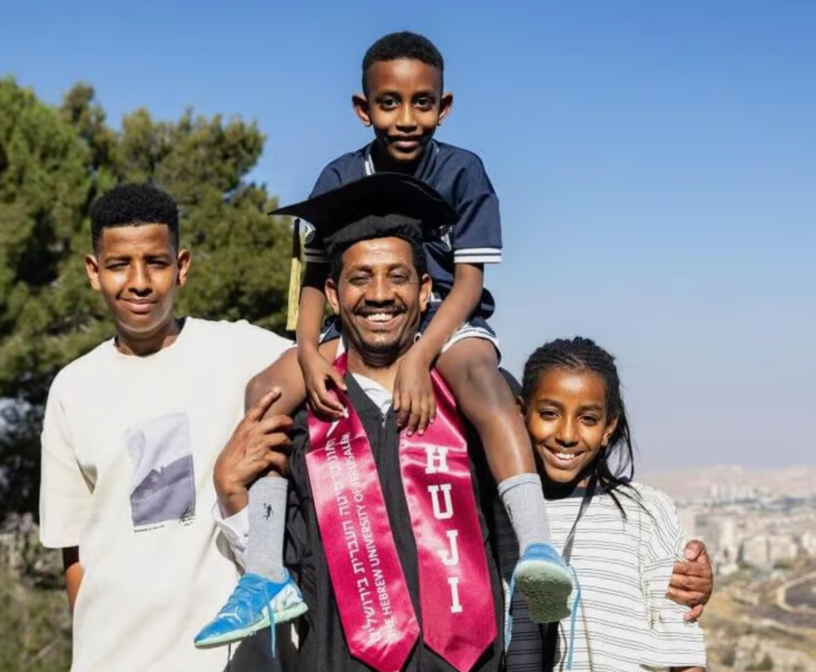
He Escaped from Eritrea, was sent to Ketziot Detention Camp, yet he completed a doctorate in Jerusalem: “Thanks to the people of Israel”
In 2007, Habtom Gebrzegiabhar arrived in Israel after fleeing Eritrea and was sent to detention in Ketziot. This week, his excited family watched him receive a doctorate in sociology at the Hebrew University. “Thank you to the people of Israel for the opportunity to build a better future”
By Tamar Trabelsi Haddad | Updated:07:5382 commentsTags
Among the recipients of a PhD in sociology who stood on stage at the festive ceremony at the Hebrew University was a particularly excited student, who on the way to receiving his degree went through a long journey that sounded like a script for a Hollywood movie.
Habtom Gebrzegiabhar (44), married and father of four, fled the dictatorship in Eritrea and survived imprisonment and deportation in Kenya and Ethiopia. In 2007, he crossed the desert from Sudan to Israel on foot, on an arduous journey, and upon his arrival in Israel was sent to a two-month detention center in the Ketziot facility.
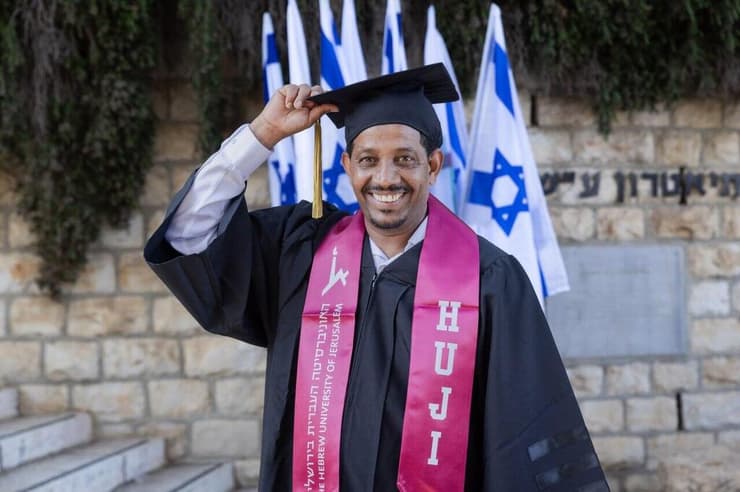
Despite arriving in Israel with a bachelor’s degree in statistics from the University of Asmara, Gebrzagiabhar emerged from detention into a complex reality in which he made a living for years from hard work in agriculture, with an iron determination to continue fighting for his future despite the difficulties of language and living in Israel.
“I am excited to receive a doctorate from the Hebrew University, and I want to express my deep gratitude to the people of Israel for the protection I was granted, and for the opportunity to build a better future for myself and my family,” he said, and also wished to thank “Professor Yael Barda, who accompanied and guided me on my academic journey, the Hebrew University, and the Minerva Center for Human Rights.”
Prof. Barda, a lawyer and faculty member in the Department of Sociology and Anthropology at the Hebrew University, met Al-Batoum in 2016, when he began his doctoral studies in sociology, as part of a joint program that dealt with human rights in times of crisis. Al-Batoum arrived at the program as a refugee from Eritrea and an asylum seeker in Israel.
“Throughout his years of research, Abtom demonstrated extraordinary perseverance,” she said. “Even when faced with bureaucratic difficulties, uncertainty about his future, and responsibilities to his family, he continued to work, research, write, and participate in academic life with full seriousness and commitment. This is not just a personal or academic success. It is also a story about the power of knowledge, curiosity, and perseverance. For me, Abtom is an example of an excellent researcher, a valued colleague, and a person who greatly enriched the academic community around him.”
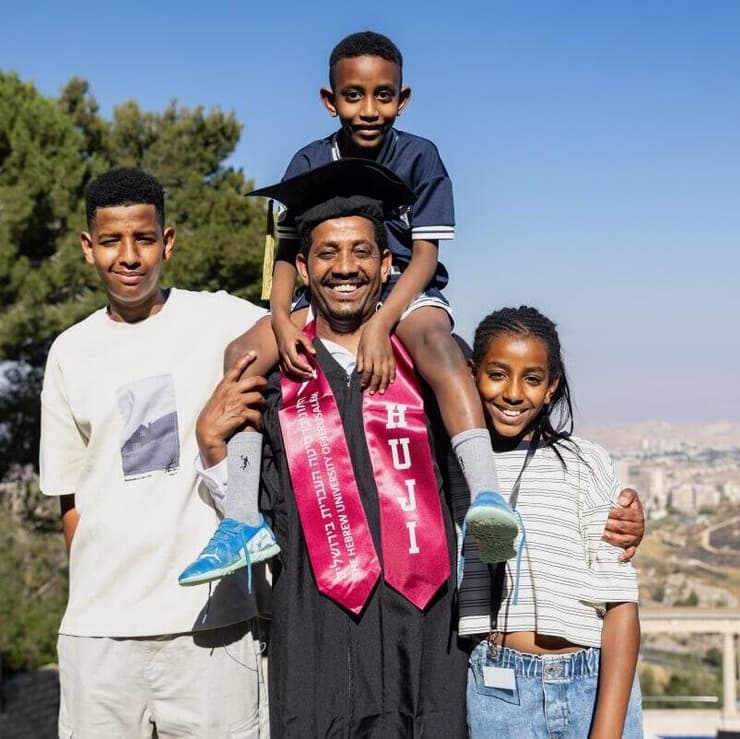
Habtom’s doctoral thesis dealt with the question of how diaspora communities from countries with authoritarian regimes are affected by the control mechanisms of the country they fled from. In his research, he showed how fear, surveillance, and social and political pressures continue to operate among immigrant and refugee communities.


wonderful, motivating story! Thanks
juerg Schneider, Switzerland