The official statement first, then a possible explanation.
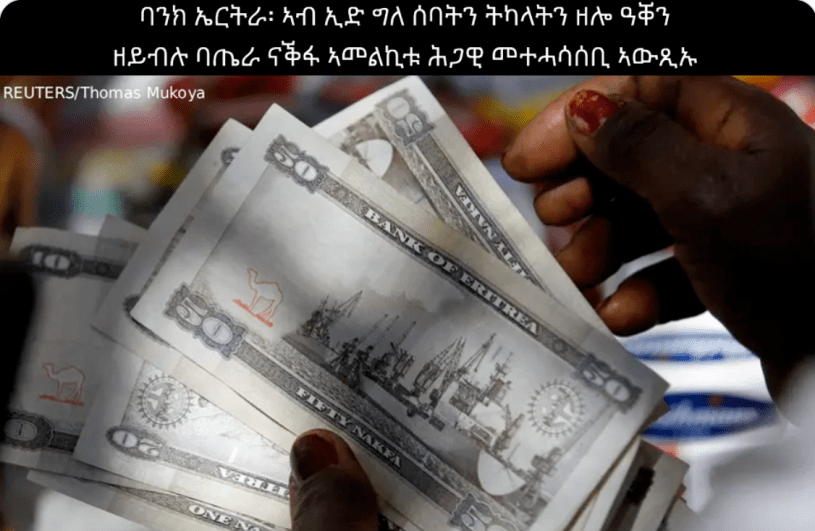
The Bank of #Eritrea hereby informs the public that holding or retaining large amounts of Nakfa outside the banking system for an indefinite period is not permitted.
Accordingly, all cash holdings must be deposited into bank accounts no later than 31 July 2026.
Individuals without bank accounts are required to open accounts and deposit their funds before the deadline.
Failure to comply with this directive may result in legal measures.
This kind of notice is not new in Eritrea. Similar measures were introduced ahead of the currency reform on May 24, 2015, when new banknotes were introduced to address large volumes of Nakfa held outside the formal banking system, including in neighboring Sudan and Tigray.
That period also saw tighter cash controls and limits on withdrawals, alongside a push toward bank-based transactions, which contributed to effectively neutralized black market activity.
This latest notice appears to reflect renewed concerns about currency circulating outside the banking system and the possible re-emergence of informal markets.
Given increased cross-border movement with Sudan and the alleged use of Nakfa in parts of Tigray, following Abiy Ahmed’s bank access restriction in Tigray, a significant amount of cash may once again been collected outside formal channels.
A deadline-based deposit requirement can serve at tightening liquidity control, discouraging hoarding, and potentially preparing the ground for broader monetary changes.
Whether or not a new currency is involved this time as well, the move clearly points toward reasserting control over cash circulation and limiting the space for informal markets.
So why is this happening? Why is there such a shortage of currency?
As the Bank of Eritrea rightly observes it is the result of increased “cross-border movement with Sudan and the alleged use of the Nakfa in parts of Tigray”.
The movements across the border into Sudan is, at least in part, because of increased numbers of Eritrean troops in Sudan, who take the currency with them. They spend it on goods that they can rarely obtain in Eritrea itself and send them home – for their own use or to sell. It is, of course, possible, that some officers are sending good back to Eritrea in large quantities, in order to make money for themselves.
The use of the Nakfa in Tigray reflects the newly formed ties between the TPLF who control the region and President Isaias. This has meant goods and currency can once again flow across the Eritrea-Tigray border.
The [Ethiopian] federal authorities have previously accused the TPLF of growing closer to Eritrea, although the group has denied this.
“It is imperative that everyone with any leverage or influence over the TPLF and its patrons in Asmara exert maximum pressure on them to avoid a relapse into conflict,” the piece said.
It went on to warn that “a resumption of hostilities would be dangerous and would have serious regional consequences”.
The authors also claimed meetings are taking place between Eritreans and members of the TPLF in the Eritrean capital, the Tigrayan capital Mekelle, and Sudan.

