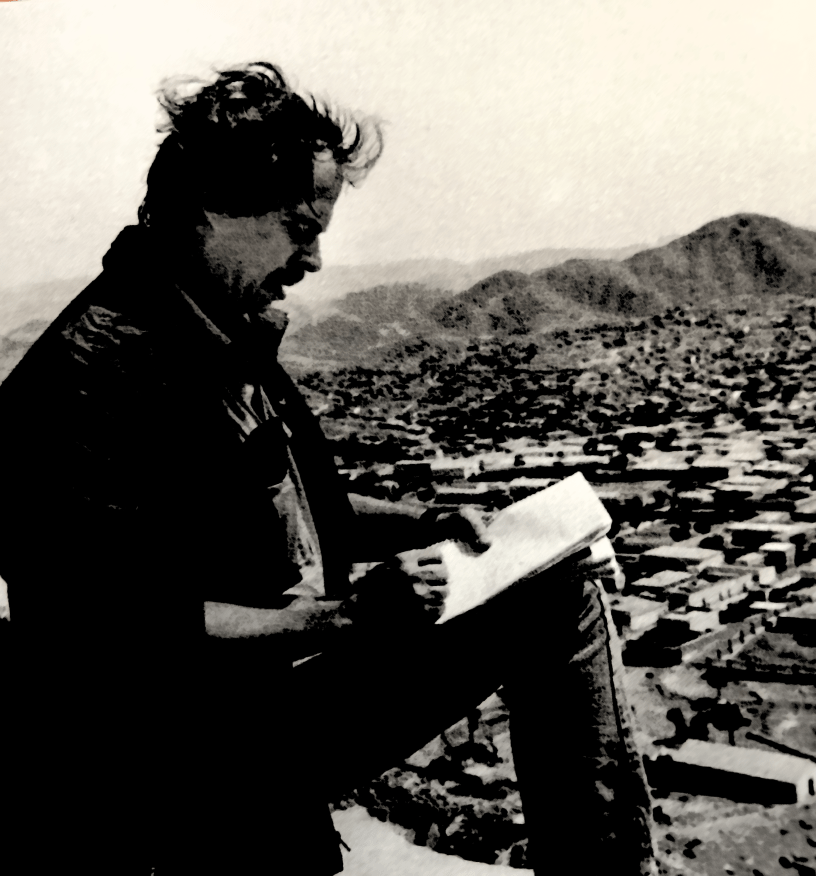
By Dawit Mesfin
London 30 Aug 2026
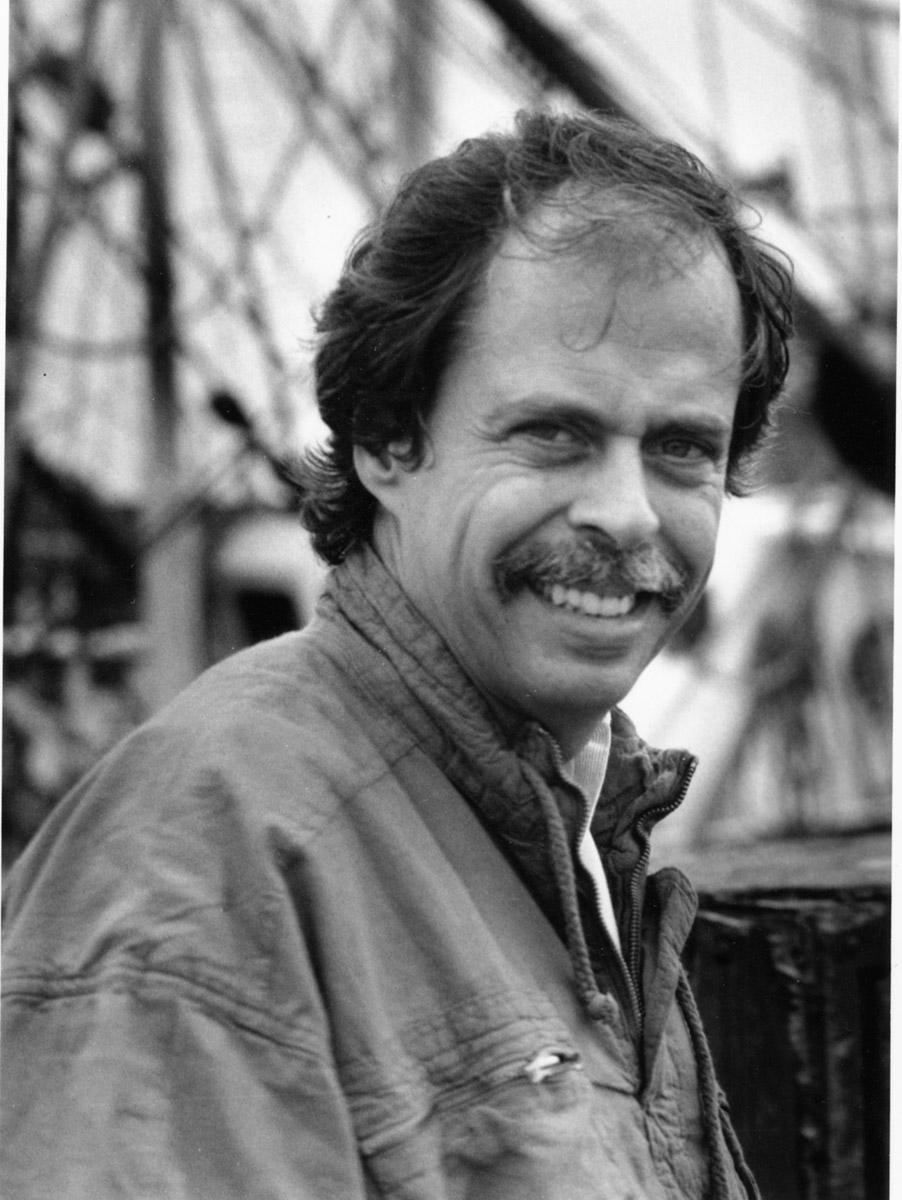
To me, Dan Connell stands as arguably one of the most significant and influential Western voices in support of Eritrea’s struggle for independence – and perhaps the most prominent ‘Ferenji’ among the so-called “Friends of Eritrea.”
This article is based on the story published by BBC Tigrinya on 23 August 2026.
Dan Connell is far more than a tireless journalist, author, and researcher. He has also been a steadfast human rights activist, a prolific political analyst, and one of the most important chroniclers of modern Eritrea. At a time when the world knew little of Eritrea, and even less of the nature and depth of its struggle, Connell helped carry the Eritrean story across borders and into the consciousness of an international audience.
Since 1976, he has devoted decades of his life to bearing witness to that story – a remarkable offering of time, energy, courage, and conviction. He did not simply write about Eritrea; he listened to its people, walked alongside its history, and helped give its struggle a voice beyond the mountains, deserts, and battlefields where that story was being written.
For Eritreans like me, who did not personally take part in the struggle, such dedication ought to make us pause. Perhaps it should even give us a compunctious jolt. A foreigner spent decades helping to tell a story that was, before anything else, our own.
There is something deeply humbling in that. While generations of Eritreans carried the burden of the struggle with their lives, others chose to take the soul of the struggle to global audiences. Indeed, Dan Connell was one of those people.
And perhaps that is part of his enduring significance: he did not merely observe Eritrea’s history. He, once again, helped ensure that the world could hear it.
The Early and Later Connell
To avoid confusion, it is important to distinguish between the early Connell and the later Connell, as his assessment of the EPLF evolved significantly over time.
In his early work, Connell described the EPLF in largely positive terms, emphasising its grassroots participation, organisational discipline, social transformation, self-reliance, and other characteristics that he regarded as remarkable. In his later work, however, he came to argue that some of these same mechanisms – particularly discipline and centralised control – also contributed to the suppression of internal dissent and, ultimately, to the authoritarian state that emerged in Eritrea. He makes this connection explicitly in his later writings.
The chronology is important here. The EPLF had already been established in September 1973, before Connell’s first visit to Eritrea. The members of the so-called MenqaE faction had already been rounded up, its leaders executed by Isaias Afwerki and his close associates, and those who supported their demands – principally, for a greater role in administering the organisation – imprisoned.
Connell first entered Eritrea in 1976, at a particularly turbulent moment in the armed struggle. The EPLF’s field leadership had rejected a merger with the ELF, while the organisation was undergoing profound internal ruptures. The EPLF had repudiated Osman Saleh Sabbe, a towering figure in Eritrea’s armed struggle, and arrested the leaders of the Yameen group, a dissident faction whose members were later executed.
This chronology, documented by Connell himself in his Historical Dictionary of Eritrea, provides an important context for reflecting on the evolution of his own interpretation. It also invites a broader question: whether some of the organisational features that initially appeared to underpin the EPLF’s strength and effectiveness contained, from the outset, tensions that would become more apparent in its later political trajectory.
Introducing the ELF–EPLF Debacle Is a Must at This Stage
For those less familiar with Eritrea’s armed struggle, the Eritrean Liberation Front (ELF) and the Eritrean People’s Liberation Front (EPLF) were the two principal organisations that fought for Eritrea’s independence from Ethiopia. I do not intend to revisit here the complex and often deeply antagonistic history between them. However, I believe that history has to be acknowledged if we are to properly understand Eritrea’s subsequent political trajectory.
The EPLF eventually emerged as the dominant force, a process decisively shaped by the persecution and military defeat of the ELF in the early 1980s. Particularly consequential was the EPLF’s collaboration with the TPLF in driving the remaining ELF forces across the border into Sudan. This effectively ended the ELF as a significant military force and marked a critical turning point in the Eritrean struggle.
I find this history especially relevant when considering Dan Connell’s own engagement with Eritrea. Much of his involvement with the liberation struggle was conducted through his association with the EPLF, while his recognition of and association with the ELF came considerably later. It is tempting to interpret this evolution as reflecting a growing recognition that the EPLF of the post-independence period differed in important respects from the organisation he had originally encountered and supported.
That, however, is an interpretation rather than a conclusion I would wish to impose. I would prefer to leave it to Connell himself to explain how his understanding of the two fronts, and of Eritrea’s political evolution, changed over time. For me, raising the ELF–EPLF history at this stage is less about revisiting old divisions than about recognising how deeply that history continues to shape our understanding of Eritrea.
The Dawning of the Derg Era in Ethiopia and Eritrea
Times were changing with breathtaking speed in Ethiopia. On 12 September 1974, Emperor Haile Selassie I was overthrown in a military coup, bringing to an abrupt end an era that had seemed, until then, almost immovable. In his place, a new military authority emerged – the Provisional Military Administrative Council, known as the Derg. General Aman Andom, an Eritrean, was appointed to head it.
I still remember General Aman’s arrival in Asmara. At a time when hopes, fears, and uncertainties were running high, his visit seemed to carry the possibility of a new beginning. He had come with the intention of finding a way to resolve the Eritrean conflict, and many watched his efforts with cautious interest. For a brief moment, there was a sense that perhaps dialogue might succeed where force had failed.
But those hopes were not to be realised. General Aman’s efforts produced no political settlement, and the conflict continued. Looking back, his visit stands in my memory as one of those fleeting moments when history seemed to pause, offering a possibility of a different future – only for events to take another, darker course.
In his Historical Dictionary of Eritrea, Connell notes that, by December 1976 of the very year in which he first entered Eritrea, approximately 220,000 Eritrean refugees were already in Sudan. These were the tumultuous years following the Derg’s seizure of power in Ethiopia – the years when Eritreans were leaving their homeland in great numbers, even as others were making the journey in the other direction, crossing into the mountains to join the fronts.
An Era Marked by Profound Uncertainty and Confusion
Amid the bitter rivalry within the Derg, Colonel Mengistu Haile Mariam gradually emerged as Ethiopia’s strongman. On 23 November 1974, in a chilling display of the new order, he ordered the execution of sixty officials of the imperial government. That same night, he turned against General Aman Andom. General Aman resisted arrest and was killed in a shootout at his residence in Addis Ababa.
I was there – in Addis Ababa – young, restless, and caught up in the wild exhilaration of what felt like freedom. Yet even as we breathed that intoxicating air of change, another reality was unfolding far away. Back in Asmara, Ethiopian afagn death squads were already operating. The contrast was difficult to comprehend: in Addis Ababa, the streets seemed alive with the promise of a new beginning; in Asmara, fear was beginning to settle over the city.
I remember that period as a time of extraordinary contradictions. I was young enough to be swept along by the excitement, yet old enough to sense that something ominous was taking shape. The future seemed suddenly open, but the freedom we imagined was shadowed by violence we could neither see nor fully grasp.
Yes, I was in Addis Ababa when the heroic ELF commandos carried out their daring operation in early 1975, freeing some 1,000 captives from Adi Qwala and Sembel. The news spread through the city with a mixture of astonishment and exhilaration. Around the same time, word reached us that our freedom fighters had penetrated Asmara. For those of us who longed for Eritrea’s freedom, these reports carried an electric sense of possibility. It felt as though the struggle had suddenly moved from the distant hills and battlefields into the very heart of the city.
But then, it seemed, the gates of hell opened.
What followed was a wave of violence that left thousands of Asmarinos dead. Thousands more Eritreans fled the country, many eventually making their way to the liberation fronts. Even the Eritrean police began to fracture, with large numbers of officers abandoning their posts and defecting.
Looking back now, I realise how little we understood of the forces that had been unleashed. We were living through history, but we did not yet have the distance to comprehend it. For me, Addis Ababa remains inseparable from that strange mixture of exhilaration and dread – the feeling of being young and free while, elsewhere, people we knew were being hunted and killed. The excitement of those days would not last. The darkness gathering over Eritrea would.
For me, however, Addis Ababa was becoming something altogether different.
There, I lived with the almost reckless abandon of youth. Being a teenager did not help. I was young, restless, curious, and intoxicated by the intoxicating sensation of freedom. I moved through those days with the careless confidence of someone who believes, without ever having to say so, that tomorrow will surely come. I did not yet understand how fragile that assumption was.
I knew my poor sister, with whom I was staying, had many sleepless nights due to my recklessness.
I remember that period almost as a dream suspended between two realities. In Addis Ababa, I was discovering the pleasures and possibilities of being young; in Asmara, people my age were discovering the price of hope. I could not see the whole picture then. Youth has its own kind of blindness: not ignorance exactly, but an inability to imagine that the world one inhabits can change beyond recognition.
My sister, wiser and far more attuned to the gathering storm, saw what I could not. She understood that Addis Ababa was becoming increasingly dangerous and decided, wisely, that I should leave the city altogether.
She, in consultation with other family members, had every reason to be concerned.
The Red Terror was fast approaching.
To shorten the drama, let me simply say that I was among the fortunate few who were given an opportunity to emigrate. My sister set about obtaining a passport and navigating the necessary paperwork to get me out of Ethiopia – and to do so quickly. Before long, I was dispatched to Rome, Italy.
Dan Connell in Asmara
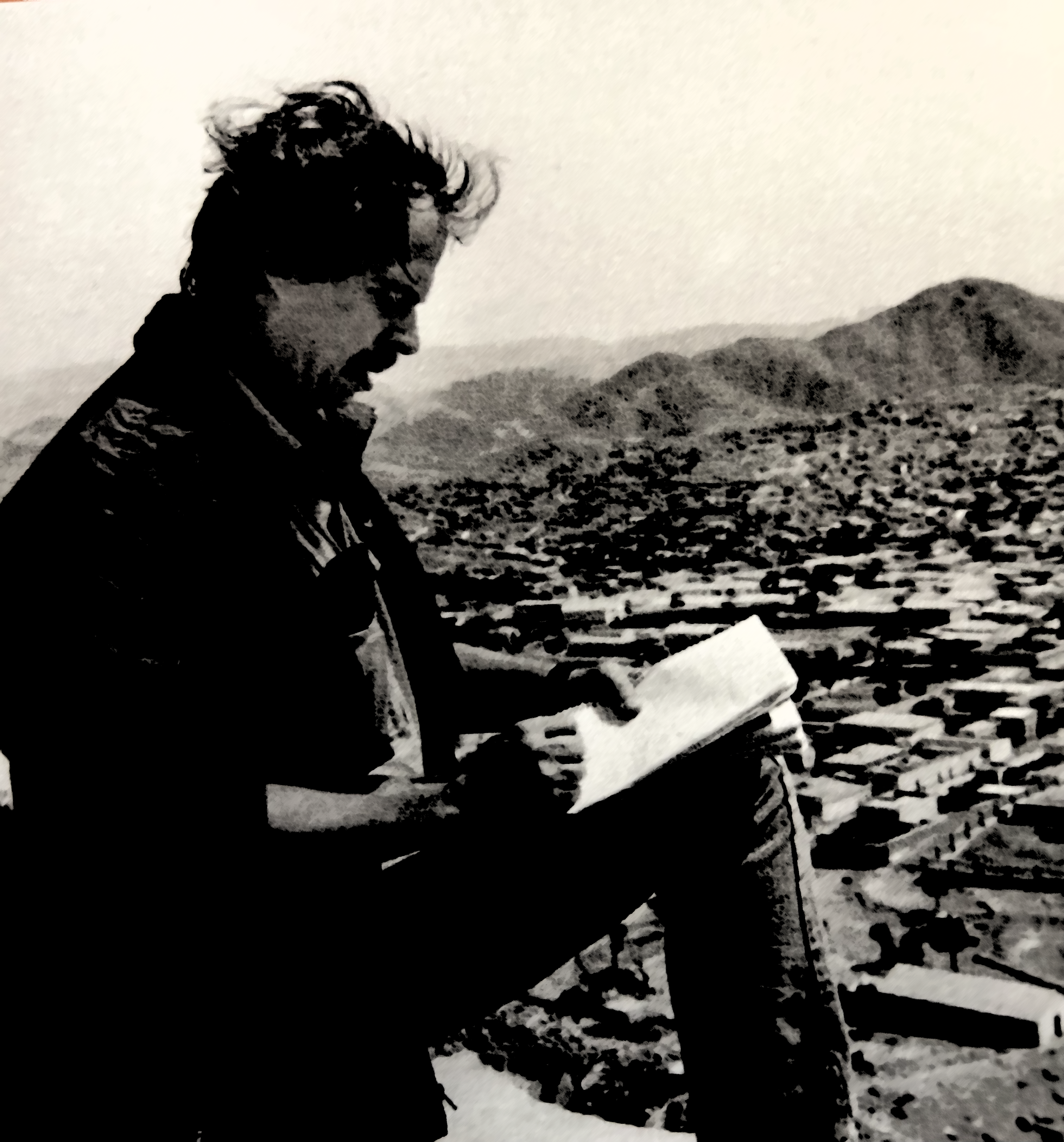
Dan Connell’s journey to Asmara began in Adwa, a city in northern Ethiopia. There, he joined a large convoy of military vehicles, accompanied by supply trucks, heading toward Asmara.
The convoy was led by Col. B’shu Gebre-Tekla, an officer who was Eritrean by birth but Ethiopian by profession.
When Dan Connell entered Asmara in 1976, the city was in a muddle. A curfew was in force, beginning at 7:30 p.m.
In Asmara lived a woman named Nebiat, who ran Bar Kebabi in the centre of the city. Col. B’shu was a regular at Nebiat’s bar. Soon after arriving in Asmara with his convoy, the colonel contacted Nebiat and arranged a get-together.
What Col. B’shu did not know was that Nebiat had been approached by EPLF urban guerrillas and asked to set him up. On that fateful Saturday evening, he and his bodyguard arrived at Nebiat’s bar for a drink. There, in front of Bar Kebabi, the colonel and his guard were gunned down.
Nebiat and her young son fled the scene. Almost immediately, chaos erupted across the city. Many people were killed that evening and the following day.
That was how Dan Connell was introduced to Asmara.
To be continued …

