Jonathan Fenton-Harvey, World Politics Review
September 17, 2026
Earlier this month, U.S. forces began stepping up their operations in Somalia’s semiautonomous Puntland state. According to local media reports, U.S. surveillance drones flew over the Al-Miskad mountains on Sept. 3, an area known as a stronghold for militants affiliated with the Islamic State group. U.S. forces subsequently carried out airstrikes against suspected IS fighters identified by the drones.
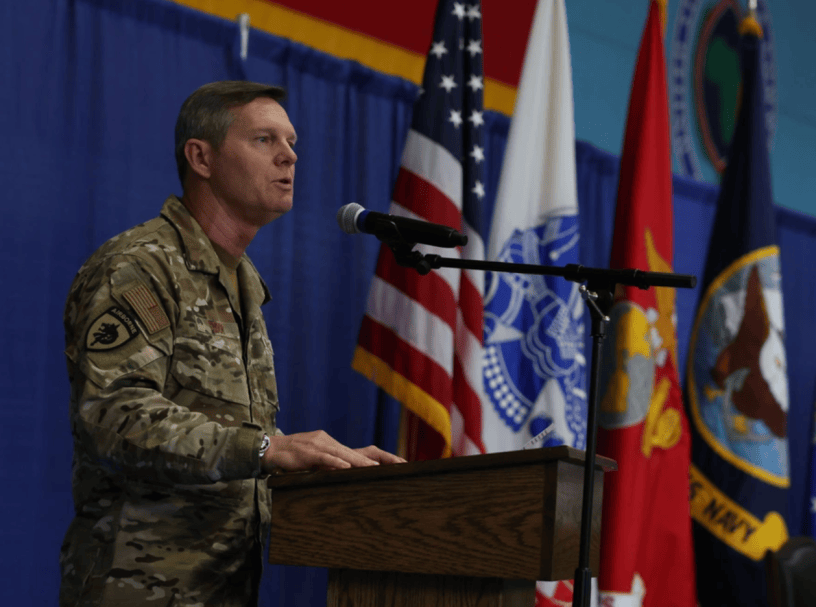
The operations are part of an ongoing effort by Washington to carve out a more durable presence along Somalia’s northern coastline. A month earlier, a U.S. military delegation led by Maj. Gen. Claude Tudor, the head of Special Forces Command Africa, met with Puntland’s president, Said Abdullahi Deni. Following the meeting, Puntland announced that the two sides had agreed to expand a U.S. military base in the port city of Bosaso, with the aim of supporting counterterrorism and maritime security operations.
However, Somali journalists have widely reported that the statement was a mischaracterization. The U.S. previously had no military presence in Bosaso, so the agreement effectively calls for the establishment of a new base in the city. The Pentagon has not publicly commented on the plans.
The timing of the U.S. push into Puntland is notable. Iran’s continued efforts to choke off shipping through the Strait of Hormuz have forced Saudi Arabia to redirect its oil exports through the Red Sea and the Bab al-Mandeb, a strategic maritime chokepoint that connects to the Gulf of Aden. That waterway borders southern Yemen and Somalia’s northern coast.
To be sure, Washington’s interest in Puntland predates the Iran war. Under President Donald Trump, U.S. forces have pummelled Somalia with airstrikes at an unprecedented rate, mostly targeting militants from IS-Somalia and al-Shabab. But conflict with Iran has certainly strengthened the rationale for surveillance and strike capacity near an increasingly important but vulnerable shipping corridor.
At the same time, even as Puntland expects a larger U.S. military presence, Washington is scaling back support for Somalia’s broader multilateral security framework. The Trump administration has indicated that after Dec. 31, it will stop supporting the U.N. logistical system sustaining the nearly 12,000-strong African Union Support and Stabilization Mission in Somalia (AUSSOM).
Although AUSSOM officials have warned that the mission could collapse without replacement funding, the planned withdrawal signals the Trump administration’s rejection of a comprehensive national security framework in favor of selective engagement in strategically useful territory.
Bosaso fits this emerging dual-track approach. It lies close to IS-Somalia’s mountain strongholds, where Puntland forces have fought with U.S. air support. A base in Bosaso could also support surveillance of al-Shabab-controlled territory in central and southern Somalia, as well as overland smuggling routes and maritime traffic off the Somali coast, where there has been a worrying uptick in piracy.
The Trump administration has continued its formal cooperation with Somali President Hassan Sheikh Mohamud’s government and publicly emphasizes Somalia’s sovereignty. But its simultaneous engagement with regions like Puntland—whose relationship with Mogadishu has broken down into open political confrontation and even armed clashes in recent years—makes Washington’s longstanding counterterrorism and maritime engagement more transactional and less tied to an AU-backed national stabilization framework.
The Iran war has reinforced that logic. It has exposed the vulnerability of major U.S. bases in the Persian Gulf to Iranian missiles and drones, increasing the appeal of a more dispersed and flexible military footprint. Tehran, for its part, also views the Bab al-Mandeb as potential leverage against Washington. Recent military advances by the Iran-backed Houthi movement in Yemen have put it in pole position to choke off the strait. In July, Iran reportedly instructed the Houthis to prepare to close the strait in the event of a U.S. attack against Iranian power infrastructure.
The danger extends beyond attacks on shipping. Worryingly, the Houthis have built closer ties with al-Shabab in recent years, despite sectarian differences that make the two militant groups unlikely bedfellows. Both sides stand to benefit from a pragmatic partnership: Al-Shabab gains more advanced weaponry and training, while the Houthis get access to a wider range of smuggling and piracy routes. Northern Somalia’s rugged coastline has long served as a gateway for illicit weapons flows between East Africa and Yemen.
The U.S. has an incentive to deal with authorities that can provide de facto access on the ground, rather than supporting a unified and sovereign Somali state.
It is important to avoid overstating the threat of Houthi collaboration with al-Shabab. The nature of their relationship appears to be transactional and opportunistic, with deep ideological differences that will hamper closer cooperation. Moreover, the Houthis are not simply an Iranian proxy group; they retain considerable operational autonomy. It is not a given that they will try to close the strait in response to a request from Tehran.
Nonetheless, the Pentagon treats these networks as tightly interconnected. In May, Gen. Dagvin Anderson, the head of U.S. Africa Command, told Congress that Iranian weapons and unmanned systems were being smuggled through intermediaries into Africa. He also alleged that al-Shabab had received Iranian weapons, training and weaponized drones, while Houthi smuggling routes had expanded.
This assessment provides a rationale for widened U.S. operations. An expanded presence in Bosaso is attractive because it would potentially enable U.S. intelligence personnel to identify targets for airstrikes while limiting the exposure of U.S. troops and leaving Puntland’s forces to bear the brunt of any consequences.
Alongside the proposed withdrawal of support for AUSSOM’s logistical system, this suggests an approach that prioritizes operational freedom over a sustained commitment to the national security institutions on which Somalia’s stability depends.
The Somali central government recognizes the attractiveness of its strategic location and has sought to turn that into influence with Washington. In March 2025, Mogadishu offered the United States exclusive control of strategic facilities, including Bosaso and the port city of Berbera. Yet Bosaso is controlled by Puntland, while Berbera lies within the territory of the breakaway republic of Somaliland, which does not recognize the Somali government.
For Washington, this creates an incentive to deal with the authorities that can provide de facto access on the ground, rather than supporting a unified and sovereign Somali state. Such arrangements risk further fracturing the country.
Somaliland sharply illustrates this dynamic. After Israel’s decision last December to recognize Somaliland’s sovereignty, there have been mounting calls for Washington to follow suit, though Trump has thus far declined to do so. Meanwhile, the United Arab Emirates, which maintains close unofficial ties with Somaliland, is reportedly expanding a military base at Berbera that could be available for use by U.S. and Israeli forces.
Washington has not confirmed any such arrangement. But broader U.S.-UAE security cooperation in the region, already visible in the quiet American use of Emirati-developed facilities elsewhere on the Somali coast, could open the door to deeper U.S. involvement at Berbera. It would also strengthen the UAE, a country that Mogadishu has long considered a destabilizing influence.
Ultimately, this approach carries costs for Somalia. Deals struck directly between external powers and regional authorities allow those authorities to secure military support and international attention while bypassing the federal government. Ports and airfields are consequently becoming bargaining chips in Somalia’s internal contest over sovereignty and political authority.
Washington’s planned withdrawal of support for AUSSOM would be another blow to Somalia’s cohesion, weakening the country’s multilateral support structure as foreign governments continue backing separate regional forces. The foreseeable result is an even weaker and more fragmented national security system. The United States may find Somalia’s coastline easiest to use precisely where Mogadishu’s authority is weakest. This strategy intended to secure the Gulf of Aden risks making the political fragmentation that fuels its insecurity harder to reverse.
Jonathan Fenton-Harvey is a British analyst and journalist whose work has focused largely on Gulf Cooperation Council affairs, as well as geopolitical and economic issues pertaining to the wider Middle East and Indo-Pacific. He has worked with or written for a wide range of think tanks and publications based in the U.S., the U.K. and the Middle East.

