How Sweden’s Inaction Strengthens Repression in Eritrea
By Gual Harestay (ጓል ሓረስታይ)
“Sweden’s silence is not neutrality, it is complicity. And its cost is measured in human lives.”
For more than three decades, the People’s Front for Democracy and Justice (PFDJ) led by President Isaias Afwerki has ruled Eritrea through fear, imprisonment, and absolute control. There are no national elections, no independent press, and no freedom of religion or movement. Thousands of Eritreans flee each year to escape indefinite military service, torture, and political persecution.
Many of them have found safety in Sweden, a nation known for its democracy, compassion, and human-rights commitment. Yet tragically, the dictatorship they fled has followed them here. Under the guise of “cultural festivals” and “community associations,” Eritrea’s regime has turned Sweden’s freedoms into instruments of controlled propaganda.
Every krona raised, every public space granted, strengthens the machinery of repression, from Stockholm to Asmara.
Eritrea remains one of the world’s most repressive states. The constitution drafted in 1997 has never been implemented; indefinite national service traps generations in forced labor; and dissenters disappear without trial. Reports by the United Nations Human Rights Council, Amnesty International, and Human Rights Watch document systematic torture and arbitrary detention.
Sweden has long been a humanitarian actor in Africa and a host for thousands of Eritrean refugees. Yet since the imprisonment of Swedish-Eritrean journalist Dawit Isaak in 2001, diplomatic relations have been effectively frozen. Despite two decades of human-rights violations, Sweden has pursued a cautious, almost silent, diplomatic stance one that has done more harm than good.
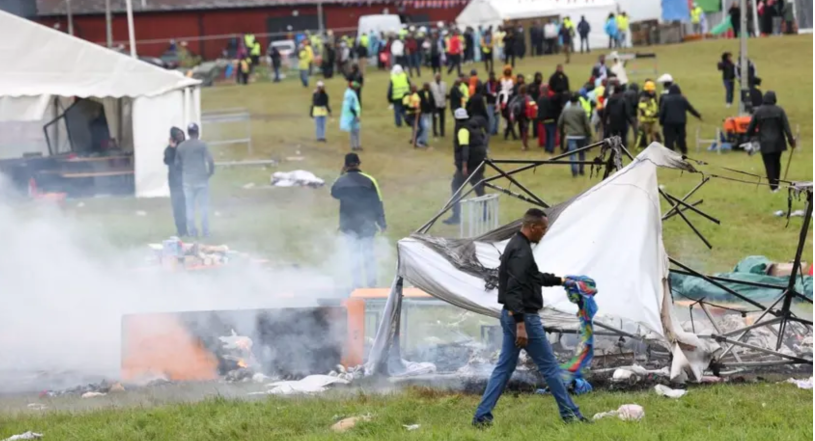
By failing to take a clear moral or diplomatic stand, Sweden has indirectly legitimized a brutal regime. The Eritrean government interprets Stockholm’s silence as tacit approval and uses it for propaganda. Investigations by Stockholm City and the Swedish Defense Research Agency (FOI) reveal that regime-linked associations in Sweden collect funds and disseminate propaganda under the pretense of “cultural” events. Each summer, the so-called Eritrean Cultural Festival in Järva Folkets Park functions not as a celebration of heritage but as a political rally for dictatorship.
“This is not cultural expression. It is political manipulation under the mask of culture.”
When Swedish municipalities grant permits or public funding to these associations, they inadvertently strengthen the very system responsible for mass imprisonment and forced labor. Silence in this context becomes complicity and the cost is paid by ordinary Eritreans trapped under tyranny.
Sweden’s muted response also undermines the Eritrean diaspora’s struggle for freedom. Eritrean-Swedish activists, human rights defenders, and independent journalists depend on visible political support to confront the regime’s transnational repression. Instead, many live under fear. Eritrean regime agents in Sweden monitor and intimidate critics; threats to families back home are common. Activists have reported surveillance at community events, harassment on social media, and ostracism within local diaspora networks.
Without strong backing from Swedish institutions, these citizens feel abandoned. The government’s passivity discourages civic engagement and leaves democracy vulnerable to foreign manipulation. Sweden’s diplomatic inaction also perpetuates the humanitarian disaster it continually confronts. Thousands of Eritreans seek asylum in Sweden every year, fleeing indefinite conscription and torture abuses that persist precisely because the international community, including Sweden, refuses to apply sustained pressure.
By tolerating regime-linked activity on Swedish soil while accepting refugees from the same regime, Sweden enables a vicious cycle: repression creates exodus, and exodus sustains repression through remittances and coerced fundraising. To address migration meaningfully, Sweden must challenge its root causes dictatorship, militarization, and fear.
Some argue that Sweden’s cautious approach preserves minimal communication channels and protects citizens like Dawit Isaak from retaliation. Others suggest that humanitarian aid and asylum policies already represent sufficient solidarity. However, after twenty-four years of “quiet diplomacy,” Dawit Isaak remains behind bars. Not a single democratic reform has taken place in Eritrea. Silence has failed as a strategy. Constructive engagement requires transparency, not complicity.
Sweden’s democracy built on freedom, equality, and rule of law must not become a playground for authoritarian regimes. Other European nations such as the Netherlands and the United Kingdom have already restricted regime-affiliated activities. Sweden must now do the same:
- Ban events and associations directly tied to Eritrea’s ruling party.
- Investigate the regime’s illegal diaspora taxation and propaganda networks.
- Deny entry to regime operatives posing as cultural representatives.
- Increase support for exiled Eritrean civil society and independent media.
- Publicly condemn Eritrea’s human-rights violations and back UN investigations.
Neutrality in the face of oppression is not balance it is moral surrender. Sweden cannot claim to champion human rights abroad while ignoring repression within its borders.
“Every time a dictatorship is tolerated in a democracy, democracy itself is weakened.”
The Eritrean people deserve solidarity, not silence. They deserve to know that the country that gave them refuge will now defend them. Sweden must stand up for its own values, for its own integrity, and for the universal principles of human dignity and justice.
By Gual Harestay (ጓል ሓረስታይ) is an Eritrean-Swedish human rights activist based in Sweden.
NB: Gual Harestay means “daughter of farmer”: farmers are the foundation of Eritrea’s economy and society, with over 75% of Eritreans involved in farming activities.

