Under Isaias Afwerki became a strange country. The President elevated “self reliance” to the central tenet of government policy – no matter what hardship the nation had to endure.
“Self-reliance” was always something of a fiction: Eritrea had support from Somalia, Syria, Sudan, Libya, Cuba, and China at various times during the war of liberation from Ethiopia (1961-1991). A whole range of aid agencies, and international supporters, sent medical experts and aid into Eritrea during this difficult period. Of course Eritreans were the key supporters of the EPLF, but they won with the help of others – including the TPLF from time to time.
After formal independence in 1993 there was goodwill and offers of help from everyone. Organisations from Oxfam to the African Development Bank came to Asmara, hoping to lend a hand. But gradually the smiles faded, as they discovered in President Isaias a cold and sceptical partner. The World Bank and IMF provided analysis and made suggestions, but found no-one who was really engaging with them. The dream of a “Singapore of the Horn of Africa” vanished.
First the aid agencies, who had worked so closely with the EPLF, were excluded. Then the international organisations, including the UN organisations, had to leave. Finally, only organisations like the UN Development Programme and UNICEF managed to maintain a presence, at the cost of keeping their heads down.
All international news agencies were excluded and few have been welcomed back. Even if they came, journalists were strictly controlled and if they got an interview with Isaias all they got was a lengthy lecture with no opportunity to really explore issues.
Relations with the United States slide
In 2005 the American government’s aid arm, USAID, was forced to close. The US Ambassador, Scott DeLisi, said that he respected Eritrea’s right as a sovereign state to make such decisions, but added: “I cannot answer for you the question as to why [they made the decision]. The government has told us that they are uncomfortable with the activities of USAID; that is all I know.”
Relations with Washington continued to deteriorate. In 2018 former US ambassador to Eritrea, Ronald McMullen explained how tough the situation was after 48 Eritrean staff working for the embassy was closed – one of a range of repressive measures. The ambassador said that his office had to give a 10-day notice to Eritrean officials to get a permit to leave the capital city, Asmara, and that of his 65 requests, only 14 were approved.
While using glowing terms to describe Asmara and the people of Eritrea, Ambassador McMullen said that the country “is very, very, repressed and the government of President Isaias [Afwerki] is highly centralized and very authoritarian and attempts to control all aspects of life.”
Is Isolation with the US Ending?
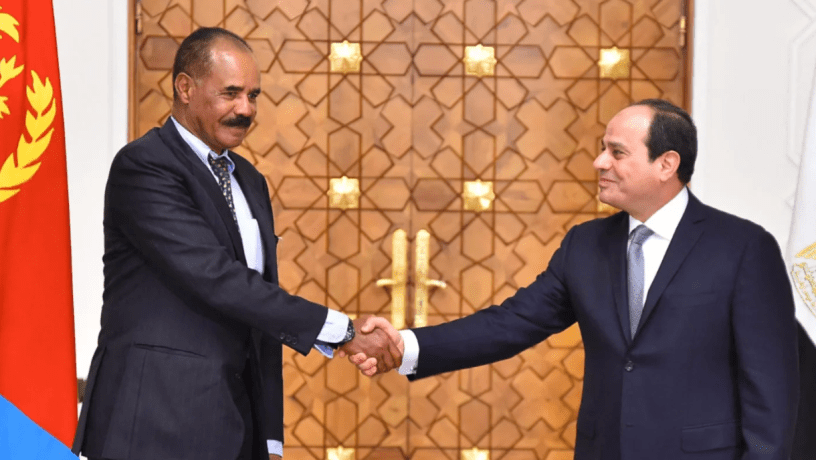
Under President Trump relations with Asmara appear to be on the mend. Massad Boulos, Senior Africa Advisor to President Trump, has led the outreach. He met President Isaias Afwerki in Cairo late in 2024, with Egypt mediating the talks, to discuss easing sanctions and reopening dialogue. Boulos also held discussions with Eritrean Foreign Minister Osman Saleh Mohammed on the sidelines of the UN General Assembly.
President Trump sent a letter to Eritrean President Isaias Afwerki on 30 July 2025, in which he pledged to reverse the “negative, harmful damage” of the Biden administration and signaled readiness to re-establish a respectful and productive national relationship with Eritrea.
On 23 April 2026 the Wall Street Journal Post reported that Boulos told foreign diplomats that the U.S. aims to begin lifting some sanctions on Eritrea.
“It is part of an effort by the U.S. administration to restore higher-level diplomatic relations with the country for the first time in decades. Other officials said the plan to normalize ties with Eritrea and lift sanctions on the country is undergoing review and hasn’t yet been finalized.
Others Follow Suit
The Americans are not alone. Other powers have followed. This change was reported on by Geoffrey York Africa Bureau Chief Globe and Mail in April 2026.
The isolated regime of Eritrea, long shunned as one of the world’s most repressive dictatorships, is enjoying a sudden flurry of diplomatic attention from Western governments that increasingly value its strategic location on the Red Sea.
The courting of Eritrea is the latest sign that the West is downplaying its traditional human-rights concerns in the Horn of Africa and instead prioritizing geopolitical factors such as shipping routes and military muscle in volatile regions.
The United States and the European Union imposed sanctions on Eritrean officials in 2021 in response to the regime’s military incursion into northern Ethiopia, where its troops have massacred civilians. But U.S. and EU envoys − along with a Canadian ambassador – have been visiting Eritrea and meeting with officials in recent weeks, even though its soldiers are still entrenched in Ethiopia.
The visits are part of a “diplomatic stampede to Eritrea,” according to Cameron Hudson, a U.S.-based Africa analyst and former U.S. official.
Why End Isolation Now
Eritrea appears to be responding to these overtures. Some organisations are even reporting progress.
The African Development Bank is reported to be considering working on an important road development [see below]. This is remarkable in a country which has even forbidden citizens to rebuild or repair their homes and where water and electricity are seldom available, even in Asmara.
There appear to be several reasons for this. Some are due to Trump’s desperate need to keep shipping lanes open after his disastrous war with Iran.
But there is change on the other side as well. Isaias has always kept ties with his neighbours, when he is not fighting them. Eritrea relies on the Gulf states to keep their finances afloat and store their financial reserves.
Secondly, Isaias knows that Ethiopia is eyeing the Eritrean ports of Massawa and Assab. A new war with Ethiopia has been predicted for at least 18 months. So – ever the master manipulator – the Eritrean leader has reached out to the TPLF in Tigray, FANO in Ethiopia and a host of other groups. They met in Port Sudan recently to cement their relationship.
However, regional partners are not enough. Eritrea needs funds and needs international friends. Hence President Isaias’s recent meetings with Egypt’s President el-Sisi. The Egyptian President welcomed his Eritrean opposite number to what he called Isaias’s “second home”.
With so much at play is it any wonder that the tectonic political plates along the Red Sea are shifting?
Eritrea Moves Forward With Strategic Massawa–Tesseney Road and Coastal Infrastructure Plan
Source: Mesob Journal
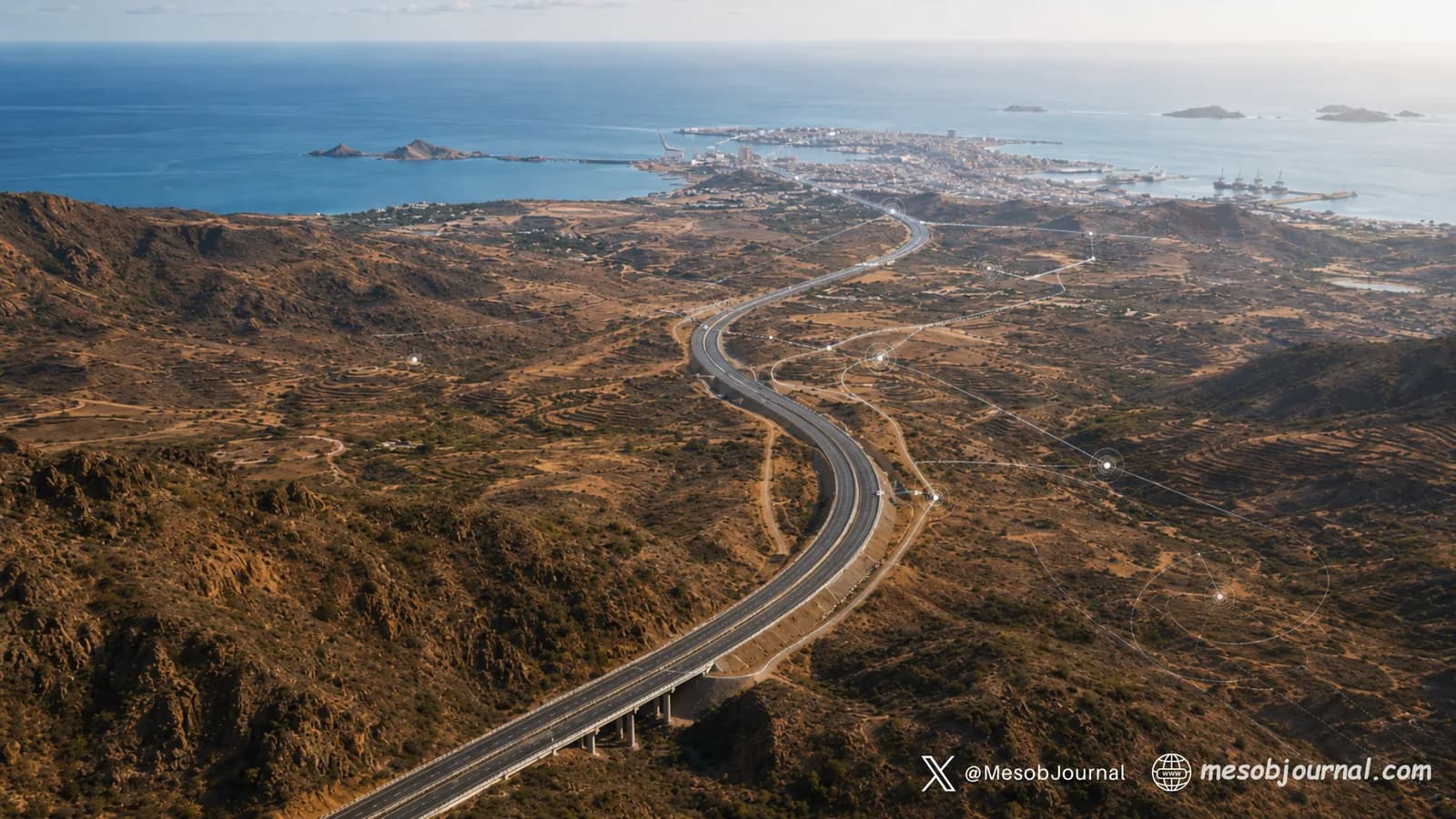
Eritrea has moved a step closer to preparing one of its most strategically important transport and coastal infrastructure projects, after the African Development Bank published a general procurement notice for the Massawa to Tesseney Road and Coastal Area Infrastructure Development Project.
The notice, dated June 19, 2026, confirms that the Government of the State of Eritrea has received financing from the African Development Fund to support the study update for the project. The work is intended to improve Eritrea’s readiness for a bankable infrastructure intervention that could attract financing for implementation.
According to the procurement notice, the project’s principal objective is to improve Eritrea’s domestic and regional transport connectivity in support of economic development. More specifically, it will update studies for the Massawa to Tesseney road and related coastal area infrastructure, including economic analysis, trade and regional integration assessment, technical studies, environmental and social assessment, climate change analysis, and gender considerations.
The project is organized around two main components: a feasibility study for the Massawa to Tesseney Road and Coastal Area Infrastructure Development, and project management.
The Massawa–Tesseney corridor carries clear national and regional significance. Massawa, located on the Red Sea, is one of Eritrea’s most important maritime gateways. Tesseney, in the western lowlands near the Sudanese border, connects Eritrea’s internal transport geography with wider regional movement, trade and cross-border economic potential. A serious infrastructure study linking these areas therefore speaks not only to road development, but to Eritrea’s broader position between the Red Sea, the Horn of Africa and the Sudanese corridor.
The African Development Bank notice highlights Eritrea’s strategic location along the Red Sea and the Gulf of Aden, noting that the country is bordered by Ethiopia, Sudan, Djibouti and the Red Sea, while also sharing maritime borders with Yemen and Saudi Arabia. That geography gives Eritrea an important position in discussions on regional integration, maritime connectivity and future economic corridors.
For Eritrea, the significance of the project lies in preparation. The current notice is not announcing immediate road construction. It concerns the updating of technical, economic, environmental and social studies needed to make the wider project financially and institutionally ready. In infrastructure development, that stage matters. Major transport corridors require bankable studies before financing, procurement and implementation can move forward with credibility.
The project also reflects the African Development Bank’s renewed engagement with Eritrea’s development priorities. In May 2026, the Bank said it had reviewed progress on the Massawa to Tesseney Road and Coastal Infrastructure Development Project during a high-level mission to Eritrea, alongside discussions on renewable energy, transport infrastructure, financial modernization, skills development and national data systems.
The procurement notice states that goods and works will follow the Bank Group’s procurement policy for funded operations. Bidding and request-for-proposal documents are expected to become available from July 2026.
The Ministry of Finance and National Development in Asmara is listed as the contact institution for interested bidders, applicants and consultants.
Beyond the technical language of procurement, the project points to a larger development question: how Eritrea can use its geography for practical national growth while strengthening regional connectivity on its own terms. Roads, ports and coastal infrastructure are not just physical assets. In the Red Sea region, they shape trade, mobility, economic resilience and strategic relevance.
If carried forward successfully, the Massawa to Tesseney project could become part of a wider effort to connect Eritrea’s coast, interior and western frontier more effectively. At a time when the Red Sea and the Horn of Africa are increasingly viewed through the lens of military competition and external power politics, Eritrea’s infrastructure agenda offers a different emphasis: connectivity, preparation, trade readiness and long-term development.
The next important step will come in July 2026, when procurement documents are expected to become available and the study update process moves from notice to implementation.

