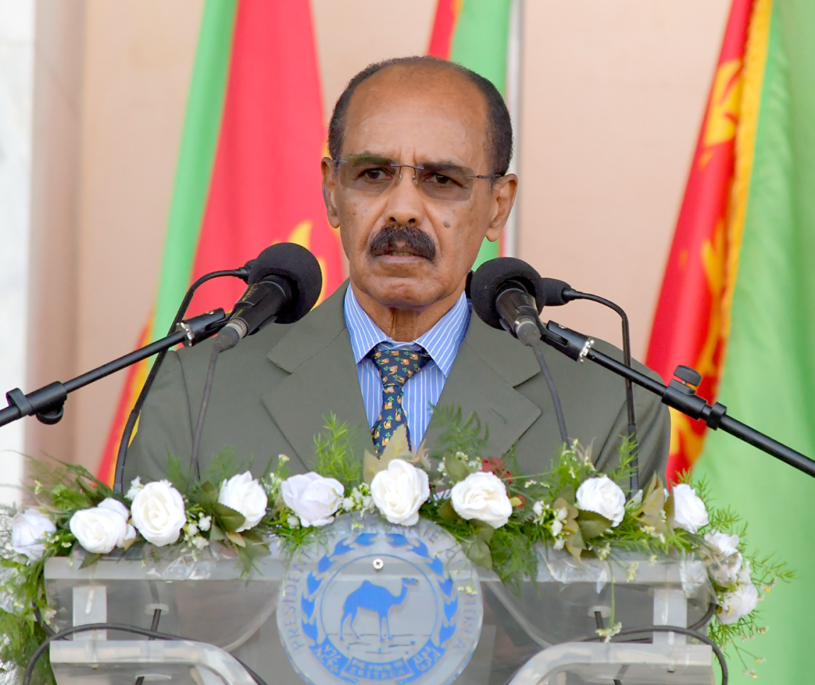
Eritrea has no functioning constitution, no elected parliament, no independent judiciary, no free press, and no opposition parties. The president who built this system, Isaias Afwerki, who turned eighty in 2026 and has led Eritrea since 1991, has never submitted himself to an election, has buried the only constitution his country ever ratified, and governs by personal fiat from a rural compound outside the capital, Asmara.
There is no succession plan, no institutional framework for transition, and no democratic tradition on which a future government could draw. The consequences radiate outward: Eritrea has been at war, or on the brink of war, with all three of its neighbors—Sudan to the northwest, Ethiopia to the south, and Djibouti to the southeast—as well as Yemen across the Red Sea, since independence from Ethiopia in 1993.
The absence of democratic accountability at home has consistently translated into aggression and destabilization abroad. Understanding how this came to be, and why it was not inevitable, matters now more than ever.
What was aborted in the spring of 1992, in the dust of Eritrea’s highland villages, was not merely an administrative exercise. It was the possibility, however remote, of a democratic culture taking root in the interstices between the state that the EPLF was building and the society it was building it upon. That possibility was not defeated by external enemies or structural impossibilities. It was ended by a political organization, and a man, that had won everything except the capacity to govern by any principle other than its own unchallenged authority.
Full article here

