From the US to Sweden, from Germany to Ethiopia—and in Israel, too: hundreds of thousands of Eritrean refugees have united for the first time to fight for a return to the homeland they fled and to liberate it from dictatorship. The revolution, they promise, is coming soon.
Haaretz, Ran Shimoni, September 18, 2026
Available in Hebrew at: https://www.haaretz.co.il/news/education/2026-09-18/ty-article-magazine/.premium/000001a0-addb-df5b-adf2-ffff2f9f0000?gift=493709a9eadd4028873398bb774f4a21
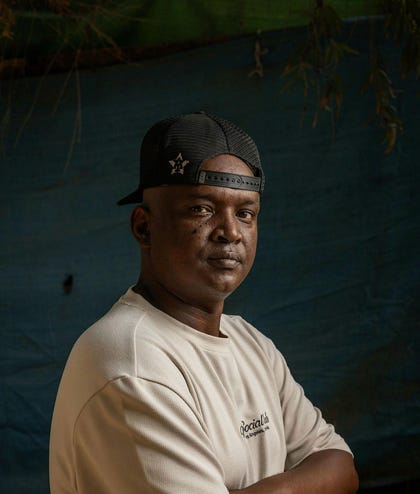
Ataklti Abraham Michael. His son was taken out of school and imprisoned for two years until he managed to escape to another country in Africa.
In one warehouse in southern Tel Aviv, people are sitting and planning a revolution. They have been dreaming of it for 20 years, even longer, but they have had their fill of dreams. Now, they say, these are days of fulfillment. Very soon everything will happen, in another moment the dam will burst, in a little while they will be there, in the home they fled from. More than any argument they will make today, the expressions on their faces testify to their intentions. No one is joking or feels a need to temper the declarations. Yes, they insist, we are the people who will lead the democratic revolution in Eritrea.
This warehouse, hidden among buildings undergoing renovation work, is one of their organizing hubs around the world. From the United States to Sweden, from Germany to Ethiopia. Seated in it now are Atekilti Abraham Michael and, opposite him, Sultan, leaders in the Eritrean community in Israel and two of its representatives in the revolutionary movement. Dawit Teferi, a Canadian-Eritrean businessman and the movement’s treasurer, is joining via Zoom from Washington. In Addis Ababa, the movement’s leader, Beyene Gerezgher, is waiting. About two million Eritrean refugees and asylum seekers live in these countries, and they intend to lead them all back to their homeland.
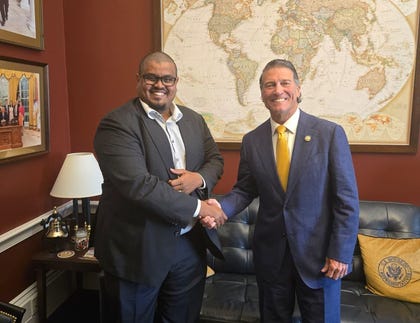
Dawit Teferi with Republican Congressman Ronny Jackson in Washington in June. According to Teferi, no one in the brigade foresaw the violent outbreaks in Israel.
“Our opposition was not effective in the last 20 years,” says Teferi, 43, the son of an Eritrean father and an Ethiopian mother who were granted asylum in Canada. “Since 2022, a real opposition has emerged—new faces, new voices, and new methods.” Its leadership includes roles for finance, diplomacy, community-building, and military organization. They call themselves the “N’hamedu Brigade,” loosely translated as “For the Land” or “For the Homeland,” echoing Eritrea’s war of independence against Ethiopia at the end of the 20th century.
Since that war, independent Eritrea has known no freedom. Isaias Afwerki, one of the leaders of the struggle for its liberation, became its president in 1993 and has not left power since. Nationwide elections have not been held, the constitution has not been implemented, and the independent press has been shut down. Eritrea has increasingly become a dictatorship. Young people are sometimes conscribed into military service as early as age 14, with no discharge date; countless others are held behind bars without cause. The country’s remaining 3.7 million residents are held captive to ensure the continuation of Afwerki’s rule—he is now 82—even as the state sinks in every sphere.
The election rally in Ness Ziona last month. Approximately 1,300 community members attended the event.
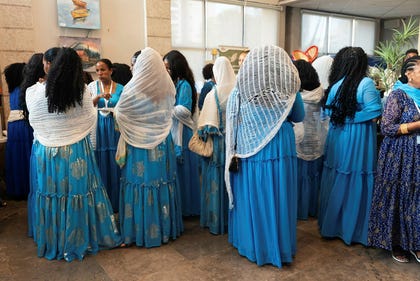
Last month, on a Saturday, in a hall in Nes Tziona, about 1,300 members of this community took part in an election. They filled the rows of chairs and the upper gallery. Women in long blue dresses sat at the front, some wrapped in thin white scarves. On the stage, a table and plastic chairs were set up in honor of the community leaders who are candidates for the brigade’s international council of elected representatives. There was no tension or rivalry there, but rather a festive atmosphere. At the end of the event, both on the stage and in the galleries, community members held hands, raised them together, and sang loudly.
Seventeen similar events took place around the world during those same days. In the course of these events, community representatives were elected, with seats allocated according to the size of each community. In total, the council has 51 members—and since then, council member Mulu Sultan said, it has been convening every week for three-hour meetings. They discuss money, the division of responsibilities, establishing a base in Ethiopia, and contact with the people who remained in Eritrea; they are creating the conditions needed for the day of revolution.
“One community, all over the world.”
Beyene Gerezgher is the man meant to lead them there. Even over Zoom, it’s easy to sense his strength—the unarticulated energy people look for in a leader. His appearance, too, carries a presidential bearing: a short, rounded Afro sits on a high forehead, and a neatly trimmed beard traces his jawline. Gerezgher is not quick to claim his place in the conversation or assert his status. This isn’t modesty, but self-assurance. When it’s his turn, he speaks calmly, often with a smile, yet directly. “Behind us are masses ready to fight for their state,” he says.
He left Eritrea in 2012, and shortly afterward fell victim to human trafficking in Libya. Only a year later did he manage to reach the Netherlands, where he settled. “My personal trauma gave me the drive to become a human rights activist—for all human beings,” he recounts. Three years later, he began building power. Every week he posted monologues to the Eritrean people on social media, traveled to meet communities around the world, and became a familiar face in diaspora communities. “That’s how, over time, we created a single political community that exists all over the world,” he says.
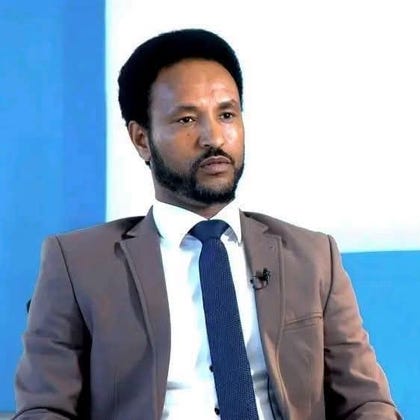
Movement leader Beyene Gerezgher. “We have masses of people behind us who are ready to fight for their country,” he says.
It cannot be taken for granted that people will respond. In a regime that punishes dissent, members of the community learn to be wary of one another as well. A UN report from May 2025 describes how surveillance and threats follow Eritreans even in exile, and how relatives who remain in the country are exposed to punishment. Gerezgher says that the regime also tried to infiltrate the movement and dismantle it from within. “We are learning from the failures of previous generations,” he explains. “The current generation is succeeding in working together, as one force and with one goal—to replace the government.”
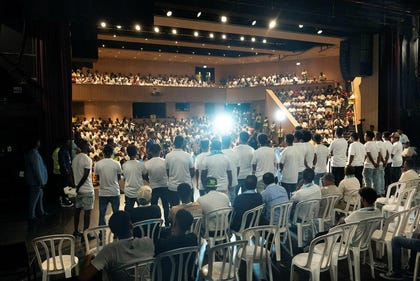
The elections in Ness Ziona last month. At the end of the event, on stage and in the stands, members of the community joined hands, raised them together, and sang at the top of their voices.
“In his speeches, the organization explains, hundreds of thousands also watch in Eritrea. The spread within the homeland, despite limited internet access, is the result of the organization’s efforts. Alongside smuggling and other means, Gerezgher says a team from the brigade cuts key excerpts from his speeches and interviews, blends them with musical arrangements, and thus the messages sound like songs.
“We have sources inside the country, from ordinary people to senior figures in the army and government,” he says. “We know that crowds are waiting for us, especially in Asmara (the capital). People spray our name on walls—on streets, in schools, in prisons. We are engaged in massive dissemination of messages (so that) they reach them.”
“One day we will return.”
In Israel, this hatred erupted into the streets in September 2023. A festival the Eritrean Embassy planned to hold in Tel Aviv led to clashes between regime opponents, who wore blue, and its supporters, in red. In those days, Eritreans also clashed in Sweden, Germany, Canada, and the United States. The violence in Israel continued even after the event ended and the streets were cleaned. According to a UN report from May 2025, at least nine Eritreans have been killed here since September 2023, including both regime opponents and supporters.
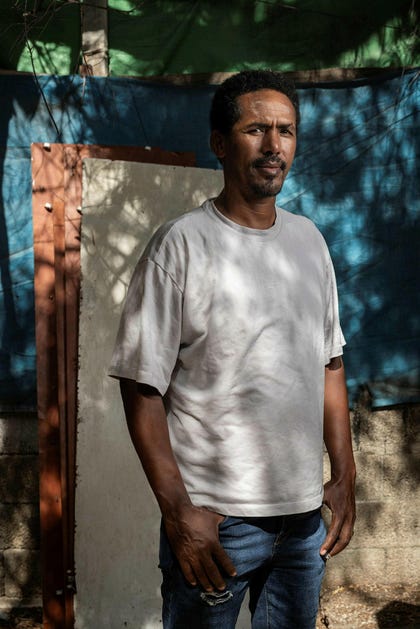
Mulu Sultan believes that Israel should have long since distinguished between those who fled the regime and its supporters.
Sultan, who has lived in Israel since 2008, believes that Israel should have long ago distinguished between those who fled the regime and its supporters. “It’s very simple: the police should go to events held by the Eritrean embassy in Israel, photograph those present, and arrest them,” he says. “I am the first to support the deportation of regime supporters.”
From his base in Washington, Teferi recounts that no one in the brigade anticipated these violent outbursts, and that he regrets them. At the same time, he acknowledges that in their aftermath they realized that people’s emotional attachment to their homeland—and their aspirations to break free from dictatorship—presented an opportunity to build a genuine alternative for Eritrea. “From here, a real opposition structure began to take shape,” he says.
The opposition of Atekliti Abraham Michael to the regime harmed his children. He arrived in Israel in 2011, after military service and a flight through Sudan and Egypt. He slept in Levinsky Garden for almost a month. Later he washed dishes, became a cook, and worked in a nursing home. Today he cleans stairwells. His three children remained in Eritrea and, according to him, paid the price for his activism. His eldest daughter was drafted into the army; his son was removed from school and imprisoned for two years until he managed to escape to another African country. “My youngest son, age 14, is in detention until age 17, and from there they will draft him into the army.”
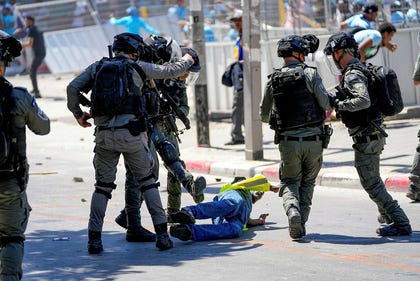
Clashes in Tel Aviv between supporters and opponents of the Eritrean regime in 2023. During that period, Eritreans also clashed in Sweden, Germany, Canada, and the United States.
He barely knows them. Even before he fled, he would come home from the army for short leaves and then return to service. Only his eldest daughter, who was small when he left, still remembers him. With his two sons, from the day they learned to speak, he spoke only on the phone. His mother hasn’t seen him in years either. ‘None of them know what I look like today,’ says Atekilti, a tall, strong man, now on the verge of tears. ‘Above all, I am fighting to return to my children,’ he explains. ‘Almost two million of our people are scattered all over the world. We have a national story, but each person also has their own personal story.’
“Sultan’s four children already live in Canada. He is 46, and since arriving in Israel he has worked in construction, in nursing homes, in an egg-production factory, and even ran a bridal dress shop. Today he is a delivery courier for Wolt. Sultan is among the few Eritreans—the lucky ones—who have received official recognition as refugees. Even so, he feels his life will not be complete unless he returns home. ‘At first we came here and tried to survive: to work, to recover from the journey we went through. But you know,’ he explains, ‘no one wants to be a refugee forever; everyone wants to go back home.’
“And what about the younger generation, born here and knowing no place other than Israel? Will they come with you?”
“They won’t refuse. They grew up knowing that we have our own country, that one day we will return.”
“That’s not what I hear from them. Many of them don’t feel a special commitment or connection to Eritrea. For quite a few of them, the biggest dream is to enlist in the IDF.”
“Listen, right now they are suffering here too. They feel they have no future here. They see it. After they finish high school, everything is closed to them. They won’t come to a broken, ruined state, but if there is a revolution—I think they will come.”
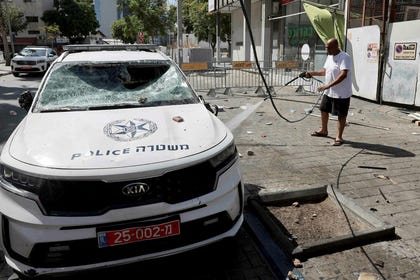
Damage resulting from clashes between opponents and supporters of the Eritrean regime in Tel Aviv in 2023. Sultan believes that Israel should have long ago distinguished between those who fled the regime and its supporters.
Teferi spends his days in Washington courting members of Congress and U.S. administration officials. He makes a point of being photographed with them and publicizing their meetings. According to him, the support he hears from them goes beyond mere sympathy. “The U.S., Israel, and the Gulf states have a major interest in having a partner in the Red Sea region,” he says. He believes this interest can work to their advantage, transforming exiles seeking help into figures worth supporting in a bid for power. “It takes time,” he says, “but many doors are open to us. We are in a very good position.”
Gerezgher offers a slight caveat. Connections in Washington, he notes, do not yet amount to official recognition. “We cannot bring about a democratic revolution in Eritrea on our own; we need international support.” Nevertheless, he credits these diplomatic efforts for the fact that he is now based in Addis Ababa. According to a report by the research organization Crisis Group, Ethiopia has been openly hosting the movement since early 2025. “We have a free hand to operate from here,” he says. This is also where the force that will eventually allow them to cross the border is to be built. “The dictator won’t just let us walk right in,” he says. “We haven’t actively recruited people, but the masses are waiting for the call. We are ready for the right moment, and I think we are close—very close.”

