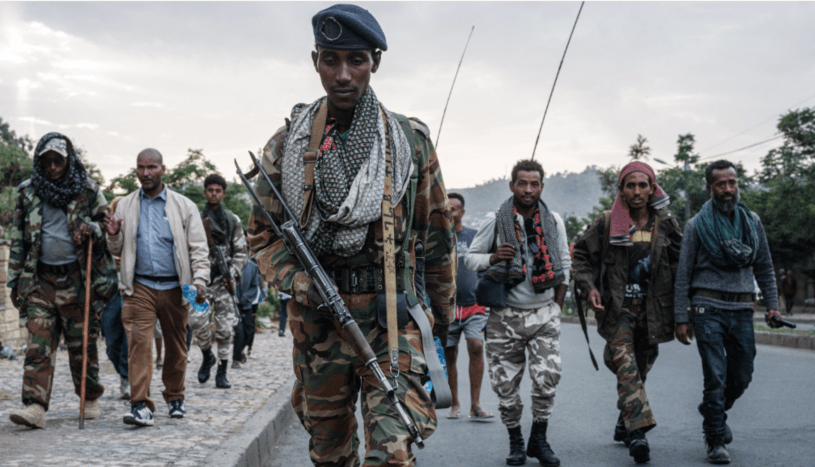
Anyone who followed the last Tigray war (2020 – 2022) will notice that the current conflict is remarkably similar.
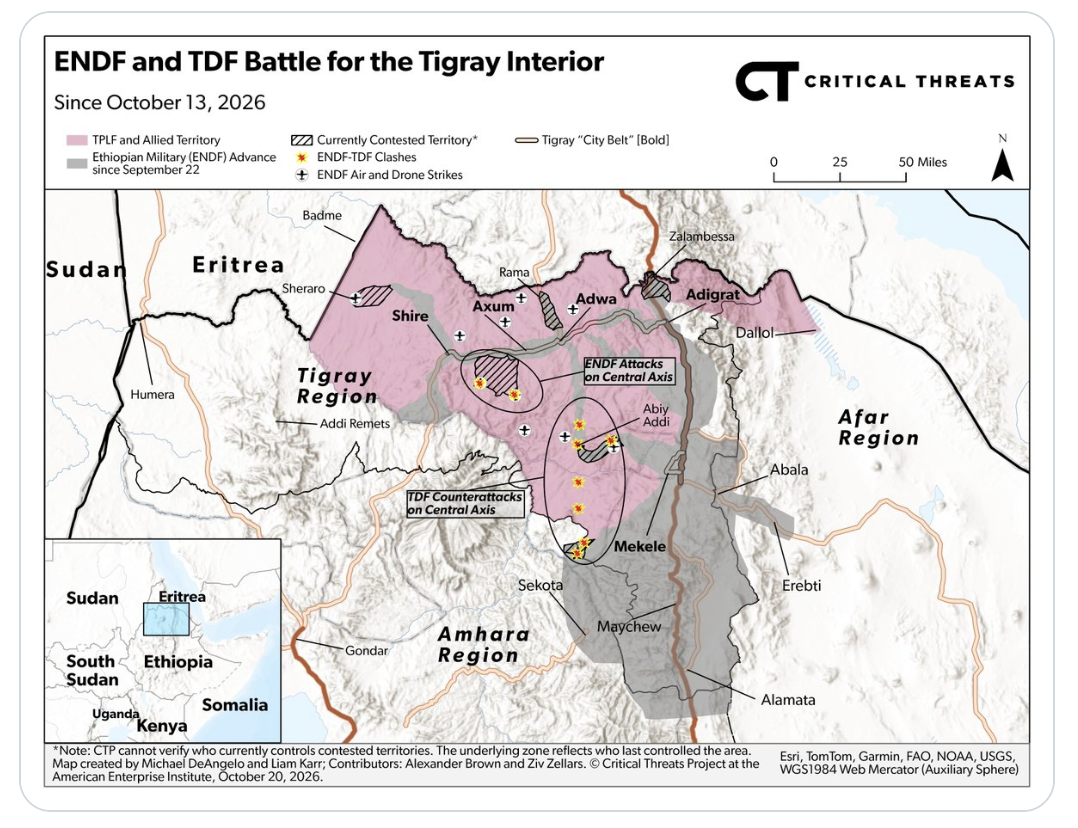
Phase one: The Ethiopian military – ENDF – crosses the border. Tigray moves its armed forces out of the cities and into the mountains and rural areas.
Phase two: Ethiopia captures Mekelle and other Tigrayan cities. Prime Minister Abiy celebrates success.
Phase three: Tigray launches counter attacks, targeting Ethiopian supply lines and wearing their military down.
We now appear to be in phase three. Negash Hiluf, an official of the Tigray People’s Liberation Front (TPLF), is reported to have said that his fighters killed 1,511 federal soldiers and wounded 1,050 others during clashes on Oct. 17 and 18. “Tigray Defense Forces (TDF) intercepted Ethiopian National Defense Forces (ENDF) troops near Mirena … inflicting 1,511 fatalities and wounding 1,050 others,” Hiluf said. This is just one confrontation.
This is not a replay of the last war
Although the fighting in Tigray itself looks remarkably familiar, key differences exist between the current conflict and the 2020-2022 war.
Firstly: Not all Tigrayans are supporting the TPLF forces. The Tigray Peace Force is currently allied with the ENDF. As al-Jazeera reported: “Ethiopian government forces and TPF fighters entering Aksum, while rival Tigrayan fighters remained in surrounding mountainous areas.”
At the same time, the TPLF are not alone, having formed an Alliance for Survival with six other Ethiopian movements. This was announced on 20 September 2026, in a statement read live on Tigrai television by Zemene Kassie, chairman of the Amhara Fano National Movement, who announced that seven Ethiopian armed and opposition organizations had constituted themselves as the Ethiopian Peoples’ Forces Alliance for Survival.
Secondly: Amhara forces of the FANO are now fighting Ethiopian government forces, while last time the Amhara militia attacked the Tigrayans. Clashes are reported between the FANO and the ENDF in locations South of Tigray by the Ethiopia Conflict Map.
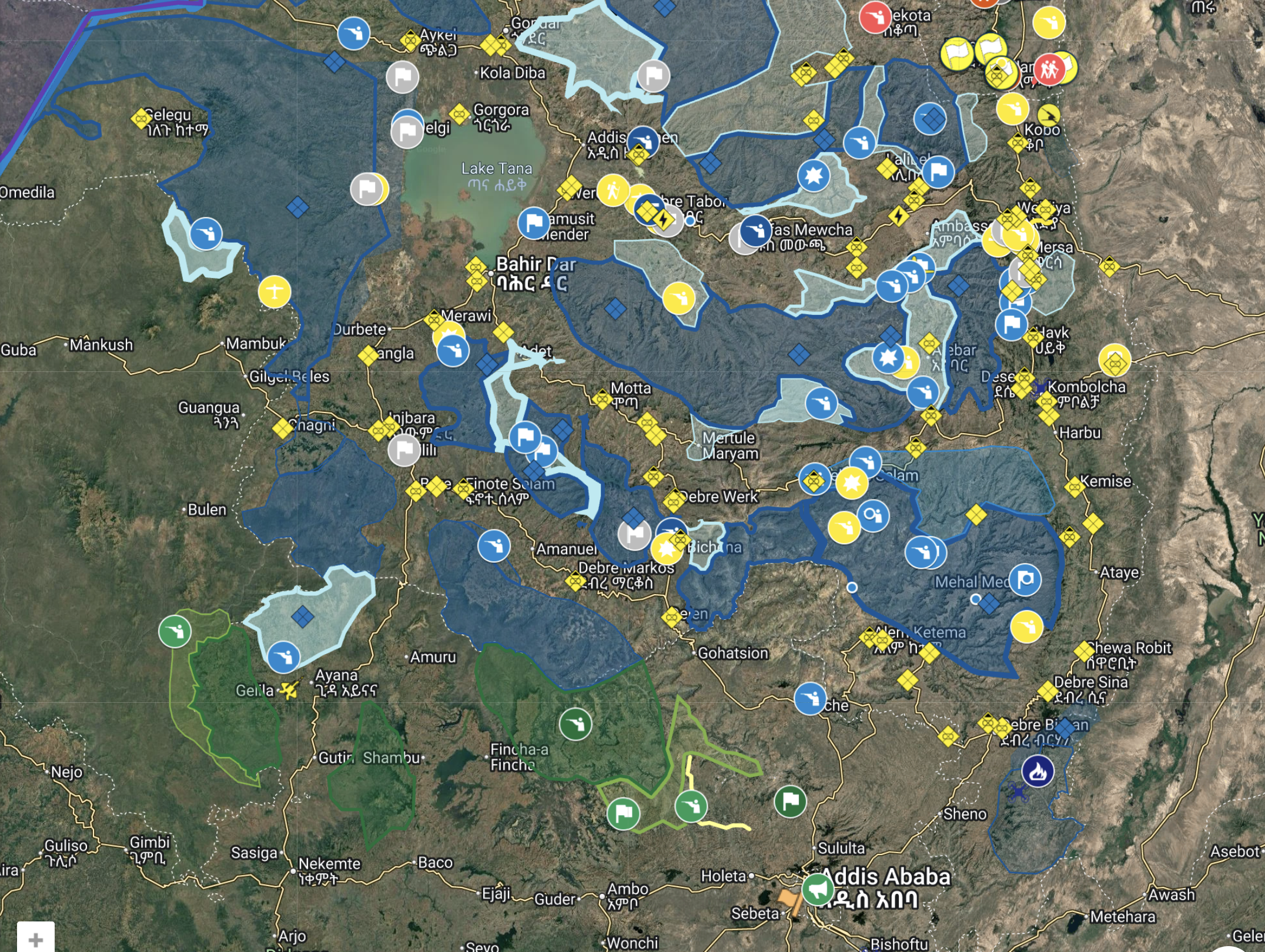
There are also reports that: “Ethiopia’s capital and seat of the federal government, increasingly within reach of Oromo Liberation Army activity spreading from Oromia region.”
Thirdly, Eritrea has not entered the war in support of Prime Minister Abiy, as it did in 2020 – 2022. Rather, there are reports that Eritrea has mobilised its armed forces and conducted drives to round up fighters, some as old as 65.
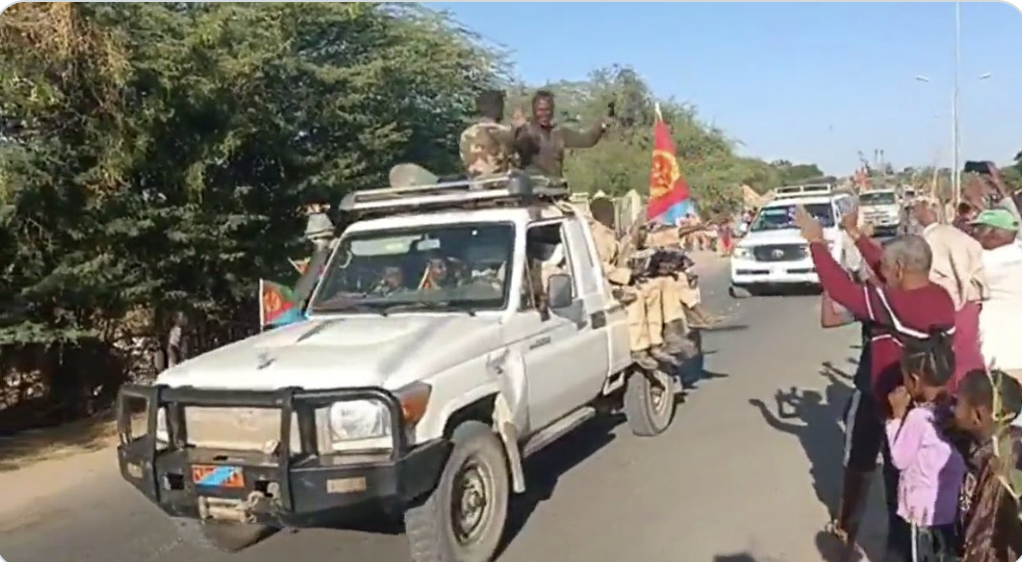
Quite how keen Eritrean families are to see their children go to another war remains to be seen.
Fourthly, there is diplomatic activity to try to prevent the war from becoming a regional conflict, engulfing Ethiopia, Eritrea and Sudan.
The American Secretary of State, Marco Rubio, called on both Eritrea and Ethiopia to reduce tensions, warning that: “all countries in the Horn of Africa must respect the sovereignty and territorial integrity of their neighbors and avoid cross-border incursions. The Secretary emphasized that the region cannot tolerate more conflict.”
Rubio’s comments triggered immediate push-back from the Alliance for Survival. “In a statement issued on 18 October, the alliance said its military operations were not driven by separatist objectives or intended to fragment the country.” Instead, it described its actions as self-defence after what it called the government’s rejection of efforts to achieve a peaceful resolution, including through the November 2022 Pretoria Agreement.
Fifthly, during the 2020 – 2022 war Turkey helped turn the tide against Tigray by providing drones and technicians to help manufacture and deploy them. It is not clear what they and other drone supplier to the ENDF are planning. At the same time, drone attacks have taken place against Ethiopian government forces, and even hitting targets in Addis Ababa itself.
Finally, there is continued speculation about how the conflict might end. There are many options and little clarity, as the chart below indicates.
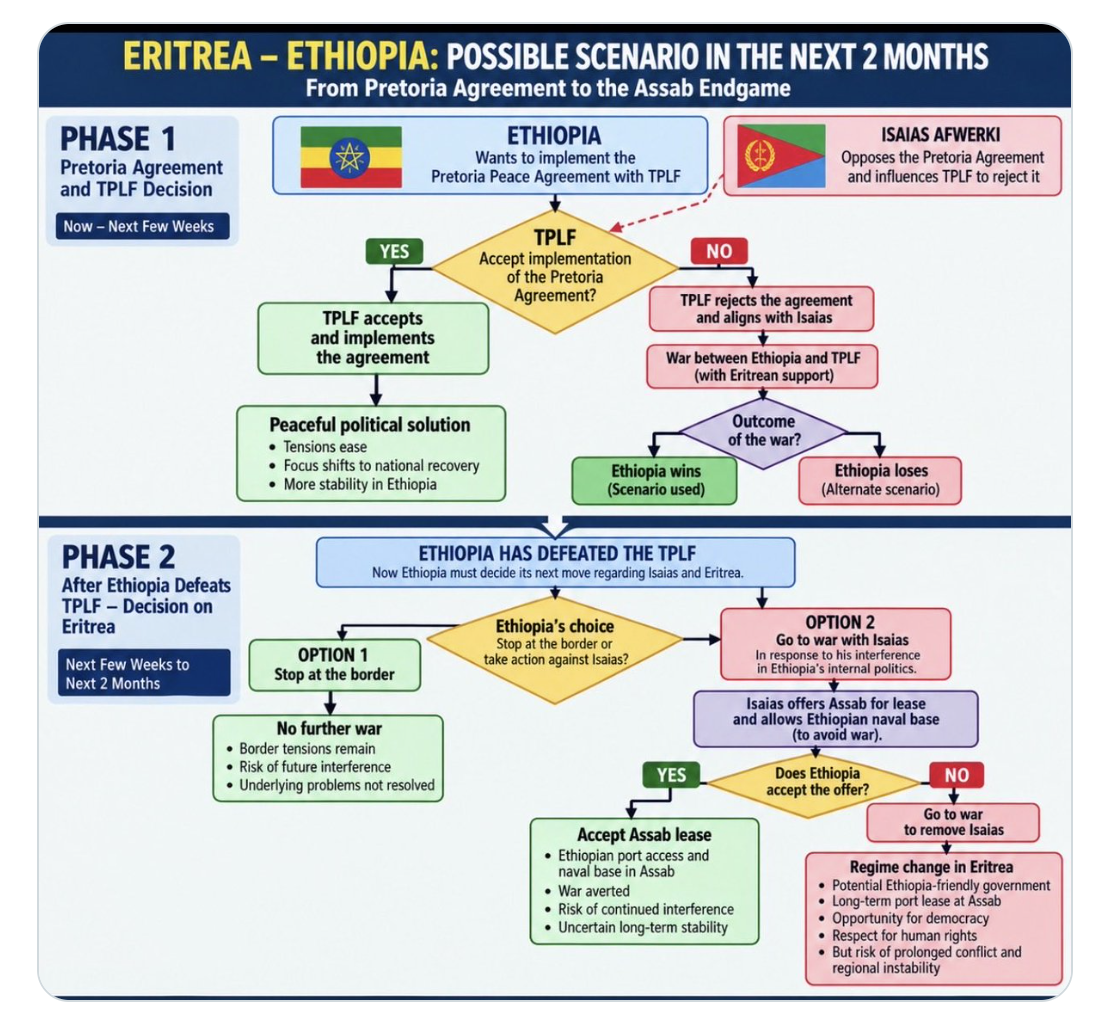
What can we conclude?
That the fighting is bitter, intense and ongoing. That is obvious. The alliances in the current war are, however, different from those that were in place in the previous war.
Perhaps all we can say with absolute certainty is that the the death toll is rising, with both troops and civilians paying the price. And that this is taking place at a time when Tigrayans are exhausted in every sense: psychologically and physically, since they also face extreme hardship after drought and crop failure.
This war – like all wars – are a tragedy for the people of the Horn.

