30 April, 2026
Source: Geeska


Unresolved testimonies and partial disclosures reopen questions about Isaias Afwerki’s early ties to U.S. Central Intelligence Agency and Ethiopian imperial strategy, challenging decades of official denial.
History may not always offer clean beginnings. In Eritrea’s case, the unresolved questions surrounding the early trajectory of its president, Isaias Afwerki, are not merely academic – they go to the heart of how power was built, consolidated, and sustained in one of Africa’s most closed political systems.
For decades, allegations have circulated that Afwerki, before emerging as the leader of the Eritrean People’s Liberation Front (EPLF), maintained covert links with external actors – most notably Ethiopian imperial authorities and, more controversially, the United States’ Central Intelligence Agency (CIA). These claims have long been dismissed by the ruling establishment. Yet recent disclosures and older testimonies, now resurfacing with renewed urgency, make it increasingly difficult to ignore them.
In 2016, a colleague shared with me a piece of interesting information that he heard from Mulugeta Asrate Kassa, son of a controversial governor of Eritrea (1964-1970), that Eritrean guerrilla leader, Isaias Afwerki, visited his father while he was under treatment at a hospital in Chappell Hill, London, in 1970/1971. The question that posed itself was why on earth a guerrilla leader against Ethiopia would visit the former Ethiopian governor?
A year later, Mulugeta Asrate Kassa himself, who lived in London at the time, confirmed to me in a Facebook exchange that Isaias had indeed visited his father and that he was aware that his father supported Isaias, with instructions from the crown, to fight against the Eritrean Liberation Front (ELF), which was regarded as a Muslim and Artab organisation; he added that this was done with Israeli support. More recently, his brother, Dr. Asfawossen Asrate Kassa, also confirmed the visit and the father’s support for Isaias’s faction.
Isaias left the field for the first time in January 1972 to attend a conference in Beirut organised by Osman Sabbe for representatives of both factions – the ELF and the newly emerged Ala or Selfie Netsanet under his leadership. Thus, if these allegations are true, Isaias’s visit must have been during that period.
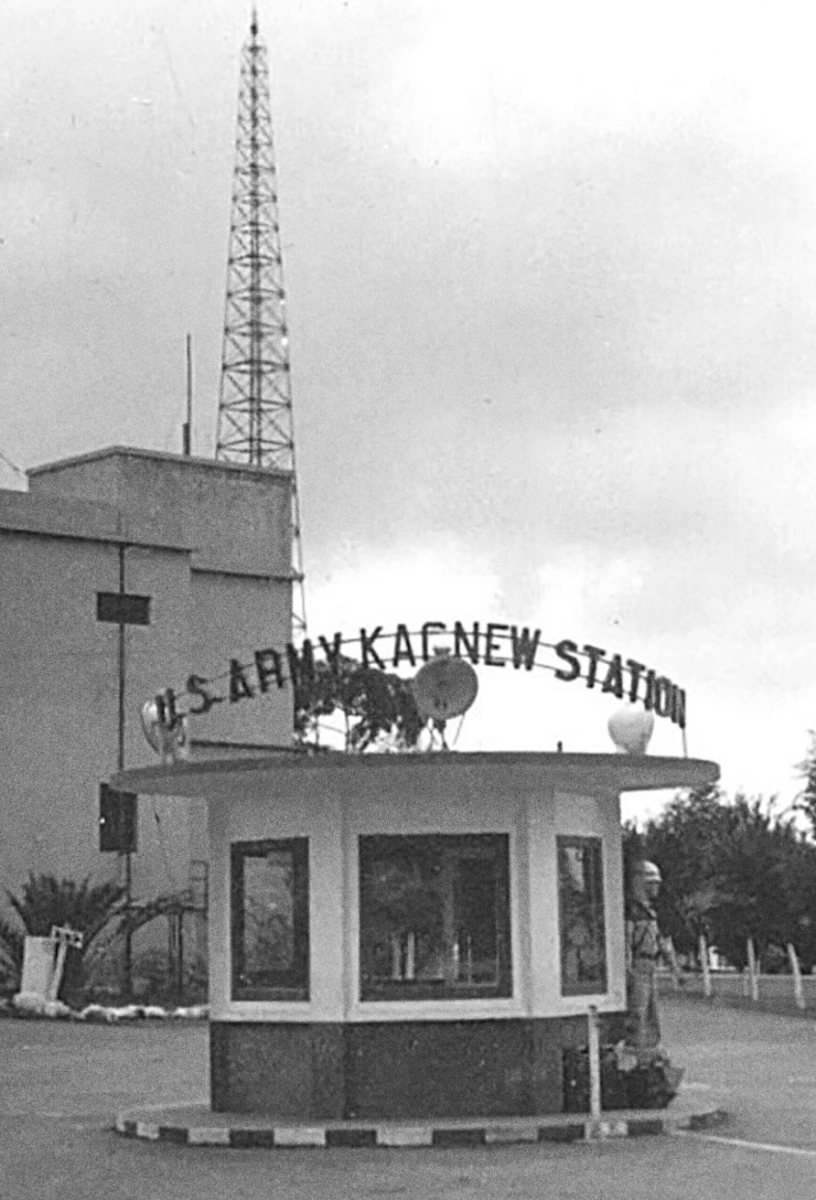
In November 2025, an unusual admission slipped through Eritrea’s tightly controlled media environment. Awel Seid, a prominent regime-affiliated voice, revealed that Afwerki had been summoned from the battlefield to Kagnew Station in Asmara – then one of Washington’s most important intelligence hubs in Africa.
According to Seid, American officials offered support on the condition that Afwerki frame his struggle in sectarian terms – as a fight against Muslims – which he reportedly refused. The regime’s intent in allowing such a revelation is unclear. But in a country where unsanctioned narratives are swiftly suppressed, the mere acknowledgement of such a meeting is significant. It confirms, at the very least, that contact occurred. That alone challenges decades of categorical denial.
To comprehend the conditions under which such contact might have occurred, Eritrea must be situated within the geopolitical realities of the late 1960s.
Kagnew Station was not a peripheral installation, it was a strategic asset central to U.S. global communications and intelligence. Protecting it was a priority. At the same time, the Eritrean Liberation Front (ELF) had begun to attract support from Arab states and cultivate links with Palestinian movements and socialist governments. With Palestinian Black September attacks heightening anxiety over American and Israeli targets, Washington feared regional liberation movements might coordinate against U.S. interests.
In such a context, it would have been entirely consistent with Cold War practice for the United States to explore alternative channels, particularly with factions perceived as less ideologically hostile. Afwerki’s group, which regarded itself as christians persecuted by the ELF – then based in the Ala area after breaking with the organisation – may have appeared as precisely such an opportunity. The question, therefore, is not whether contact was plausible. It is why the possibility has been so forcefully denied for so long. Parallel to the American dimension is a more grounded and arguably more consequential connection: Ethiopian imperial strategy in Eritrea.
Central to the narrative of external contact is Tesfamichael Giorgio, a local administrator who allegedly acted as a conduit between Afwerki’s group, Ethiopian authorities, and American intelligence. His account, narrated to the ELF in 1974, to me, and later publicised after his defection, describes a series of meetings facilitated under the cover of official duties. Through these channels, Afwerki’s representatives reportedly engaged with U.S. officials at Kagnew Station, presenting their faction as distinct from, and opposed to, the ELF’s ideological orientation. The CIA contact was Richard Miles Copeland.
Giorgio’s testimony has been contested, but he has also produced documents to support his claims. It is also supported, in fragments, by Ethiopian officials who acknowledge that internal divisions are being exploited; family members of Asrate Kassa who confirm contact; and, more recently, the Eritrean state’s partial admission.
Accounts from former officials and contemporaries suggest that Asrate Kassa, the governor of Eritrea under Emperor Haile Selassie, actively sought to exploit divisions within the nationalist movement. Testimonies from individuals who served the Ethiopian state suggest that Afwerki’s faction received varying forms of support, from logistical facilitation to the provision of arms.
General Daniel Mengistu, who was Ethiopia’s Foreign Affairs security chief during Haile Selassie’s reign, alleged in an interview with the Ethiopian magazine “Menelik” (March 2001) that Isaias was an “Ethiopian spy” and on Ethiopia’s payroll. There was no other source to support this claim.
Captain Tesfaye Resteye, who served as head of the foreign intelligence section of the Ethiopian Security Services (ESS) during the Derg regime, also alleged that Isaias’ faction received military support from Asrate Kassa, then a security officer in Eritrea in the 1970s. His testimony is supported by events during that period.
Major Dawit Woldegiorgis, who served as representative of the Coordinating Committee of the Workers’ Party of Ethiopia (COPWE) in Eritrea in the mid-1980s, confirmed to me that Tesfamicael Giorgo was imprisoned by the Ethiopian authorities for bringing Isaias to the Kagnew Station without their approval and that Dawit, as a junior military officer in Eritrea, helped Tesfamichael be released from prison.
Individually, each of these testimonial evidences is inconclusive. Yet taken together, they form a pattern that is harder to dismiss.
If accurate, this would not be an anomaly. Divide-and-rule strategies have been a staple of counterinsurgency campaigns worldwide. What makes the Eritrean case distinctive is that the faction allegedly nurtured to fragment the rebellion ultimately went on to dominate it, and to define the post-independence state.
Whatever the origins of Afwerki’s early connections, what followed is beyond dispute. By 1970, he had broken decisively with the ELF, leading a splinter group that would evolve into the EPLF. Over the next two decades, the EPLF would outmanoeuvre, outfight, and ultimately eclipse its rivals. In 1981, the ELF was driven to Sudan by a joint assault of the EPLF and the Tigray People’s Liberation Front.
In 1991, EPLF entered Asmara as the victor. Two years later, Eritrea formally achieved independence, with Afwerki at its helm. What is less often examined is how the dynamics of those early years – fragmentation, secrecy, strategic ambiguity – shaped the political culture of the state that emerged. The EPLF’s emphasis on discipline and allegations of self-reliance are well documented. Less discussed is the extent to which its leadership internalised a worldview shaped by clandestine engagement, shifting alliances, and existential distrust.
Eritrea today is marked by an increasingly centralised power structure, a lack of transparency, and little patience for dissent. The basis for this system is inextricably entwined with the formative experiences of its leadership.
That he would have seen the liberation struggle not just as a revolutionary goal but also through its diplomatic and international implications, as a political actor, can account for Afwerki’s deep wariness of independent institutions. It also begs the uncomfortably obvious questions. Difficulty is part of it, which comes from a lack of hard evidence. Many key archives – be it in Washington, Addis Ababa or Asmara – are still not closed or open. The handful of persons involved are mostly dead or eliminated. The few that are left all speak from a space of loyalty, grievance or hindsight.
This leaves fragments for historians and analysts to work with: testimonies, recollections, and partial disclosures. It is an imperfect record. But it is not empty. And yet, that story does not emerge from these fragments. A detailed and more humane account of a liberation struggle set against a backdrop of political turbulence.
Leaders make choices under pressure. Movements adapt to survive. Outside actors play their games. This does not detract from the case for Eritrea’s war of independence. However, they do make the narrative a bit more complicated.
In interviews with Paul Hentze, who was the CIA Station Chief in Ethiopia (late 1960s–early 1970s), and according to Mesfin Hagos, who was a close ally of Isaias during the struggle, and based on analysis of Isaias’ own statements after Eritrea-Ethiopia rapprochement, 2018-2021, he is reported to have been interested in ruling Ethiopia, rather than just Eritrea. This opens the door for further questions, revealing the true depth of the matter.
Thus, the questions about Isaias are too significant to overlook. And as Eritrea nears the next major juncture in its history – whether political, generational, or otherwise – the demand for a more comprehensive accounting of its past will only increase. Not to cast blame, but to figure out how we got here. For in the end, the shadows behind a revolution do not disappear. They shape the state that follows.

