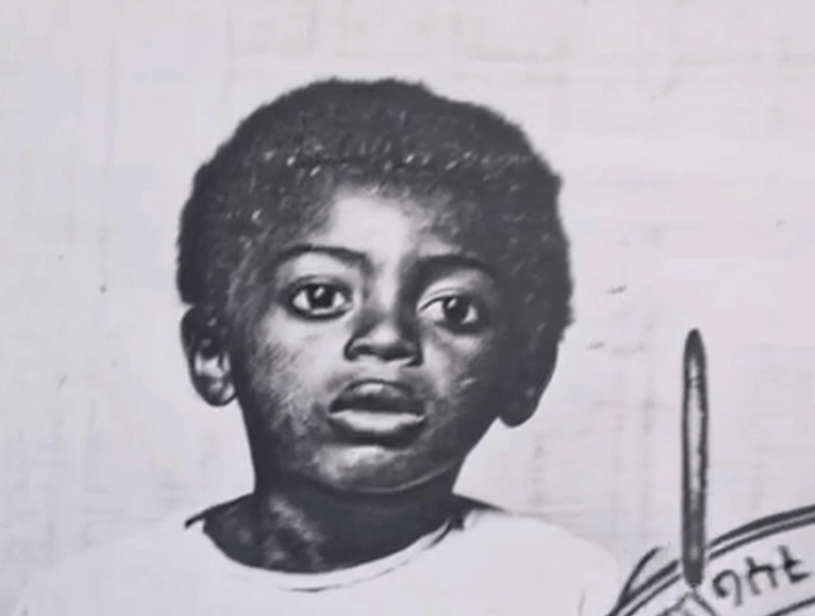
by Filmon W.
Jun 02, 2026
There are things in Eritrean history that are covered not because they are unknown, but because they do not fit the story we wanted to tell ourselves.
I have always wanted to write about one of those things. Not as a historian. Not as someone trying to correct the official record. But as someone who grew up inside one of the silences produced by that history.
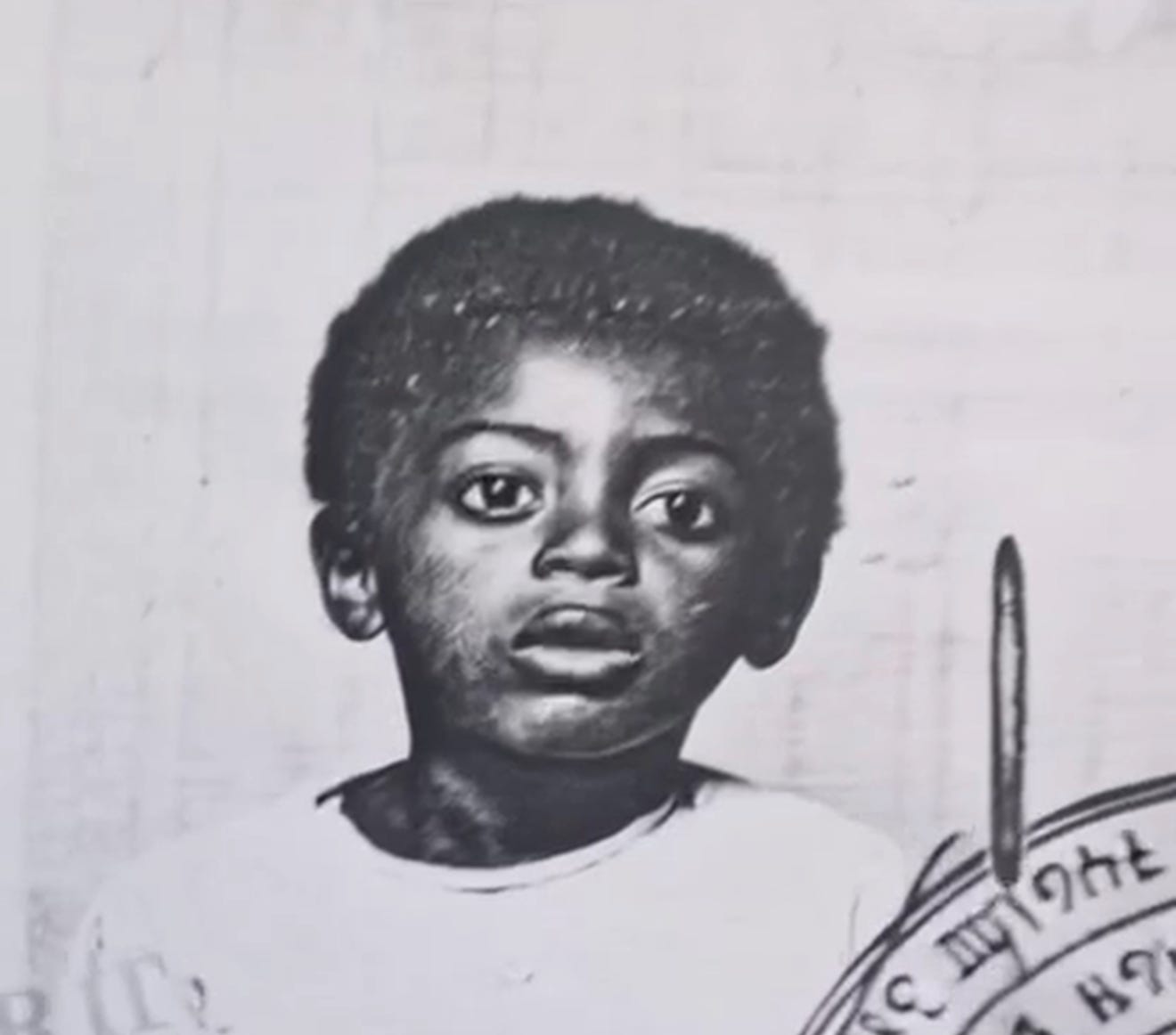
I was born after the long war for Eritrean independence, at a time when the country was still learning how to narrate itself. The story around us was clear: the fighters had returned victorious, the martyrs had given everything, the Derg had been defeated, Ethiopia had been expelled, and Eritrea had finally become itself.
That was the public story.
But there were children like me who lived in the shadow of that story.
We were children born to Eritrean mothers and Ethiopian fathers, or fathers who were assumed to be Ethiopian soldiers, civil servants, teachers, or men who had come during the previous political order and later disappeared. Some left before we were born. Some were killed. Some returned to Ethiopia. Some were simply erased from the child’s life. In many cases, the mothers stayed behind and raised the children alone.
There was no official law that marked us. No document that said we were less Eritrean. No government form that named our wound. But society does not need a law to produce shame. Sometimes all it needs is a story powerful enough to decide who belongs fully and who belongs with hesitation.
We were called Wodi Amhari.
The son of the Amhara. The son of Ethiopia. The son of the defeated side.
It did not matter whether the father was actually Amhara. It did not matter whether he was a soldier or a teacher. It did not matter whether the child had ever met him. It did not matter whether the child knew a single street in Ethiopia, spoke Amharic, or felt any emotional connection to Ethiopia at all. The category was already waiting.
And once that category existed, childhood became complicated.
For other children, Eritrean identity was celebratory. It came with pride, flags, songs, martyrs, heroes, victory, and the moral clarity of liberation. To be Eritrean was to belong to the side that had sacrificed, endured, and won.
But what does that story do to a child whose father is associated, even vaguely, with the defeated enemy?
What does national pride feel like when the enemy in the story has your father’s face, even if you never knew that face?
I did not know my father. My mother was pregnant when he left. I grew up with her, like many children in similar situations. She was Eritrean. My life was Eritrean. My language, my neighborhood, my memories, my suffering, my schooling, my imagination, all of it was Eritrean. And yet there was always a limit. There was always some invisible border beyond which I could not claim belonging without feeling exposed.
The strange thing is that I did not feel Ethiopian either. I never did. In fact, as a child, I hated that part of me because it felt imposed. It felt like a stain I did not earn, did not choose, and could not remove. I was not confused because I did not know who I was. That is not what identity crisis means to me anymore.
Identity crisis is not simply confusion about the self.
Sometimes identity crisis means society has no dignified category for you to stand in.
You know who you are, but the available categories are humiliating. You exist, but the story has no honorable place for your existence. You belong biologically, socially, and emotionally to a place, but symbolically you are treated as a problem.
That was the crisis.
In school, the question of fatherhood was always dangerous. Teachers could casually ask, “Where is your father?” or “Call your father.” For many children, that question was normal. For me, it opened a hole in the floor.
What was I supposed to say?
That I did not know him?
That he was Ethiopian?
That he was dead, even though I did not know if he was dead?
Sometimes I said he was dead because death was easier than explanation. Death gave the story dignity. Ethiopia did not.
Everyone in the neighborhood knew, of course. These things were rarely spoken directly, but they were known. That was part of the cruelty. The knowledge stayed in the background, waiting. People did not always use it, but you knew it could be used. It was your vulnerability, stored quietly in the community.
There is one memory that stayed with me, even though I only understood its full meaning much later.
In junior school, there was a family event. Parents came to the school. My mother was there. That day, I was one of the children being celebrated. I had received three prestigious awards consecutively. People were surprised and proud. Neighbors were happy. Some hugged me. One older man even gave me money out of joy. To the outside eye, it was a beautiful moment.
Recently, my mother told me what she overheard that day. The same old man, after celebrating me, said something like: “But that child, nobody knows who his father is.”
That sentence stayed with her. And when she told me, it explained something I had carried for years without fully naming it.
I have never loved the spotlight, even when I did well. From elementary school onward, I was often seen as a smart kid. I received praise. I stood out. But standing out also meant being seen, and being seen meant inviting the question behind the praise: Who is this child? Whose son is he?
Achievement did not protect me from shame. Sometimes achievement brought shame closer, because it made people curious about lineage.
That is a very specific kind of wound. You are praised for what you do, but reminded that your origin is still questionable. You are celebrated as a child, but not fully situated as someone’s legitimate continuation. Even success becomes unstable because it exposes the missing father.
And this was not only a private family issue. It was connected to the national atmosphere.
After independence, Eritrea built much of its identity around the memory of struggle and victory. That was understandable. A country had been born through sacrifice. People had died. Families had lost everything. The martyrs deserved remembrance. The fighters deserved recognition.
But national stories can become cruel when they leave no space for those who do not fit neatly inside them.
There were children of fighters, children of martyrs, children whose family history placed them comfortably inside the heroic national narrative. I went to school with many of them. Their fathers’ absence, when present, could be turned into honor. A dead fighter father could become a source of pride.
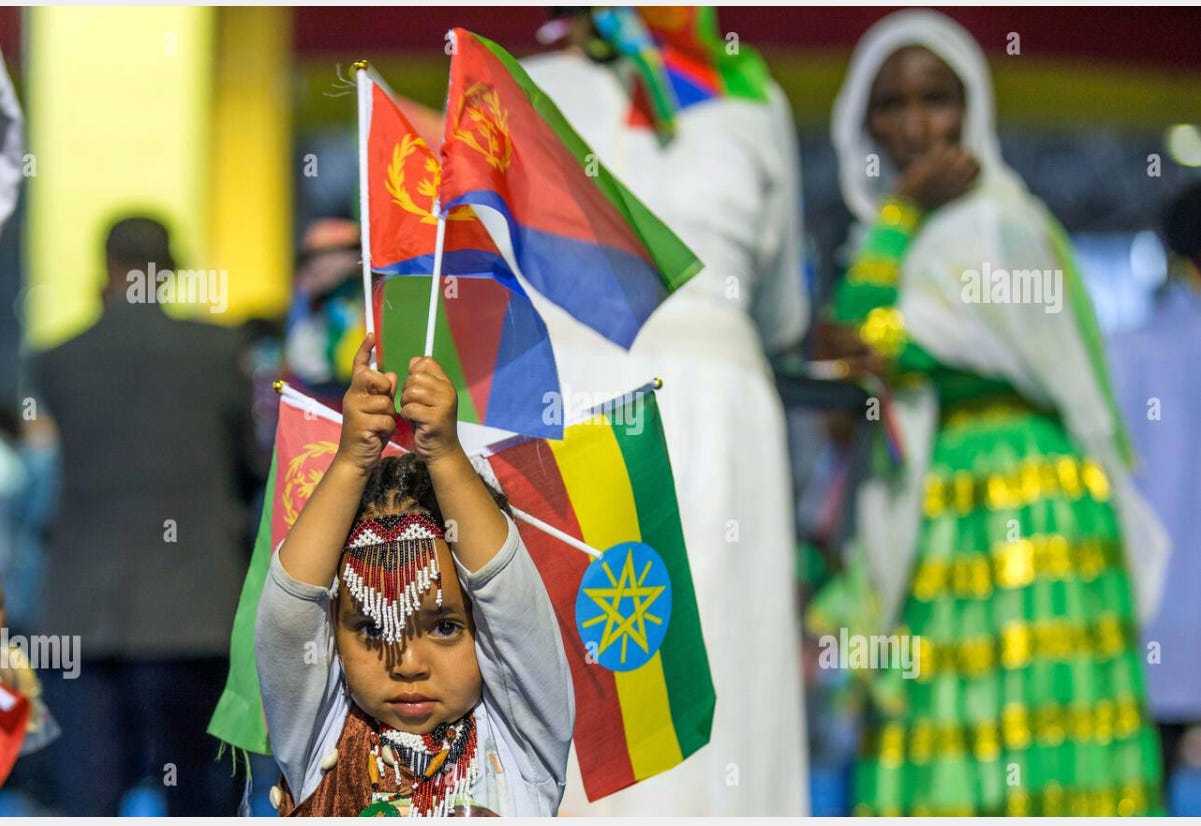
But what about the child whose absent father belonged to the wrong side of the story?
What kind of silence is that child supposed to inherit?
The war with Ethiopia made this even worse. During those moments, suspicion sharpened. Ethiopian identity became not just foreign, but dangerous. People who were known to be Ethiopian or associated with Ethiopia were watched, questioned, or socially marked. Even when nothing official happened to children like me, the cultural atmosphere became unbearable.
It was not only the state. It was the public sphere itself. People explained betrayal through blood. They spoke of lineage as destiny. Even the president, Isaias Afwerki, was often attacked through claims about Ethiopian ancestry. The political accusation was not only that someone was wrong, authoritarian, cruel, or destructive. The deeper insult was that he was not truly Eritrean.
That kind of politics does something devastating to a child.
It teaches you that belonging can always be revoked by origin.
It teaches you that citizenship is not enough, place is not enough, language is not enough, memory is not enough, even love is not enough. Somewhere behind all of that, blood is waiting as a weapon.
I think this is one reason I developed such a deep aversion to nationalist symbolism. Not because I hate Eritrea. I do not. My relationship with Eritrea is complicated precisely because it is the place that made me, wounded me, raised me, excluded me, and gave me the language through which I now think.
But I could never easily participate in the emotional rituals of nationalism. I could not simply hug the flag and feel complete. I could not hear the heroic story and feel only pride. I could not think of politics mainly through betrayal, sacrifice, martyrs, enemies, flags, and victory.
Those things were not emotionally accessible to me in the same way they were to others.
So I had to find another way to understand the country.
In 12th grade, I began thinking seriously about politics, but not through nationalism. I came to politics through economics. I remember reading basic economic ideas: supply and demand, banking, interest rates, employment, production, institutions. Something opened in my mind. I thought: this is how a country should be understood.
A country is not only a flag.
A country is not only a graveyard of martyrs.
A country is not only a memory of victory.
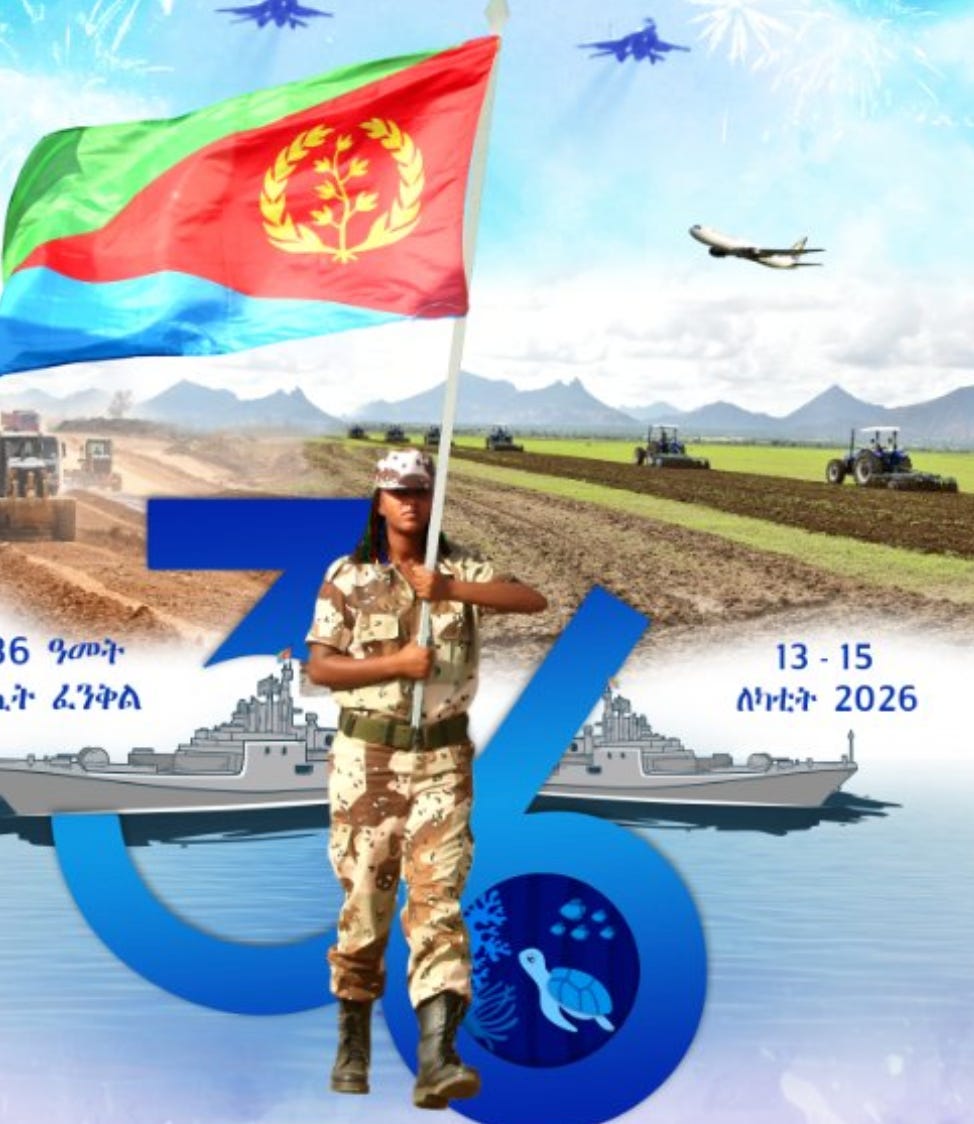
A country is an arrangement of human life. It is how people eat, work, learn, move, speak, disagree, heal, trade, build, and imagine the future. Politics began to make sense to me when I saw it through institutions, fairness, economic life, democratic systems, inclusion, and human dignity.
That became my way out.
Not out of Eritrea, but out of the prison of symbolic Eritreanism.
I could not locate myself emotionally inside the triumphant national story, but I could locate myself inside the question of how human beings should be treated. I could not build my politics on inherited pride, but I could build it on fairness. I could not worship the nation as an identity, but I could care deeply about the country as a shared human project.
This is why I am suspicious of political language that depends too much on symbolism. I do not trust politics that asks people to perform belonging before it gives them dignity. I do not trust nationalism that turns citizenship into blood purity. I do not trust public discourse that treats people as extensions of ancestry rather than as human beings with their own moral standing.
My childhood taught me that identity can be a cage when society makes it one.
It also taught me that the most honest politics begins where symbolic belonging fails.
Maybe that is why I see Eritrean politics differently. I do not ask first: Who betrayed the martyrs? Who is pure? Who is real? Who has the correct lineage? Who loves the flag enough?
I ask: What kind of society are we building? Can a child stand inside it without shame? Can a mother raise her child without carrying society’s suspicion on her back? Can citizenship be stronger than blood? Can a country make room for those born from complicated histories? Can politics become a system of dignity rather than a theater of belonging?
That is where I come from.
My politics is not detached from pain. It is born from pain. But it is also born from the refusal to let pain become hatred.
I later met my father and his family. Even then, I did not suddenly feel Ethiopian. I did not find another national identity waiting to rescue me. Ethiopia did not become home simply because blood pointed there. I see Ethiopian politics too with the same distance, the same suspicion of myth, the same refusal to confuse identity with justice.
In that sense, the wound gave me something. It stripped nationalism of its magic. It made me unable to romanticize belonging. It forced me to understand politics not as emotional inheritance, but as moral construction.
I wish I had learned that lesson more gently.
But this is the truth: some of us became politically clear because the national story never fully embraced us. We had to search for a deeper foundation than pride. We had to ask what remains when the songs, flags, fathers, martyrs, and enemies do not give you a safe place to stand.
For me, what remained was the human being.
The child before the category.
The citizen before the lineage.
The person before the nation.
That is why I write the way I write. That is why I resist the intoxication of symbolic politics. That is why I keep returning to institutions, economics, fairness, rights, and dignity. Not because these are abstract ideas, but because they are the only things that can protect people when identity becomes a weapon.
I am Eritrean. But I am not Eritrean in the simple celebratory way that some people expect. My Eritreanism passed through shame, silence, suspicion, and distance. It had to survive the fact that the nation’s emotional grammar did not know what to do with children like me.
And maybe that is why I cannot accept a politics that demands worship.
I need a politics that makes room.
Because somewhere, even now, there is a child sitting in a classroom, afraid of a simple question: “Where is your father?”
And if our national story cannot protect that child from humiliation, then the story is not complete.

