This story is far from over
Source: Daily Maverick
Amid anti-foreigner protests, South Africa has repatriated and deported more than 53,000 foreign nationals, primarily Malawians, Zimbabweans, and Mozambicans, highlighting a significant humanitarian crisis.
By Peter Fabricius 9 Jul 2026
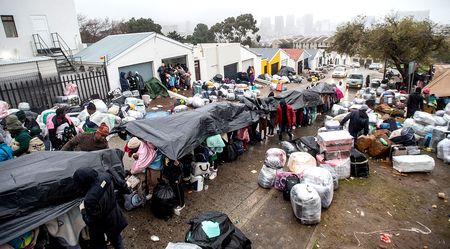
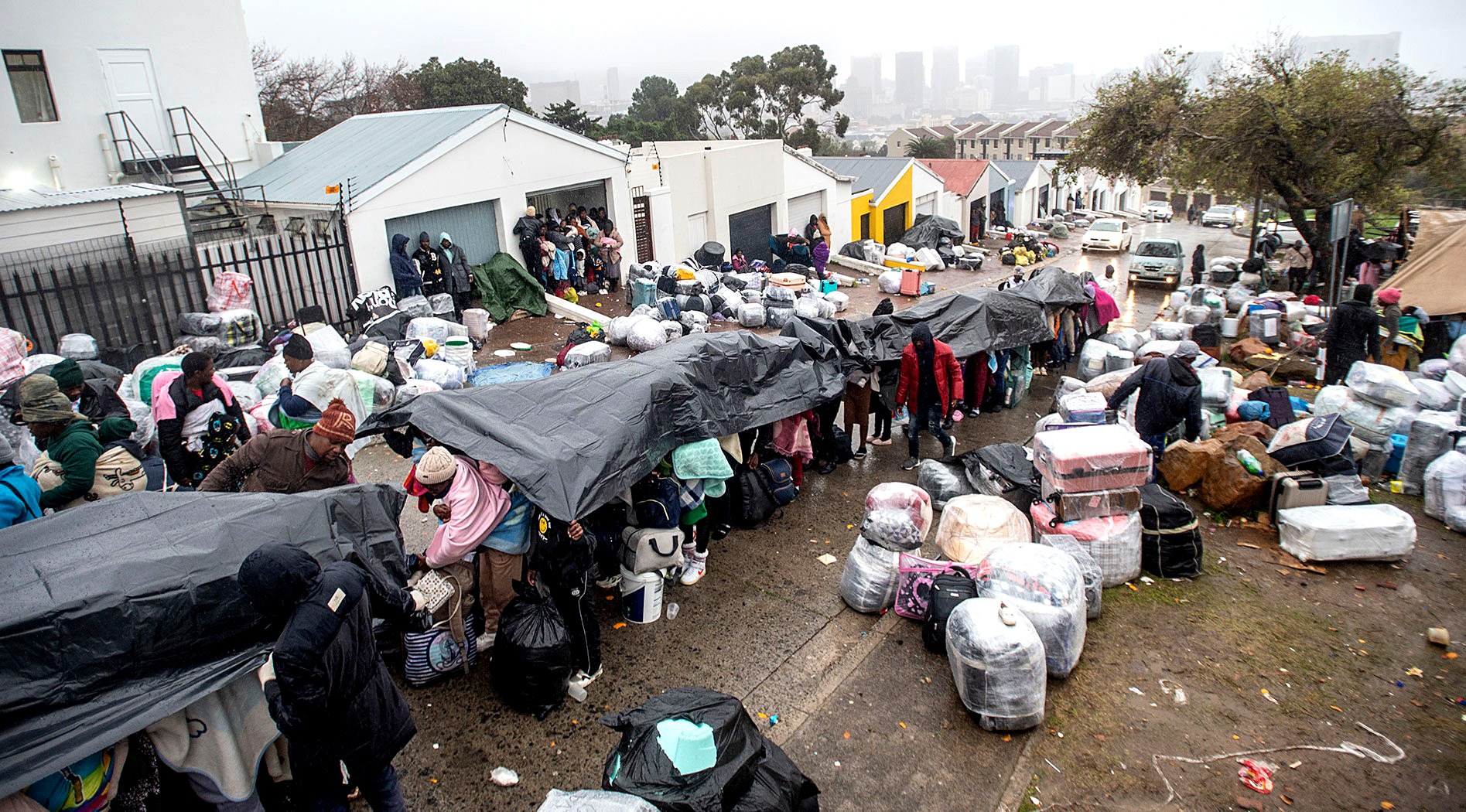 More than 1,000 Zimbabweans wait in the rain outside the Zimbabwean consulate in Cape Town on 28 June to be transported to a Home Affairs office before repatriation. (Photo: Brenton Geach / Gallo Images)
South Africa has repatriated or deported more than 53,000 foreign nationals over the past few weeks, as anti-foreigner sentiment spiked and xenophobic attacks sparked an exodus.
The vast majority of those deported or repatriated were Malawians, followed by Zimbabweans and Mozambicans. As of Wednesday, 8 July, a total of 50,280 nationals from those three nations had returned to their country of origin, said Home Affairs spokesperson Thulani Mavuso.
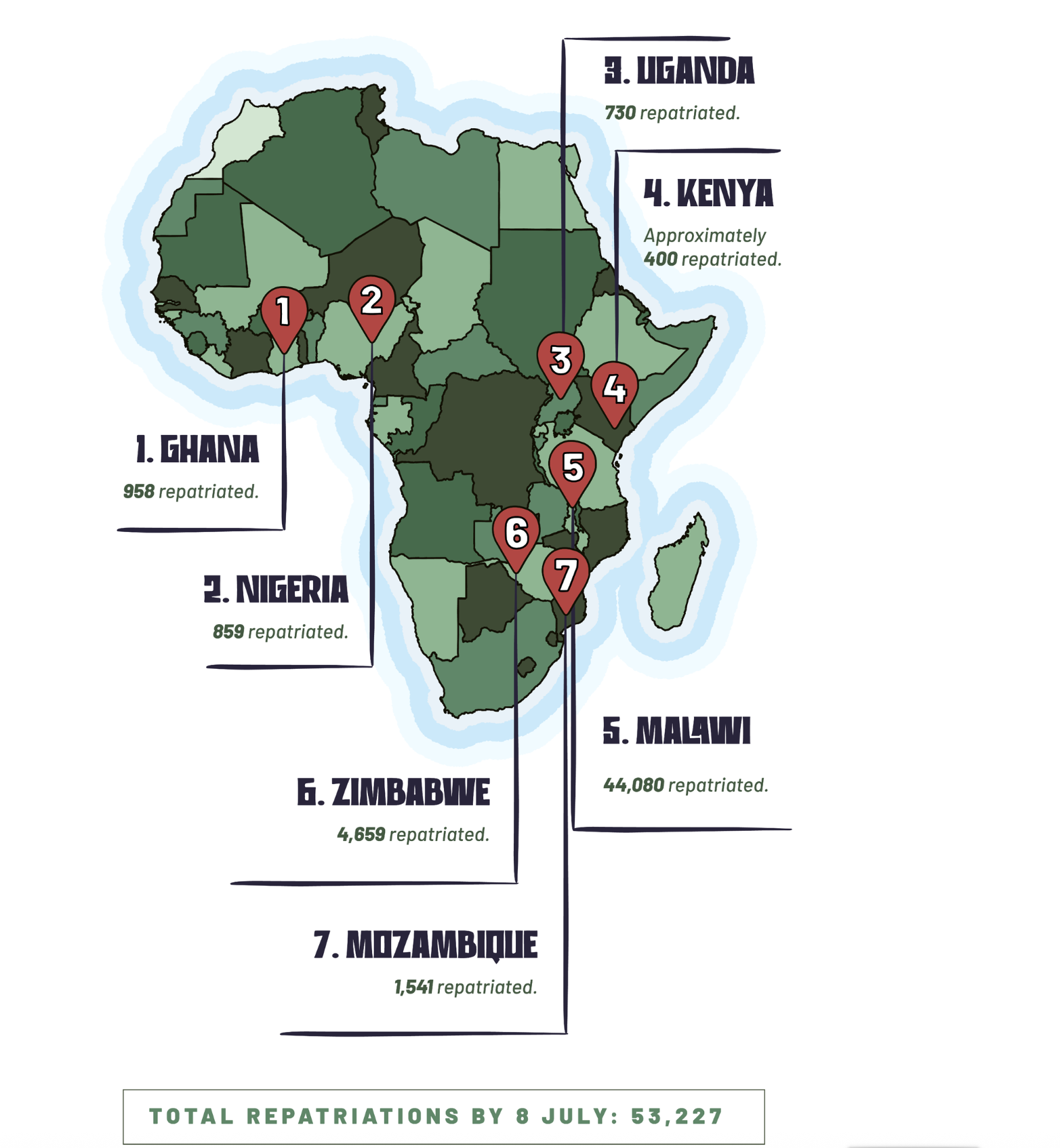
In addition, the governments of Ghana, Nigeria, Uganda and Kenya have flown about 3,000 of their nationals home over the last few months, according to official sources. That comprises 958 Ghanaians, 859 Nigerians, 730 Ugandans and “about 400” Kenyans.
The total continues to rise due to ongoing repatriations and deportations, and would be even higher if it included foreigners who returned home on their own.
Home Affairs is still processing many Malawians, Zimbabweans and Mozambicans through the Temporary Repatriation Processing Centre (TRPC) at Musina. Nigeria’s foreign ministry said a fifth — and last — repatriation flight carrying about 270 nationals would leave SA this week. Kenyan officials said a final repatriation flight of about 50 would leave Johannesburg on Thursday, 9 July.
The Home Affairs director-general, Livhuwani Tommy Makhode, and Border Management Authority Commissioner Michael Masiapato briefed members of Parliament’s Home Affairs portfolio committee on Tuesday at the TRPC. The centre was set up near the Zimbabwean border to process mainly Malawian, Zimbabwean and Mozambican nationals for repatriation by road.
Mavuso said 50,280 Malawians, Zimbabweans and Mozambicans had returned home between 14 June and Wednesday, 8 July. That comprised mainly Malawians — 44,080 — plus 4,659 Zimbabweans and 1,541 Mozambicans. These were mostly voluntary repatriations but also included a few thousand involuntary deportations.
In a slide presentation to the MPs, Home Affairs added that more foreigners “were still undergoing the verification process for repatriation from the TRPC and elsewhere in the country. Repatriation processes are undertaken at the TRPC; however, the process starts at a point where foreign nationals assemble prior to transportation to the TRPC.”
Differing figures
Home Affairs said the Ghanaian government had repatriated 958 of its nationals in three flights, on 27 May, 6 and 7 June. It said the Nigerian government had repatriated 268 in a flight on 11 June.
However, this figure is incomplete as Nigerian Foreign Ministry spokesperson Kimiebi Ebienfa told Daily Maverick this week that his government had repatriated 859 Nigerians, with another 270 expected to depart this week.
The acting Nigerian high commissioner to South Africa, Alexander Ajayi, told SABC this week that the flight this week would be the fifth and last.
/file/attachments/orphans/586-Nigerians-repatriated-from-SA-268-on-first-flight_631723.jpeg "Nigerian passengers who were repatriated from South Africa disembark from a chartered plane after landing at the Murtala Muhammed International Airport in Lagos, Nigeria, on 11 June. (Photo: Toyin Adedokun / AFP)")
The Zimbabwean government has also published figures that differ from those of Home Affairs, though the starting point of calculation might explain the difference. As of 5 July, it reported that a total of 73,678 migrants had returned to Zimbabwe from SA, of whom 54,630 self-repatriated while 19,048 were repatriated under the SA government’s repatriation programme.
The Mozambican government this week also issued slightly different figures, saying 1,363 Mozambicans had been repatriated.
The Ugandan High Commission in Pretoria posted on X that it had repatriated 730 Ugandans in three charter flights and on one scheduled flight.
The Kenyan government on Thursday said it had repatriated about 400 of its citizens and that the last flight was due to leave Johannesburg that day.
/file/attachments/orphans/6I1A6254_330090.jpg "Malawian nationals aboard a bus at the Durban Drive-In temporary repatriation centre on 1 July, as they prepare to depart for the journey back to Malawi. (Photo: Felix Dlangamandla)")
Adrian Roos, the DA Home Affairs spokesperson who attended the Musina briefing, noted that more than 87% of those repatriated voluntarily or deported through the TRPC were Malawians.
He said this was partly because many of the Malawians were in family units, whereas most of the Zimbabweans were men who had come to SA on their own. It may also have been because the Malawian government launched a large repatriation programme, though it was struggling to repatriate all of its nationals who wished to leave SA
Some humanitarian groups have raised concerns about conditions in the TRPC. But Roos claimed to Daily Maverick: “We had a special session with the NGOs and agencies such as the International Organization for Migration, and UNHCR, who all vouched for the humane nature in which the people are treated.”
Displaced migrants face severe healthcare crisis amid xenophobic violence, warns MSF
Médecins Sans Frontières says thousands displaced by anti-migrant violence are struggling to access healthcare, shelter and medication, while the government insists conditions at repatriation centres remain humane.
Source: Daily Maverick
By Kyran Blaauw
13 Jul 2026
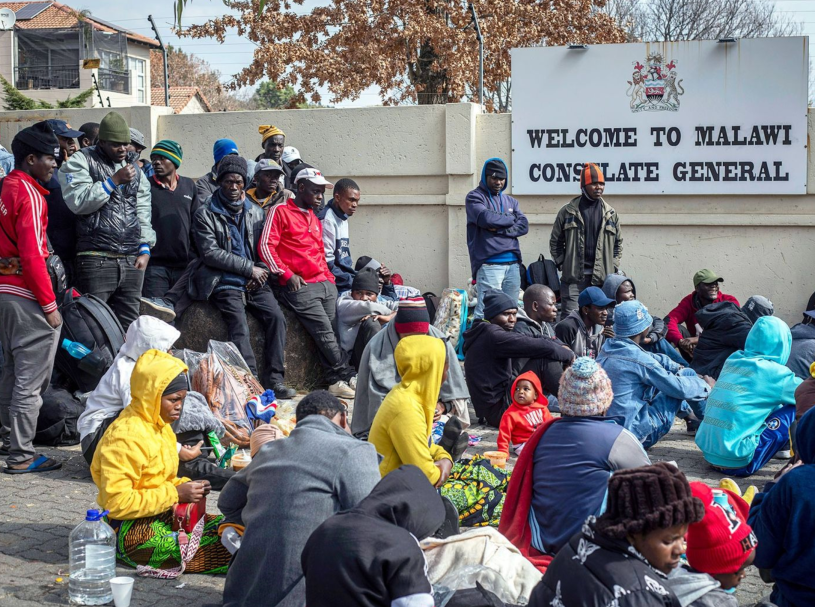
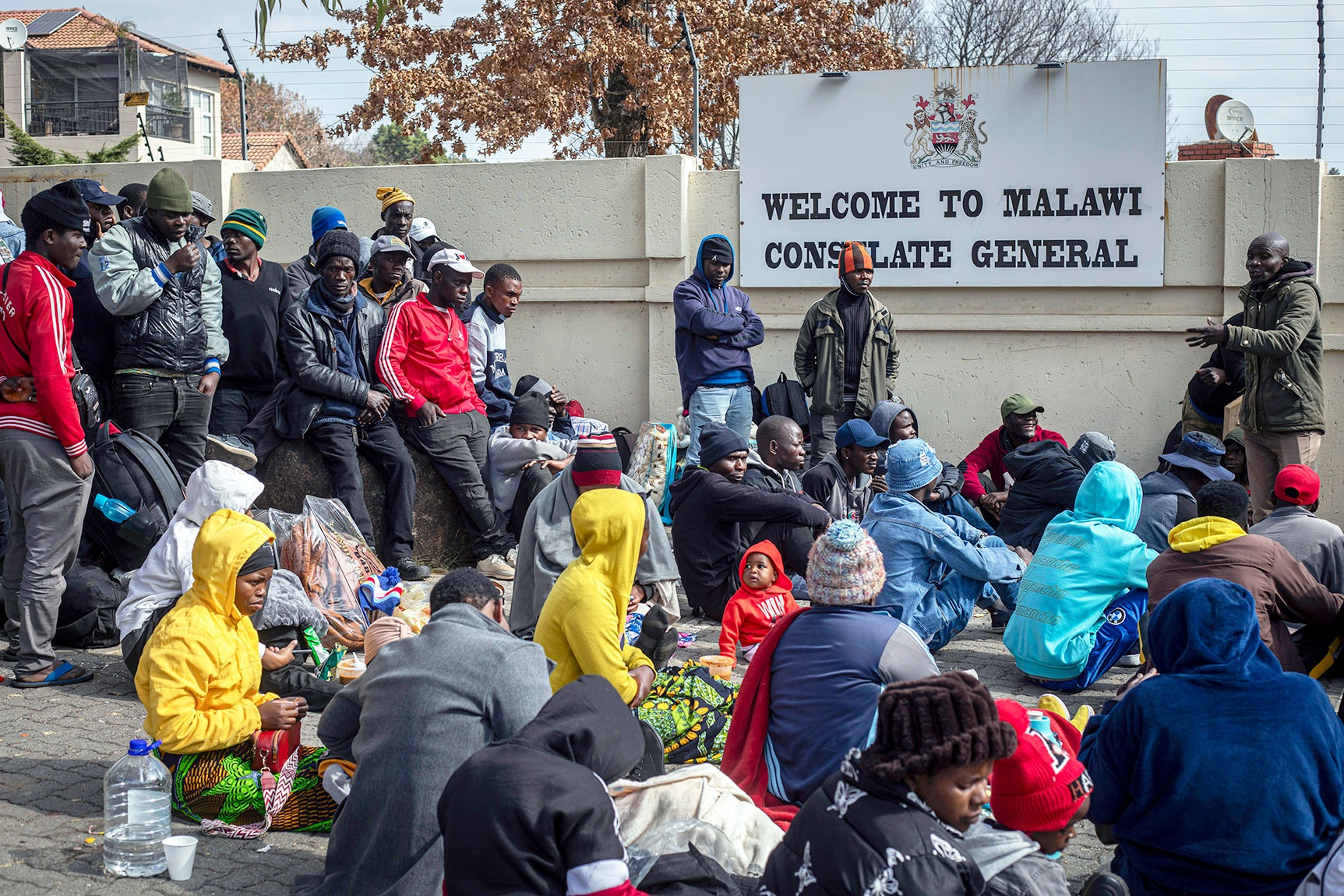 Malawian nationals wait outside the Malawi Consulate General in Johannesburg on 27 June 2026 to escape a violent wave of xenophobia and secure emergency transport home. (Photo: Per-Anders Pettersson / Getty Images)
Médecins Sans Frontières (MSF) is concerned that foreign nationals displaced by the xenophobic unrest are finding it harder to access healthcare, medication and shelter.
The warning from MSF comes as the government says it is providing humanitarian assistance and continues to implement its migration management plan following weeks of heightened tensions over undocumented foreign nationals.
Briefing the media on Sunday, Justice and Constitutional Development Minister Mmamoloko Kubayi, who chairs the Inter-Ministerial Committee on Migration (IMC), acknowledged concerns about conditions at the Musina Temporary Repatriation Processing Centre, but insisted that government was meeting its humanitarian obligations in line with the Constitution.
“We have noted some concerns from various quarters regarding the humanitarian situation, especially at the Musina Temporary Repatriation Centre. The IMC emphasises that government’s approach is both firm and humane,” said Kubayi.
“Emergency relief remains a civil mandate, and the State has an obligation relating to the right to life, access to healthcare, food, water and social security, and the protection of children. We can confirm that this temporary transit arrangement does provide appropriate shelter, water, sanitation, food, dignity packs, security, child protection and coordinated transport support where required,” the minister said.
In Musina, MSF is “urgently scaling up operations to respond to the medical needs of people gathered close to the border”.
The international medical humanitarian organisation said it had launched an emergency response across Gauteng, KwaZulu-Natal, the Western Cape and the South Africa-Zimbabwe border after a surge in violence displaced migrants and disrupted essential health services.
“We are deeply saddened to see people fleeing harassment and violence, and we stand in solidarity with affected communities who have had their rights to health and dignity undermined,” said Claire Waterhouse, MSF’s emergency coordinator.
“Our priority is to address disrupted access to healthcare for those most at risk, regardless of who they are or where they come from. It’s not over; we are very concerned that this situation is escalating into a humanitarian crisis.”
People had sought refuge in parks, churches, foreign consulates and other temporary locations after anti-migration groups issued a public ultimatum demanding that undocumented migrants leave South Africa by 30 June, MSF said.
‘Threats, intimidation and violence’
Although organisers said they were targeting undocumented migrants, MSF said many of its patients who were refugees, asylum seekers and documented migrants had also reported threats, intimidation and violence.
MSF said one of its biggest concerns was the interruption of treatment for people living with chronic illnesses.
“MSF is particularly concerned about continuity of care for people living with chronic diseases such as diabetes, hypertension, mental health, HIV and TB where lack of treatment or medication interruptions can lead to serious health complications,” said MSF nurse Phumla Tsotetsi.
Immigration courts fast-track deportations
Kubayi said dedicated immigration courts at Sherwood in KwaZulu-Natal had been established to speed up the processing of deportation cases.
She said seven courts had been set up in eThekwini, while an additional virtual court linked to Sherwood was also processing deportation matters.
Between 1 June 2026 and 9 July 2026, KwaZulu-Natal courts finalised 2,640 immigration cases for deportation, with the dedicated eThekwini courts accounting for 2,173 of those cases.
She said the re-establishment of a court at the Lindela Repatriation Centre would further accelerate deportations. Work to provide additional office space for the court was at an advanced stage and was expected to be completed within a month.
Kubayi said plans to establish another court to deal with immigration matters, among other cases, at an airport were also progressing. The Airports Company South Africa (Acsa) had made space available, and the court was expected to be operational within three months.
“Government commends communities that exercised their constitutional rights peacefully, while reminding all members of the public that freedom of expression and assembly must always be exercised within the law and must never be used to promote violence, discrimination or hatred.
“The IMC urges the public to report criminal activity, threats, intimidation, extortion, incitement or attacks on the law enforcement authorities and to refrain from sharing unverified information that may fuel fear or tension,” Kubayi said.


there are many people stuck in Cape Town, 2000 km from Musina without the means to get there. There needs to be humanitarian aid and assistance offered in Cape Town too. The official Refugee Reception Hime Affairs site was only open for 1 week now they have Law Enforcement chasing people away