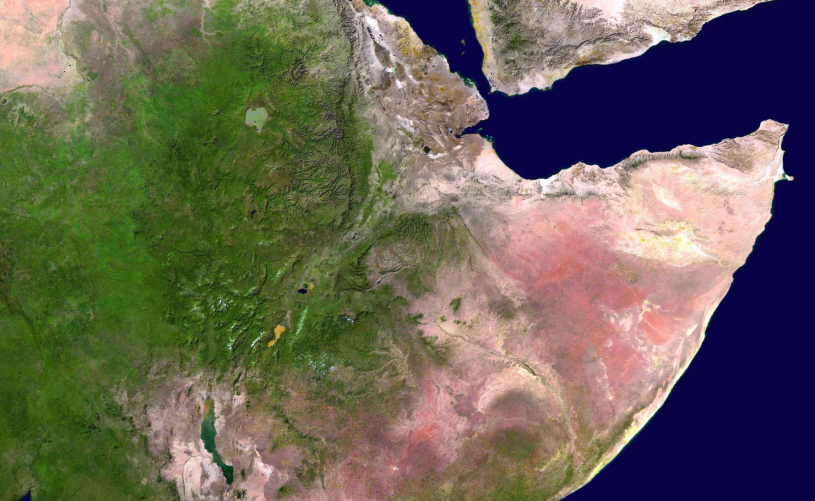
Washington has known Eritrea’s strategic importance for decades. The real question is what is being negotiated behind the reopening of the door to Asmara.
| By HABTOM GHEBREZGHIABHERSEP 18 |  |
Lifting the sanctions is nevertheless good news for the Eritrean people, may empower the dictator financially but weaken him politically, and may possibly benefit Massad Boulos.
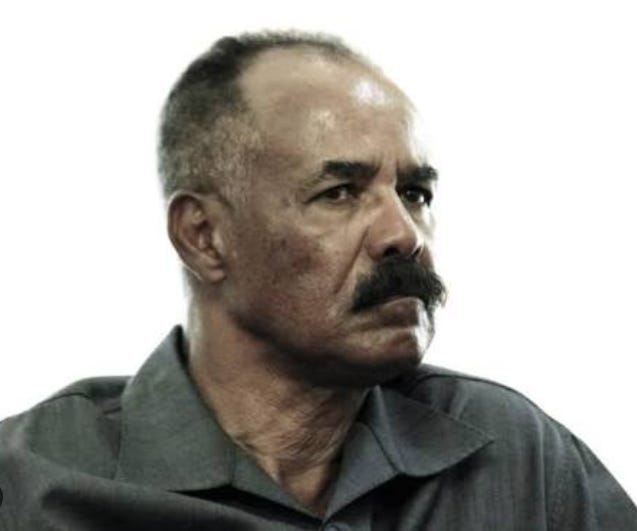
Sanctions were never the cause of Eritrea’s isolation and economic devastation—the dictator was. Their removal will not suddenly revive the economy or end Eritrea’s isolation. But the dictator can no longer blame American sanctions for everything.
It is appalling to see people spin the U.S. sanctions lift as Washington’s recognition of Eritrea’s importance, a message to Ethiopia, the beginning of U.S.–Eritrea normalization, and a sign that human rights are becoming less central to the relationship—as if human rights were ever a priority in the U.S.–Eritrea relationship.
The U.S. did not suddenly discover that Eritrea is strategically important. Washington has known it for decades.
Under George H.W. Bush, Washington backed and facilitated Eritrea’s independence once it had become a military and political reality, helping facilitate the process despite strong OAU opposition to Eritrea’s independence and pressure on the United States.
After independence, the Clinton administration actively built relations with Asmara, including military engagement, training and ship visits. Bill Clinton met Isaias Afwerki at the White House in 1995. Hillary Clinton visited Asmara in 1997. Clinton repeatedly sent senior officials to Eritrea during the Ethiopia-Eritrea war.
In 2002, Defense Secretary Donald Rumsfeld visited Asmara, while the commander of U.S. Central Command also visited and U.S. defense officials explored Eritrea’s Red Sea military potential.
Washington kept trying to engage. The problem was never that America failed to understand Eritrea’s strategic value. The problem was the dictator.
Afwerki deliberately turned Eritrea against “American imperialism,” while showing far less hostility toward Chinese, Russian, Iranian, Turkish and other imperial ambitions in Africa and the Red Sea.
The claim that lifting sanctions is a message to Ethiopia that Washington “does not support Ethiopia obtaining Red Sea access by force” is wishful thinking—and essentially Eritrean dictator propaganda.
Ethiopia is in no position to seize Red Sea access militarily and has repeatedly affirmed in international and regional forums its respect for Eritrea’s sovereignty and territorial integrity. Washington is simply becoming more indifferent to the dictator’s destabilizing activities toward Ethiopia, Sudan and the wider region.
But one point is correct: Washington is reopening the Eritrea channel. There have been meetings involving Sisi, the Eritrean dictator and Massad Boulos in Egypt, as well as repeated contacts with Eritrea’s foreign minister.
And given the Eritrean dictator’s behavior—and the opaque nature of the discussions involving Sisi, the dictator and Massad Boulos—there is little basis for calling this straightforward U.S.–Eritrea normalization.
So what is actually being negotiated?
There are interests converging here: the dictator needs to survive the Trump administration, given his ties and cooperation with Iran and Islamist actors in the region; Egypt has strategic reasons to keep Eritrea close against Ethiopia and preserve its relevance in the Horn of Africa and Red Sea; and Boulos brings a businessman’s investment perspective to Africa, not the mindset of a career diplomat.
A secret diplomatic normalization? A mining deal brokered through Cairo?
The suspicion is legitimate. After the Houthis consolidated control over Bab el-Mandeb, Eritrea’s foreign minister and close associates in the U.S. were still declaring “U.S. out, Israel out.” Egypt and Eritrea have also announced Egyptian investment in Eritrean mining—despite Egypt’s severe economic constraints.
That raises an obvious question: is Washington reopening a diplomatic channel with Asmara, or is something else being negotiated through Cairo?
And by the way, I am not against American-owned mining companies—private or otherwise—entering Eritrea’s mining sector, even through a third party. If that happens, it would not be much worse than the Chinese mining companies that have exploited Eritrean national service conscripts as slave labor.
There is no evidence that this is happening; these are only rumors and speculation. But if it does happen, it could create an opening.
And on human rights: they were never the center of the U.S.–Eritrea relationship. The central problem has been the dictator’s deliberate opposition to the United States and its presence in the Red Sea.
As the U.S. pulls back from the Red Sea, the dictator can no longer depend on the threat of “American imperialism.” He has simply found a new enemy: “UAE port imperialism” and “Zionist ambitions” to control Africa.
The target changes. The anti-Western politics do not.

