By Dereje T. Asefa, PhD
Leader of Cooperation platform for Norwegian -Tigrayans and Secretary of Union of Tigrayans in Europe
The escalating tensions between Ethiopia and Eritrea must be taken seriously. Every effort should be made to ensure that civilians, particularly the people of Tigray, do not once again become victims of a devastating conflict with far-reaching security and humanitarian consequences.
Much of the discussion surrounding the tensions between the two states has been narrowly linked to the TPLF. Some commentators argue that the dispute could be resolved if Eritrea were to extradite TPLF leaders to Ethiopia. Such arguments, however, misread the broader strategic realities that have evolved in the Horn of Africa. The issue has moved far beyond the fate of the TPLF leadership. At its core lies Ethiopia’s pursuit of reliable sea access and its ambition to reshape the region’s geopolitical architecture in support of its economic, security, and strategic interests.
Ethiopia’s quest for sea access has become an enduring national priority that is no longer tied to the TPLF. Eritrea, meanwhile, views aspects of Ethiopia’s ambitions through the lens of sovereignty and territorial integrity. Reconciling these competing concerns requires political imagination and sustained diplomacy rather than confrontation.
A possible solution lies in a new geopolitical arrangement inspired by emerging international precedents. The Greenland model demonstrates that sovereignty and strategic interests need not be mutually exclusive. States can secure vital strategic interests without altering internationally recognized borders. This principle may offer a useful framework for addressing Ethiopia’s legitimate interest in reliable access to the Red Sea while fully respecting Eritrea’s sovereignty and territorial integrity under international law.
Ethiopia’s quest for sea access is a strategic national interest
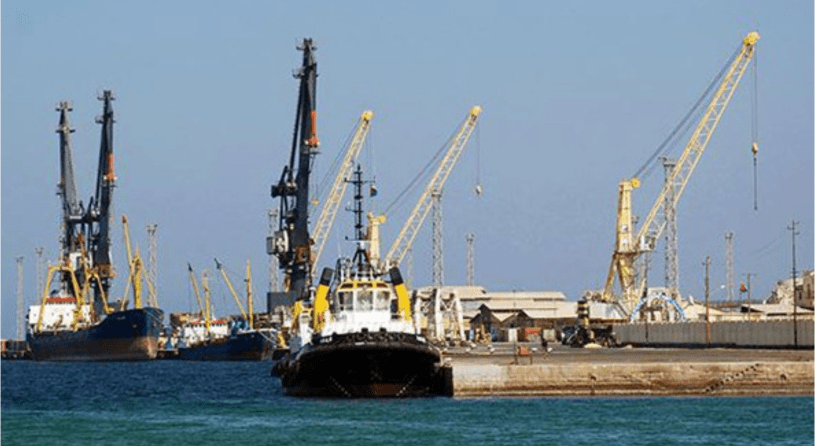
Ethiopia is the world’s most populous landlocked country. Dependence on external ports creates economic vulnerabilities, increases transportation costs, limits strategic flexibility, and exposes long-term development to external security uncertainties.
For these reasons, sea access is not merely a policy preference of the current government, but a strategic national interest rooted in geography, economics, demographics, and national security. Regardless of political orientation, any future Ethiopian government is likely to confront the same challenge. The question is not whether Ethiopia will continue seeking reliable maritime access, but how this objective can be achieved in a manner that promotes regional peace, security, prosperity, and stability.
Separating Sovereignty from Access: The Greenland Model
Contrary to many external portrayals, Ethiopia’s preferred option remains negotiation rather than coercion as a negotiated settlement is more sustainable, less costly, and ultimately more beneficial to all parties.
This is where the lessons from the Greenland model, where the strategic approach adopted by the United States and Denmark becomes relevant. The Trump administration openly articulated what it considered a vital national interest, sometimes with forceful rhetoric as a part of the public narrative while Denmark could not negotiate territorial integrity. This has opened a process aimed at reconciling American strategic interests with Denmark’s commitment to territorial integrity.
Applied to the Horn of Africa, the principle is straightforward: sovereignty and access do not need to be contradictory. The Greenland model can be employed so that Ethiopia’s strategic interest for permanent, treaty-based, internationally guaranteed rights of sea access for commercial, logistical, as well as security purposes can be fulfilled without any change as to the Eritrea’s sovereignty and its internationally recognized territory. Such an arrangement would not be a victory for one side and a defeat for the other. It would represent a strategic compromise fostering a redefined geopolitical arrangement for peaceful co-existence rather than coercion.
Eritrea must reconsider its diplomatic approach
For such a settlement to emerge, Eritrea should reassess its diplomatic approach that has often been shaped by rejectionist approach diplomatic approach toward Ethiopian aspiration to sea access. The implicit assumption appears to be that Ethiopia’s demands can indefinitely be postponed or contained. Yet developments in the region suggest otherwise. Sea access has become a central component of Ethiopia’s long-term strategic agenda, transcending individual governments and political movements. The more each proposal of Ethiopia is met with outright rejection, the greater the risk that a manageable political dispute evolves into a broader security challenge.
It is time for Eritrean policymakers to recognize that the TPLF question and Ethiopia’s pursuit of sea access are separate issues. Even a dramatic move, such as the extradition of TPLF leaders to Ethiopia, would be unlikely to alter Ethiopia’s long-term interest in securing reliable maritime access for economic, strategic, and security purposes. Ethiopia’s quest for sea access is driven by geography, economics, and national security considerations rather than short-term political calculations, and therefore cannot be resolved through measures directed solely at the TPLF.
The Regional balance is different from 1998
Any comparison with the 1998-2000 Ethio-Eritrean war must be approached with caution. At the outset of the 1998-2000 war. Eritrea benefited from Ethiopia’s lack of preparedness and achieved notable battlefield successes, which Ethiopia effectively countered by mobilising resources in a short period of time.
Ethiopia possesses a significantly stronger position than it did during the 1998-2000 conflict. Its demographic weight, economic capacity, technological resources, and military capabilities have expanded considerably over the past quarter century. Whether one supports or opposes the Ethiopia’s strategic interest in sea access, these realities of the current balance of power will shape the strategic calculations of all stakeholders that have stake in the horn.
The Greenland model of America is instructive because the United States articulated its interests openly, maintained strategic pressure, but ultimately pursued its objectives through engagement and negotiation. Ethiopia’s strategic interest in sea access could follow a similar logic: remain firm on the objective of reliable sea access while keeping diplomacy as the preferred instrument for achieving it.
A growing consensus on sea access in Ethiopia
The political landscape within Ethiopia is also changed day after day. The TPLF no longer enjoys the dominance it once exercised within Tigray as new political and civic stakeholders are increasingly shaping the region’s future. This transformation has reduced the ability of any single organization to define Tigray’s political trajectory.
Ethiopia’s internal political alignments could also shift significantly as sea access increasingly becomes a national strategic priority. For many Amhara political elites, access to the sea has remained a defining strategic question since Eritrea’s independence. Some have long argued that Ethiopia’s historical access to the Red Sea was surrendered without securing sufficient long-term guarantees. Many Oromo political actors have emphasized the importance of sea access for Ethiopia’s economic and security interests. The framing of sea access as a strategic imperative for Ethiopia’s economic future and national security has the potential to appeal to a wide range of influential political actors, thereby fostering a broader national consensus that transcends existing political cleavages.
Tigray’s vital interests are secured with Ethiopia
Tigray’s long-term interests are better served through engagement with Ethiopia’s strategic future than through alignment with Eritrea’s geopolitical objectives. While the atrocities committed during the 2020-2022 war must be acknowledged and demands for justice and accountability pursued, these issues should not be conflated with the stability of the Ethiopian state. The extensive documentation of atrocities by the UN International Commission of Human Rights Experts on Ethiopia (ICHREE) provides a lasting evidentiary record that strengthens future efforts toward justice, accountability, and historical recognition. Accountability is ultimately a political and legal process, not a function of state fragility.
Eritrea’s policies are designed to advance Eritrean interests, whereas Tigray’s constitutional status, economic links, and geographic reality remain firmly tied to Ethiopia. The assumption that Tigray’s interests are best served by aligning against Ethiopia is therefore difficult to sustain.
Tigray could instead position itself as a strategic corridor in Ethiopia’s pursuit of reliable sea access. Given its geographic location, it stands to benefit from expanded trade routes, logistics infrastructure, investment, and regional connectivity. Such an approach offers a pathway from conflict to reconstruction, replacing a legacy of war with economic development and regional cooperation.
A push for Greenland-inspired solution
Ethiopia is likely to continue pursuing reliable sea access, preferably through negotiations with Eritrea that secure mutual benefits. Rather than treating sovereignty and access as inseparable, both countries could explore innovative arrangements that preserve Eritrean territorial integrity while addressing Ethiopia’s economic, security, and geopolitical interests. The Greenland precedent illustrates that strategic interests can be accommodated without altering internationally recognized borders when parties are willing to negotiate creatively.
Failure to explore such options risks turning a diplomatic dispute into a security crisis. Recent reports of rising tensions and alleged military incidents along the Ethiopia-Eritrea frontier underscore the importance of a negotiated solution. Ethiopia has reportedly framed these developments as violations of its sovereignty and territorial integrity and sought international attention, including engagement with the UN Security Council. In this context, a redefined geopolitical architecture inspired by the Greenland model offers a constructive pathway for addressing competing interests before tensions escalate further.
For Tigray, the choice is particularly significant. The region can remain entangled in geopolitical rivalries or support a negotiated settlement that secures Ethiopia’s maritime interests while positioning Tigray as a key gateway to the Red Sea. Given its geographic location, Tigray stands to benefit from new trade corridors, logistics infrastructure, investment, and regional connectivity. The former path risks prolonging instability, while the latter offers stronger prospects for reconstruction, economic growth, and regional integration.

