Ethiopia needs an inclusive national dialogue and an agreed social contract that protects the rights of its diverse nationalities while preserving the state’s integrity, because without political accommodation, continued military confrontation risks deepening fragmentation and destabilising the Horn of Africa.
Source: Sahan
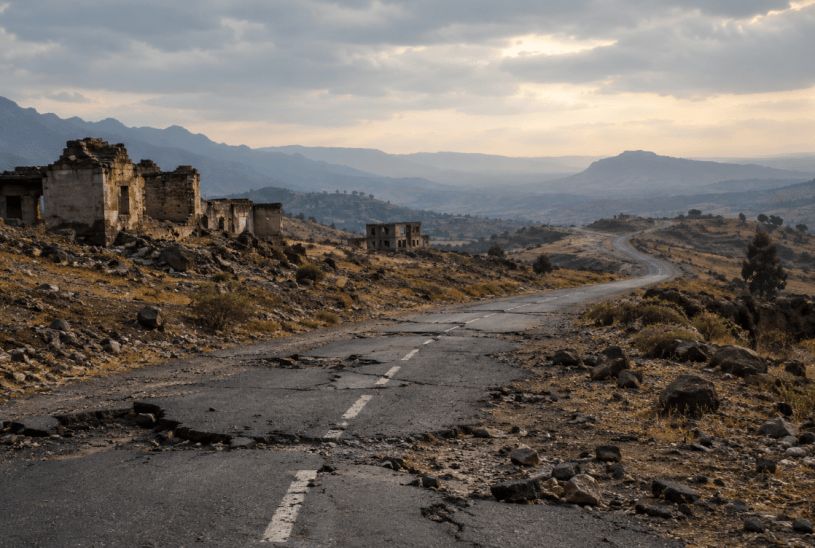
Ethiopia’s leaders are fighting a new war with an old conviction: that military victory can permanently settle the question of who owns the state. But the coalition that encircled Tigray in 2020 has fractured, the regional balance has shifted, and drone capabilities are spreading to the government’s opponents. The battlefield looks familiar, but the strategic conditions are profoundly different. The danger lies in mistaking the temporary capture of territory for the resolution of deep-seated conflict, a ruinous road Ethiopia has travelled before; its towns bear the scars, and its people carry the losses.
The 2020–2022 war drew on resentment of the Tigray People’s Liberation Front (TPLF), which had dominated the former ruling coalition, the Ethiopian People’s Revolutionary Democratic Front, for nearly three decades. Its marginalisation after the creation of the Prosperity Party, together with authoritarian rule and exclusion, gave competing actors a common adversary. Eritrea sought to settle its confrontation with the TPLF, Amhara forces pursued security and territorial aims, and federal and Afar authorities mobilised against Tigrayan advances; their purposes differed, but their convergence enabled overwhelming pressure on Tigray.
Tigray faced total encirclement, severed services and devastating supply restrictions, while the federal air force and externally supplied drones deepened a severe military imbalance. Grievances against the TPLF leadership became entangled with a campaign whose consequences fell heavily on civilians; in June 2021, EU envoy Pekka Haavisto told a European Parliament committee that Ethiopia’s leaders had spoken of plans to “wipe out the Tigrayans for 100 years”.
After the Pretoria agreement and the federal government’s 2023 attempt to dismantle regional special forces, a violent confrontation with Fano grew into a sustained war in Amhara, and elements of Fano have since joined an opposition alliance with their former Tigrayan enemies. Former partners are now adversaries, and Addis Ababa must divide its forces across several fronts. Neither Amhara nor Afar is a single political camp, since regional governments, armed factions and civilians hold distinct interests, but the alignment that once isolated Tigray cannot simply be rebuilt by federal decree.
Eritrea’s fractured relationship with Ethiopia is consequential and driven by an overt push from Addis Ababa. Prime Minister Abiy Ahmed and Field Marshal Birhanu Jula have stated that securing Red Sea access, with Assab in their sights, is an objective they intend to achieve by all means. For Asmara this turns economic arguments into an existential threat of territorial coercion, and reports of Eritrean troops coming under Ethiopian drone attack in Tigray show how dangerous the rupture is. The threat has become the single catalyst binding regional rivals, pushing Sudan and Eritrea to back the opposition inside Ethiopia, and Asmara has a strong incentive to prevent a decisive federal victory, since an Ethiopian army freed from internal campaigns and positioned on its frontier would threaten it directly. This convergence does not erase the suffering Eritrean forces inflicted on Tigrayans; it shows how fear reorders alliances.
Sudan deepens the entanglement. Thousands of Tigrayans are fighting alongside General Abdel Fattah al-Burhan’s Sudanese Armed Forces, and training camps for the Rapid Support Forces (RSF) inside Ethiopia have become operational. Despite Addis Ababa’s denials, the support for the RSF is real, and the fighters, supply networks and sponsors connecting the two wars make each country’s instability a resource for combatants in the other.
The aerial balance has also changed, though not to equality. Federal forces retain technical advantages, but reported rebel drone capabilities challenge the government’s monopoly on unmanned strikes, and claims of drone attacks in Addis Ababa suggest an expanding battlefield: the capital faced a different threat in 2021, when opposition forces advanced south, but it could now be struck without first capturing the roads leading there.
Changed alliances do not confer automatic superiority on the northern resistance. Tigray’s leadership has fractured: Getachew Reda and General Tsadkan Gebretensae broke with the dominant TPLF leadership, while government-aligned Tigrayan forces have joined the federal advance. Addis Ababa can exploit deep divisions in a resistance that once drew strength from cohesion. Federal gains matter, yet occupying towns does not necessarily destroy an opponent’s command structure or secure the countryside, and dispersal may preserve rebel forces for mobile operations while forcing the government to defend more positions and longer supply routes. The strategic test is whether federal forces can sustain those commitments across multiple fronts.
While federal attention is concentrated on the northern theatre, peripheral regions are slipping from the state’s grasp, and seven major armed opposition organisations have reportedly moved towards unseating the central government under a unified banner, the Alliance for Survival. A government can advance on several maps while exhausting the financial and human means to hold what it captures, and these pressures could turn federal gains into a costly commitment. If Tigrayan forces preserve their command structure and sustain attacks on exposed positions and supply routes, Addis Ababa must choose between reinforcing Tigray and containing advances elsewhere, and a major defeat in Tigray could weaken its ability to hold Amhara and defend the approaches to the capital. A cascading reversal could force withdrawal from all of Tigray and Amhara and bring the war to the gates of Addis Ababa, though this remains a consequential scenario rather than an inevitable outcome, dependent on the scale of federal losses and the opposition’s ability to coordinate and sustain its advances.
Jawar Mohammed’s elephant analogy captures the political anxiety beneath Ethiopia’s military struggles: an elephant finds climbing a mountain difficult, but once at the summit, descending becomes perilous, so those invested in its position conclude it must stay there at all costs. Applied to Ethiopia, this equates an incumbent leadership’s survival with a community’s security. For some Oromo nationalist elites, defending an Oromo-led federal administration appears essential even when its conduct contradicts the democratic freedoms they once demanded, and power sharing is portrayed as a collective retreat from state control.
This position is fractured. Oromo citizens, opposition parties and armed movements cannot be neatly folded into the government’s interests, and a leadership’s ethnic identity does not establish that its population controls the state or benefits equally from its decisions. The Oromo Liberation Army, for instance, wages a campaign from a position of radical nationalism, viewing the administration as a betrayal of self-determination. Framing the administration’s survival as essential to Oromo security encourages an existential “us versus them” politics, and conflicts involving Oromo communities and their neighbours can deepen that insecurity, narrowing cooperation, reinforcing dependence on the central state and making solidarity across communities harder when it is most needed.
The costs extend beyond the frontlines. An enlarged army and repeated recruitment drives strain public finances, while expensive prestige projects raise questions about government priorities. For households facing food insecurity and children whose education has been interrupted, the consequences are immediate, and a prolonged war risks consuming the resources needed for recovery while deepening the grievances that sustain resistance.
Yet an opposition coalition also owes Ethiopians more than agreement on removing the current leadership. Cooperation between former enemies does not automatically settle disputed regional territories, reconcile wartime abuses or build a shared constitutional future. The Alliance for Survival’s founding proclamation commits its members to resolving differences through peaceful dialogue; that matters, but its credibility will depend on how they address territorial disputes, civilian protection and disagreements among themselves.
The current strategy of managing internal dissent through rolling military campaigns, temporary tactical alliances and cross-border proxy warfare is running out of road. Ethiopia needs a political order in which losing office does not mean losing protection, and sharing authority does not mean surrendering a people’s future. External partners should judge progress by civilian security, humanitarian access and credible political accommodation, rather than the changing ownership of towns.
The elephant cannot remain on the summit by destroying the mountain beneath it. Those defending its position must decide whether power can be shared before preserving it consumes the country. Ethiopia needs an inclusive national dialogue and an agreed social contract that protects the rights of its diverse nationalities while preserving the state’s integrity, because without political accommodation, continued military confrontation risks deepening fragmentation and destabilising the Horn of Africa. Whether those guiding the elephant accept shared governance or cling to exclusive control will help determine whether Ethiopia emerges from this crisis united or descends into a wider struggle over its survival.

