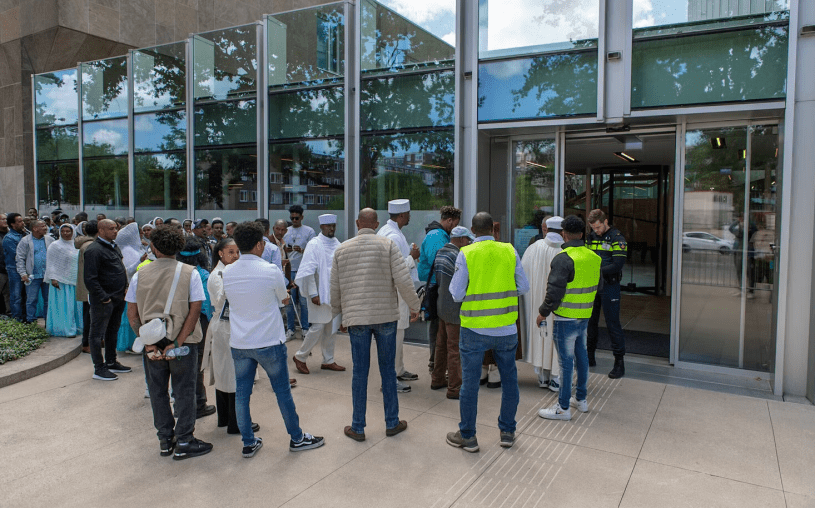
In pictures: Eritreans demonstrate at court in Zwolle
July 5, 2024 photos by Peter Denekamp
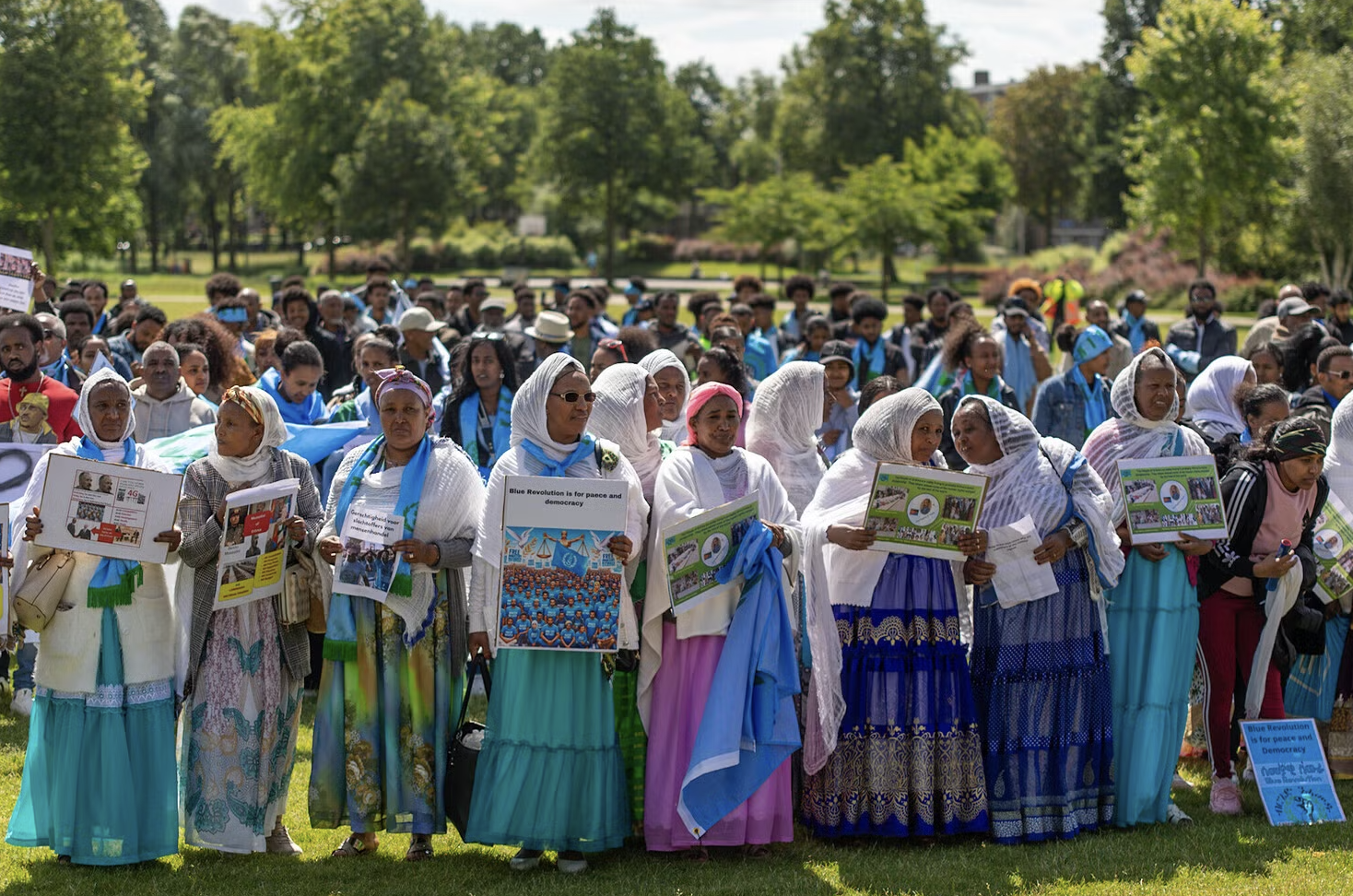
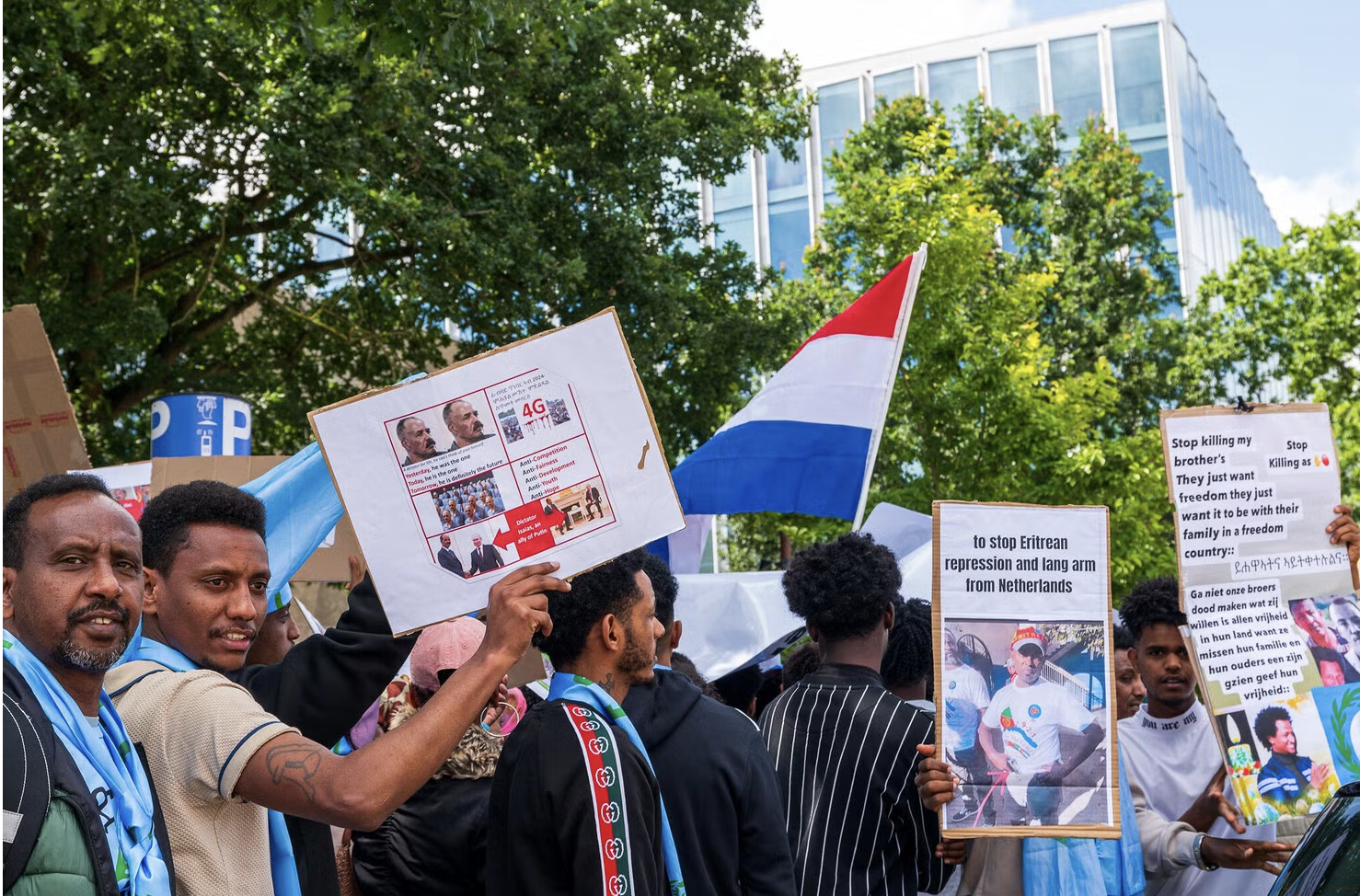
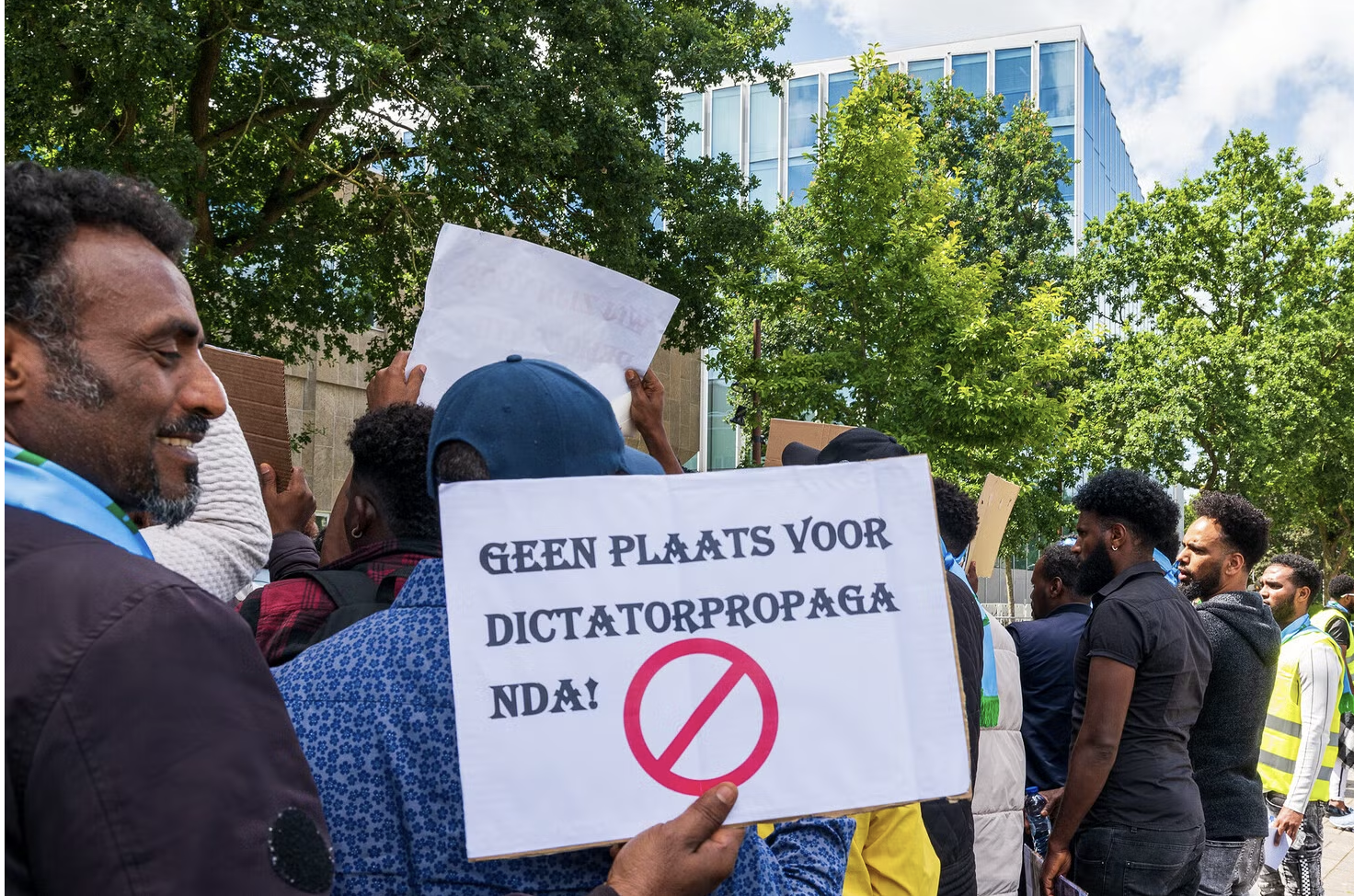
Some four hundred Eritreans demonstrated at the court in Zwolle on Thursday afternoon, where an interim hearing was being held against an Eritrean human trafficker.
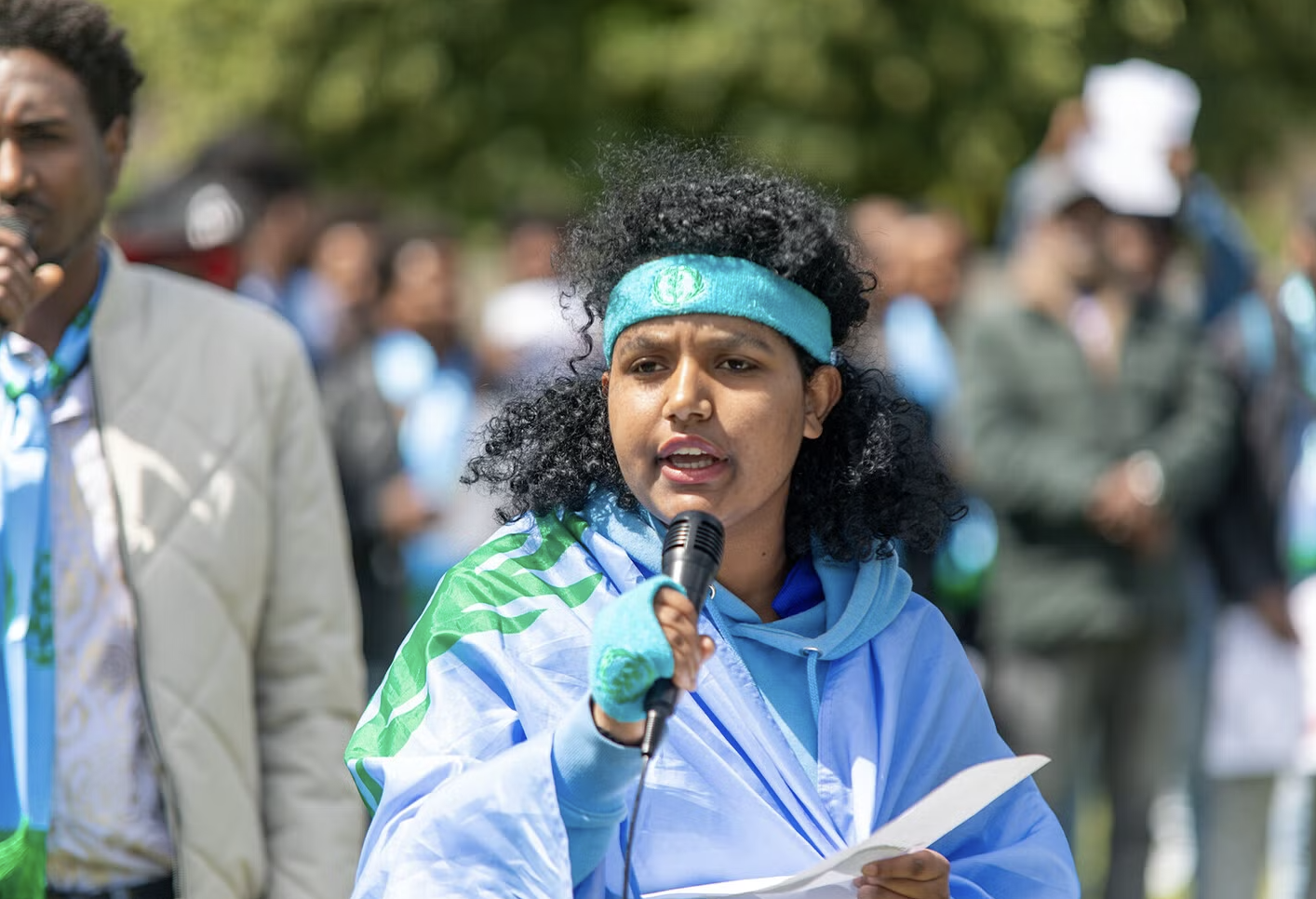
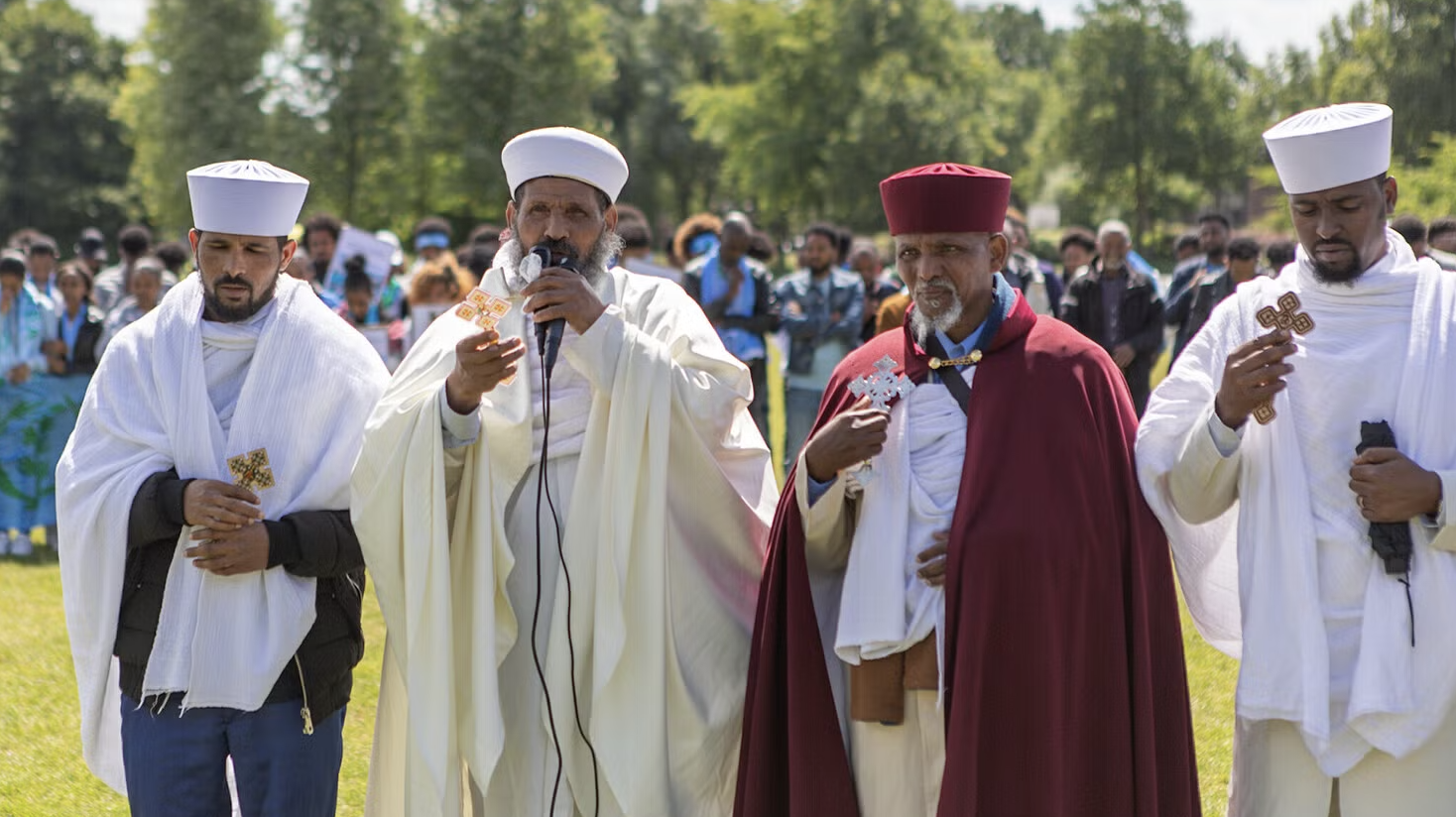
Demonstrators from all over the country came to Zwolle to protest against human trafficking and the dictatorship in Eritrea. They are also very concerned about their own safety, because according to them the long arm of the dictator reaches into the Netherlands. They therefore demand that the Dutch government does more to protect them against this.
The demonstration started around noon in Park de Wezenlanden, near the provincial government building. The police were present in large numbers, but did not have to take action. However, as a precaution, sticks that were attached to the signs and banners that had been brought along were confiscated. The demonstrators had their own security service, which kept the protest on track.
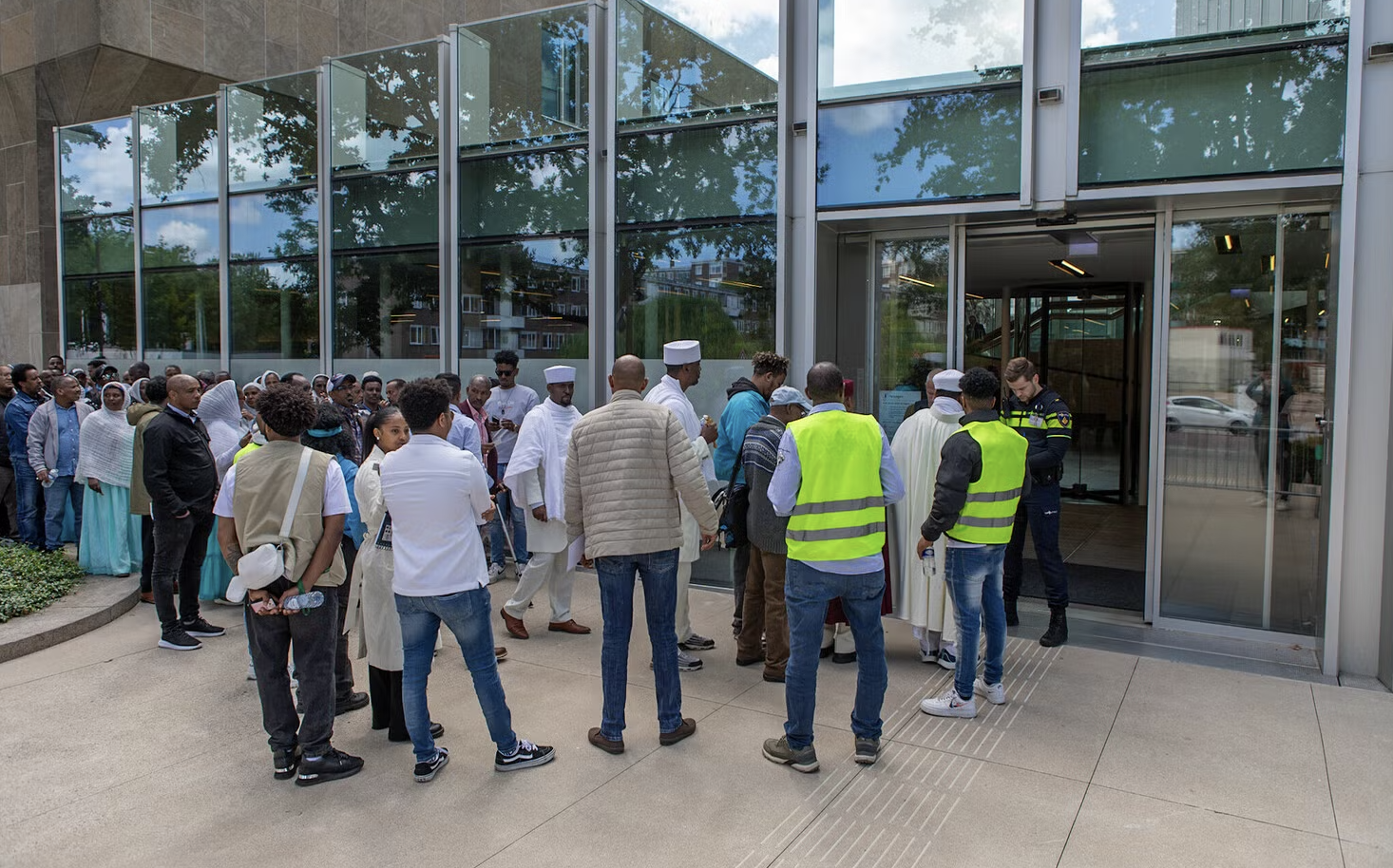
One hundred protesters were granted permission by the court to follow the hearing from the public gallery. The rest demonstrated on the pavement in front of the court during the hearing. The police and road authorities of Rova were full of praise for the way the demonstration went. All their requests were followed by the protesters.
The Schuurmanstraat and Luttenbergstraat remained accessible to traffic. The demonstrators also left the entrance to the courthouse free for other visitors. After the demonstration, the police service cleared up waste that had been thrown on the street at the courthouse and provincial government building. Most of the litter that ended up in their garbage bags was already there before the first Eritrean demonstrators appeared in Zwolle.
Professor Mirjam van Reisen, an expert on the Horn of Africa, suggested there were lessons that could be learned from the protest.
How violence can be avoided at Eritrean public gatherings – lessons from The Netherlands:
- Any Eritrean meeting, festival, demonstration, should be approved and announced by local authorities beforehand;
- No public meetings should be kept hidden by local authorities or police;
- Any public gatherings should be communicated as a minimum: date, time, location, contact details to reach out to local authority for any concern, contact details to reach out to police for any concern without bias;
- Clear policies for any groups to be able to present their concerns in public without bias;
- Clear rules to forbid carrying of any sticks, weapons or dangerous instruments by all participants without bias;
- Maintaining the rule to not carry any weapons or dangerous things, including sticks without bias;
- Open communication to all groups in the Eritrean community without bias;
- Setting clear rules, such as for the organisers, the cleaning of the place, the time and the proceedings without bias;
- Clear publicly available communication lines for reaching local authority and police to bring any concerns to be followed up without bias;
- Evaluation – without bias, with each group engaged.


bring this is the peaceful means of fighting injustice in Eritrea. Justice for Eritrean brothers.