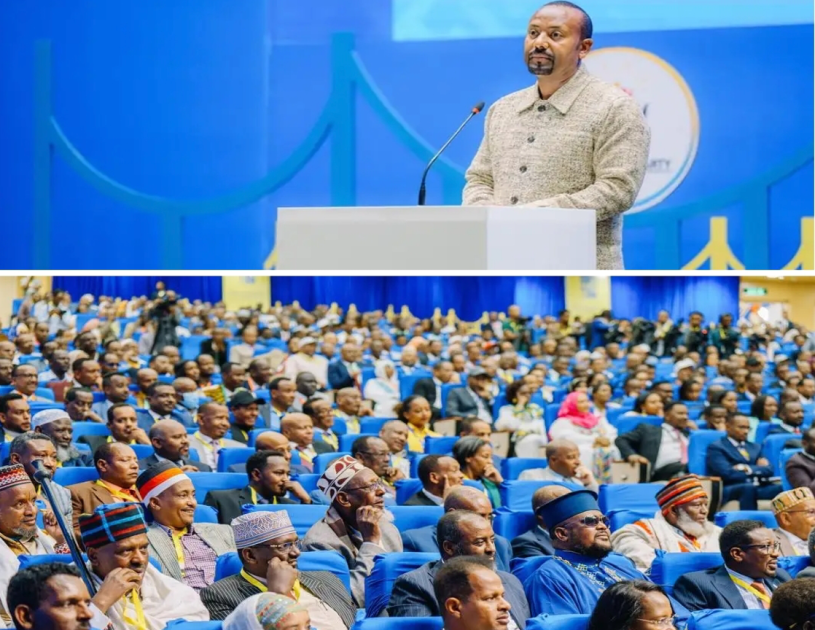
Ethiopia is entering a critical period ahead of its 2026 general elections, marked by intensifying armed conflicts, shrinking political space, and a faltering economy. In this context, the government’s flagship National Dialogue process, intended to foster consensus on divisive national issues, risks becoming mere window dressing.
Source: Clingendael

In short
- Ethiopia faces mounting crises ahead of the 2026 elections, including civil wars, repression, and deep political fragmentation.
- The National Dialogue risks deepening instability as it excludes key opposition and armed groups and lacks credibility.
- The government must urgently shift focus to ending civil wars and reopening civic and political space.
- International partners should use their leverage to press for dialogue reform and democratic conditions before offering further support.
Navigating Conflict and Growing Repression Ahead of 2026 Elections
Ethiopia is entering a critical period ahead of its 2026 general elections, marked by intensifying armed conflicts, shrinking political space, and a faltering economy. In this context, the government’s flagship National Dialogue process, intended to foster consensus on divisive national issues, risks becoming mere window dressing. While the Dialogue Commission has made progress in convening political actors, its credibility is undermined by the exclusion of key opposition and armed groups, as well as concerns over its independence.
This policy brief examines whether the National Dialogue, in its current form, can meaningfully address Ethiopia’s deepening political crisis. It explores the interplay between ongoing civil wars in Oromia, Amhara, and Tigray, the government’s increasingly repressive tactics, and the limitations of the dialogue process. The brief argues that without urgent reforms to ensure inclusiveness and political openness, the National Dialogue may further entrench instability rather than resolve it. It concludes with recommendations for the Ethiopian government and its international partners, including the EU and the Netherlands, on how to recalibrate their approach to support a more credible and constructive path forward.

