By Dawit Mesfin
London, 10 June 2026
This article is based on a story published by BBC Tigrinya on 27 May 2026.
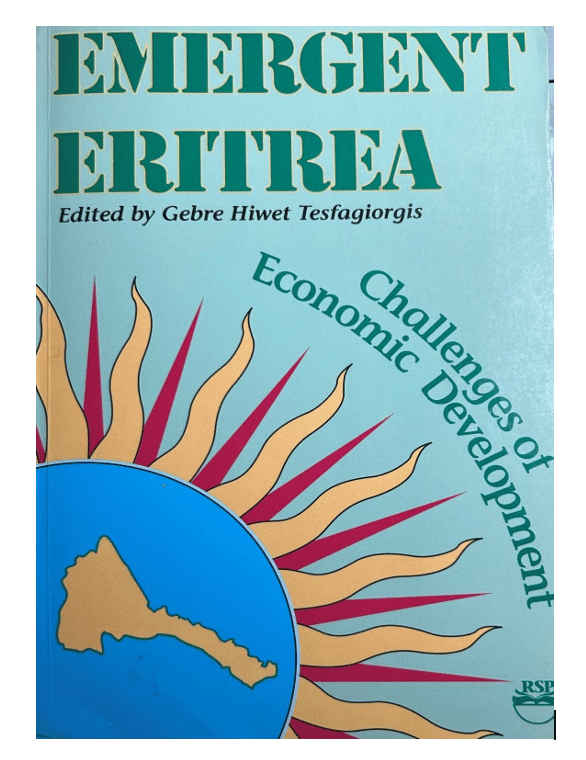
Some books are more than books. They become time capsules, preserving not only ideas but entire moments of collective hope. Emergent Eritrea, edited by Professor Gebrehiwot Tesfagiorgis and published in the dawn of Eritrea’s independence, is one such book.
I still remember encountering it for the first time. It appeared at a moment when a nation, after decades of sacrifice and struggle, stood poised between memory and possibility. Eritrea had emerged from war with a rare sense of purpose and confidence. The future seemed open, almost tangible. Emergent Eritrea sought to give that future shape.
The volume grew out of an important conference held at the University of Asmara in the wake of Eritrean independence. Bringing together scholars, policymakers, and institutions of the Provisional Government of Eritrea, the conference was dedicated to a pressing question: how could a freshly liberated country transform military and political victory into economic and social development? The result was not merely an academic exercise. It was a blueprint of aspirations – an attempt to imagine and plan the reconstruction of a nation.
Thirty-five years later, as Eritreans commemorate another Independence Day, I find myself returning to this book – not simply as a historical document, but as a mirror reflecting the distance between what was imagined and what eventually came to pass.
The experience is inevitably tinged with nostalgia. Reading its pages today, one is transported back to a time when optimism was abundant and the language of nation-building was infused with confidence. Across nearly three hundred pages, seven major chapters, contributions from twenty-one experts, and reports from seven institutions of the Provisional Government, the book captures a remarkable moment of intellectual energy. Its contributors wrote not of survival, but of transformation. They spoke of development, institutions, education, agriculture, industry, and economic growth. They assumed that independence would open the door to a new chapter of collective progress.
In his preface, Professor Gebrehiwot Tesfagiorgis explains that the conference was convened largely at the initiative of the leadership of the Provisional Government, then under the EPLF. The project therefore represented more than scholarly curiosity. It reflected a belief that ideas, planning, and expertise would play a central role in shaping the future of the new state.
Looking back, I can say those were the days when many of us genuinely believed Eritrea was about to take off and rise above the dark clouds that had overshadowed its history since the colonial era.
BTW, where is Professor Gebrehiwot today?
The question carries a significance beyond the individual. He belonged to a generation of Eritrean intellectuals who devoted their knowledge, energy, resources, and convictions to the cause of liberation and national reconstruction. Like many of his contemporaries, he embraced the EPLF’s vision with sincerity and enthusiasm. He invested hope in the promise that independence would usher in prosperity, justice, and development.
Yet history has a way of confronting convictions with realities, doesn’t it?
Like numerous intellectuals of his generation, he was also part of a political culture that often dismissed alternative narratives, particularly those associated with the ELF. In the fervour of struggle and nation-building, complexity was frequently sacrificed for certainty. Dissenting voices were side-lined, and alternative experiences within the liberation movement were too often reduced to footnotes or dismissed outright. That culture of exclusion was deeply entrenched within ‘ShaEbia’ followers during the revolutionary years and would later exact a heavy price by dividing communities.
Today, as he spends his later years abroad, Professor Gebrehiwot can only observe Eritrea from a distance. In that respect, his story mirrors that of many Eritreans who once dedicated themselves to the nation’s future, only to find themselves excluded from it. Eritrea ultimately proved unable to accommodate many of the very people who had helped imagine and shape its early aspirations.
The greatest irony may lie within the pages of Emergent Eritrea itself. Were its chapters guided by rigorous scholarly assessment and an objective understanding of the country’s economic realities? Or did they, consciously or otherwise, reflect the assumptions and expectations of the victorious political leadership?
With the benefit of hindsight, one is struck by how little room the book left for ambiguity or doubt. It largely overlooked potential obstacles, competing perspectives, and structural challenges. The nation was portrayed through an exceptionally optimistic lens, one that emphasised unity, capability, and promise while paying insufficient attention to weaknesses, risks, and contradictions … yes, while paying insufficient attention to Isaias’s character.
For more than three decades, the book has rested quietly on library shelves, patiently bearing witness to a story very different from the one its authors anticipated. The economic trajectory Eritrea ultimately followed bears little resemblance to the future envisioned in its pages. The confidence with which the contributors anticipated qualitative transformation stands in stark contrast to the realities that emerged under the leadership of Isaias Afwerki. The developmental state they imagined never materialised. The institutions they hoped to strengthen remained weak, constrained, or absent. The economic possibilities they outlined gave way to prolonged stagnation, isolation, and uncertainty.
In this sense, Emergent Eritrea has become something its authors never intended: a record not only of aspirations, but of aspirations left unrealised. It stands as both a testament to what Eritrea once hoped to become and a reminder of how far the country has drifted from those early expectations.
As I read the book, my thoughts often turned to the good doctor – the supremely confident editor – and I found myself wondering whether he has ever reflected on, or perhaps regretted, his association with such an ambitious venture. Surely he must recognise that Eritrea has evolved into the very opposite of the hopeful vision he so enthusiastically portrayed.
Reading the book today evokes a quiet sadness. One mourns not merely lost opportunities, but a lost horizon: a moment when hope, planning, intellectual engagement, and national purpose converged around a shared national project.
Yes, the book preserves the optimism of that historical moment with remarkable clarity. It reminds us that another future was once imagined, debated, and believed attainable. In that sense, its value today lies not in the accuracy of its predictions, but in its testimony to the hopes that animated a newly independent nation – and to the distance between those hopes and the reality that followed.
And so, thirty-five years after independence, Emergent Eritrea leaves us with a question that remains as urgent as it is uncomfortable:
What happened to that “Emergent Eritrea” of 1991?
Allow me to dwell a little longer on the contrast between the Eritrea of then and the Eritrea of now – a question that continues to trouble me. A brief recollection helps capture the atmosphere of the immediate post-independence period.
In the years following independence, Eritrean scholars, researchers, and educators from across the diaspora returned for brief visits with goodwill, enthusiasm, and high expectations. Inspired by the sacrifices of the liberation struggle and hopeful about the future of the new nation, they followed in the footsteps of the fighters into towns and cities, offering lectures, sharing expertise, and volunteering their knowledge wherever opportunities arose. Many were motivated by a genuine desire to contribute to nation-building; some may also have hoped to earn the confidence and recognition of the new authorities.
Yet, for reasons that were never clearly explained, many of these initiatives were abruptly halted. The lectures stopped. Visits to the homeland ceased. Those who had returned eager to serve were left puzzled, disappointed, and increasingly disillusioned.
Looking back, it is difficult not to see this as one of the earliest warning signs. Citizens who possessed valuable knowledge, professional experience, and the capacity to help shape the country’s future found themselves ignored rather than engaged. The doors that had initially appeared open gradually closed, and opportunities for meaningful participation narrowed.
In retrospect, the episode raises a troubling question: why would a newly independent nation, in urgent need of expertise and institutional development, distance itself from citizens eager to contribute their knowledge and experience? The answer may lie in the political culture that was already taking shape – one that viewed independent thought and autonomous influence not as assets to be cultivated, but as challenges to be controlled.
The promise of the “Emergent Eritrea” of 1991 rested on the hope that sacrifice, competence, and public service would guide the nation’s future. For many, the side-lining of these early contributors marked the moment when that promise began to fade.
Returning to the book …
Returning to the book, the purpose of the historic three-day conference – held from July 22-24, 1991 – was to create a comprehensive forum to identify and remove obstacles to the Eritrean economy.
The government agencies involved in the conference were 1) Agriculture Commission, 2) Commerce Commission, 3) Construction Commission, 4) Finance Commission, 5) Manufacturing Commission, 6) Marine and Port Operations, and 7) Water Resources Department.
The second group of participants-conference were a number of intellectual citizens living abroad, most of whom had connections with the EPLF’s mass organizations.
The meeting was opened by Haile “DuruE” Woldetensae, then Minister of Economy and a veteran freedom fighter who was abducted by government security forces in September 2001 and has been held incommunicado ever since. The official address was delivered by Isaias Afwerki, Secretary-General of the EPLF and current President of Eritrea.
In his opening remarks, Haile ‘DuruE’ praised the efforts of ‘Eritreans for Peace and Democracy’ (EPD), the organizers of the conference. He suggested that the work required to develop and expand Eritrea’s economy would likely demand sacrifices greater than those made during the struggle for independence.
The executive committee of EPD consisted of Tekie Fisehatsion, Wolday Fitur, Asgede Hagos, Araya Debesay, and Haile Sium.
Haile further noted that previous economic studies had been conducted, but these were largely relevant to the wartime ‘field’ economy that operated in the liberated areas of Eritrea. By contrast, he argued that the conference convened by EPD in a free Eritrea should mark the beginning of an on-going process of consultation and planning, guided by a long-term vision for national development.
He concluded his remarks by inviting the Secretary-General to take the stage.
Isaias Afwerki, for his part, thanked the organizers – EPD – and outlined what he considered important goals and how to go about putting them in practice. He stated the importance of “assessing Eritrea’s potential and prioritize what is needed”, “study the experiences of other countries”, “focus on ways that invite Eritrea’s existing economists”, “seek advice from friends of Eritrea”, “hold similar meetings regularly”… etc. He added that agriculture, industry, transportation, communication, mining, education and health should be given priority”. He also underlined that such endeavours should be managed by the Provisional Government.
What Were the Recommendations at the Time?
To understand whether the recommendations made at the time – and the vision that Isaias himself articulated – were ever implemented, it is necessary to revisit what was actually proposed by the conference participants.
The conference examined a wide range of macroeconomic issues and their related dimensions, including inflation, price stability, and economic growth. Researchers and specialists also presented and discussed papers on human resource development, agriculture and the environment, finance and banking, trade and industry, natural resource development, construction, technology, and other key sectors.
Overall, the participants reached broad agreement on a number of fundamental principles. They recommended the establishment of a mixed economy in Eritrea, driven by both public and private enterprise. They emphasised the need to harness the industriousness and entrepreneurial spirit of Eritrean citizens, expand the role of women in economic and social development, and build an economy that would be fair, transparent, democratic, and free from corruption.
More than three decades later, important questions remain. Did Eritrea properly assess its economic potential and institutional capabilities and translate these recommendations into practice? Were the experiences of other countries carefully studied and adapted to local conditions? Did the country create an environment that could attract, retain, and utilize the expertise of its own economists and professionals? Was it able to benefit from the advice and goodwill of Eritrea’s friends and supporters abroad?
These are questions worth asking. The answers, perhaps, can be found in the present state of the Eritrean economy.
Furthermore, has the book’s set of recommendations been implemented – has a mixed economy (public-private) been introduced in Eritrea? Did agriculture develop in Eritrea? Has a regional-partnership business been established in our region? Have the good qualities of our people – patriotism, perseverance, innovation, hard work, dedication, generosity – been put to use?
It is difficult to summarize all of the contributors’ recommendations in a brief commentary such as this. Nevertheless, it may be useful to sketch a broader picture by highlighting a few of the experts who contributed articles to the volume.
The book’s concise introduction was written by the late Professor Tekie Fessehatzion, former chairman of EDP. For readers unfamiliar with him, Tekie was a prolific writer and political analyst based in the United States. He was active on Dehai – a network of Eritreans largely dominated by EPLF supporters – and earned a reputation for producing thoughtful, influential, and patriotic commentary.
Tekie was also the author of the memorable and critical article “Listening to Other Voices,” published on Dehai, in which he urged the government to reconsider its stand on inclusivity. Many still remember the vicious attacks he endured from pro-government supporters in response to that article.
It is worth asking why he was subjected to such hostility. The reason was simple: he argued that “it is a better option for all parties, including the newly formed government, to listen to the veteran ELF combatants and their followers, who had been excluded and vilified all along, because they are our fellow citizens.” Those who held more rigid and intolerant views could not accept his conciliatory and inclusive message.
Putting the attacks he suffered then aside, let’s focus on the article he contributed to the book, which exhibits his wisdom and far-sightedness. The title of his piece was “Prospects for Regional Economic Cooperation”. “Eritrea and Ethiopia have gone through a long and devastating war; and the bad times they went through have created a new reality which should prompt them to realise economic interdependence is the only way forward” he argued strongly.
What became of that powerful argument? Sadly, events unfolded in the opposite direction. Rather than embracing the economic interdependence that Prof. Tekie saw as essential for lasting peace and prosperity, Eritrea and Ethiopia spent much of the ensuing period locked in renewed hostility and confrontation. His vision remained unrealised. Yet history has been kinder to his ideas than to the policies that ignored them. The troubled relationship between the two countries has only served to highlight the wisdom of his analysis and the enduring relevance of his message.
The late Dr. Yohannes Habtu, for his part, made a similar argument to Tekie’s and explained how much an economic system that integrates with neighbouring countries in the Horn of Africa would benefit Eritrea. Dr. Yohannes was a high-ranking official in the Ministry of Agriculture during the Haile Selassie era – yes, he had a lot of experience. It was an open secret that he had been very upset about the country’s economy before his death.
Dr. Woldai Futur holds a different view. An economist who has worked with the United Nations and served in several senior government positions, he has extensive experience in economic policy and development planning. His public service includes roles as Head of National Development and later as Director of the Investment Centre, overseeing key sectors such as agriculture, mining, and infrastructure.
Given Dr. Woldai’s long-standing involvement in government and economic policymaking, it is worth examining the views he expressed in this 34-year-old book.
In discussing Eritrea’s future economic direction, Dr. Woldai argued that “the industrial and trade policy needed for Eritrea should be one that is less restrictive and closer to the free market.” He further maintained that “quantitative restrictions and administrative controls as means of managing trade and industrial expansion ought to be avoided.”
Moreover, Dr. Woldai issued a specific warning regarding government protectionist measures and subsidies. He stressed that any such interventions should be approached with great caution and outlined as a set of conditions that would need to be satisfied before they could be justified (p. 186).
There is an emphasis on his details, which emphatically cautioned that the government should use exchange rates – without overvaluing them – and use a market-value-based process.
Time itself has demonstrated that the government never implemented Woldai Futur’s recommendations. One cannot help but wonder what he makes of his former convictions and the dramatic shift he has undergone since then when confronted with moments of honest reflection. How does he reconcile the principled position he articulated 34 years ago with the postures he has adopted ever since – apparently to avoid the wrath of an authority that has continuously loomed over him?
Kidane Mengisteab, another participant in that conference, made peace with his conscience and spoke candidly about the country’s trajectory (in a book that he co-authored with Dr. Oqbazgi Yohannes, – Anatomy of an African Tragedy. He stated that “Eritrea’s post-independence crisis is not just the result of external pressures or misfortune, but stems from the authoritarian political structure and leadership style established in 1993.”
In many media outlets, it is frequently argued that the PFDJ regime – the government led by President Isaias Afwerki – has established an undemocratic political system designed to consolidate and preserve his rule. Critics contend that the regime has maintained power through a highly centralized and regimented structure, characterized by the absence of a constitution, limited political freedoms, weakened economic development, and strained foreign relations.
In short, while Emergent Eritrea accurately captures the aspirations and optimism that accompanied Eritrea’s independence, it also indirectly illustrates how many of those hopes and dreams gradually dissipated in the years that followed.

