Subject: Appeal to the Member States of the UN Human Rights Council to approve a candidate for the Special Rapporteur on the situation of human rights in Eritrea with substantive expertise
Excellencies,
On 6 July 2026, the United Nations Human Rights Council decided to extend the mandate of the Special Rapporteur on the situation of human rights in Eritrea for a further period of one year. We welcome this decision and consider the continued mandate essential in light of the serious and persistent human rights concerns in Eritrea.
We further recognise the important work of the Consultative Group in reviewing applications for the position of the new mandate holder and recommending three candidates for vote by members of the United Nations Human Rights Council. We appreciate the Consultative Group’s efforts to identify candidates who possess the independence, integrity, expertise, and professional qualifications necessary to fulfil this mandate.
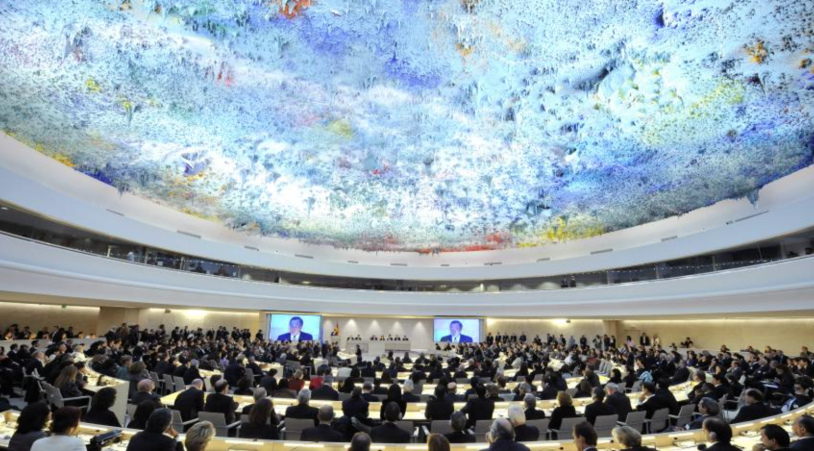
We welcome these recent developments, recalling that the election of the new mandate holder will take place during the sixty-third session of the United Nations Human Rights Council, scheduled from 7 September to 7 October 2026.
We respectfully call upon all distinguished Member States of the United Nations Human Rights Council to exercise their vote carefully with due regard for the seriousness of the human rights situation in Eritrea and the need to appoint an independent, highly experienced, and suitably qualified Special Rapporteur.
Understanding the human rights situation in Eritrea and its multi-layered complexity requires careful consideration and substantial knowledge of its complex political, legal, and social context, as well as the severe limitations on access to reliable information from within the country. Independent international monitoring remains particularly important because the Eritrean authorities have been strongly opposing the mandate and have not permitted the Special Rapporteur access to the country.
To date, Eritrea remains an authoritarian state without effective constitutional safeguards, judicial independence, or the rule of law. Arbitrary detention without charge or trial, enforced disappearance, restrictions on fundamental freedoms, indefinite national service, and the separation of children from their families have been repeatedly documented.
Moreover, the situation extends beyond Eritrea’s borders, affecting refugees, diaspora communities, and human rights defenders who face intimidation and other forms of transnational repression. These circumstances underscore the need for sustained and specialised monitoring by a Special Rapporteur with substantial knowledge of Eritrea’s context, as well as direct experience engaging with affected Eritrean communities.
We, as human rights defenders in the Netherlands, therefore, respectfully urge the distinguished members of the Human Rights Council to ensure that the next Special Rapporteur possesses specific expertise on Eritrea, including a strong understanding of its political, legal, and human rights context; experience in independent monitoring and investigation; and knowledge of the experiences of Eritrean victims and affected communities.
Yours sincerely,
Daerona Community Eritrean Global Network
Eritrean Human Rights Defenders in the Netherlands
Eritrean Human Rights Defenders in Switzerland

