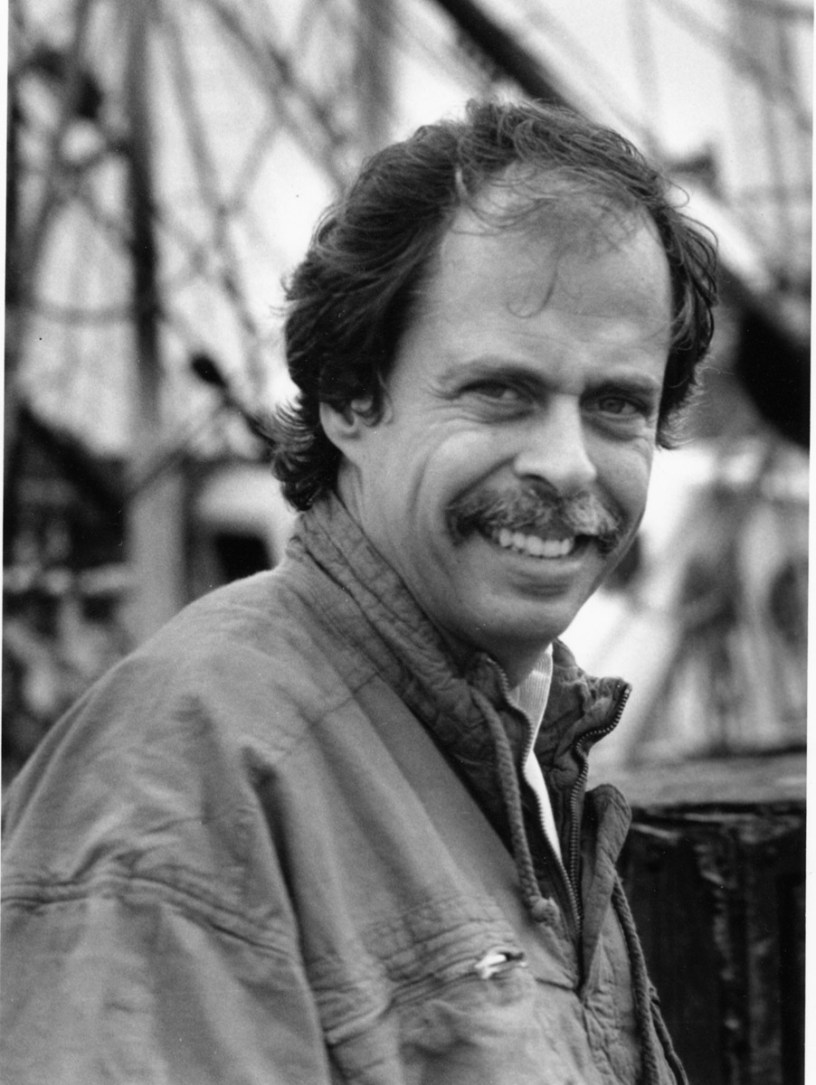
By Dawit Mesfin
London, 7 Sep 2026
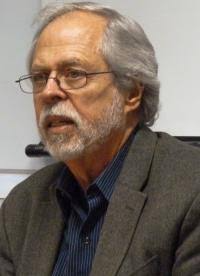
The story of Dan Connell and Eritrea raises a difficult question: did the revolution betray its ideals, or did the habits and structures forged in the struggle gradually make that betrayal possible? Perhaps the revolution also misled its most committed supporters – including the so-called “friends of Eritrea,” a network of European and other international volunteers, activists, journalists and sympathisers who gathered around the EPLF during the 1970s and 1980s.
Eritrea offers a striking place to dwell on this paradox. Connell’s own journey – from committed supporter of the liberation struggle to critic of the political order that emerged from it – mirrors, in some ways, the revolution’s own passage from liberation movement to state.
So, before I turn to part-2 of the story of Dan Connell, let me mention a few other international activists, writers, intellectuals and professionals who became interested in – and, in different ways, supported – the EPLF and the Eritrean cause during the armed struggle.
The first activist who comes to mind is Christian Sabatier. Sabatier, whose nom de guerre was Hilal, was a French journalist who became sufficiently sympathetic to the Eritrean cause to join the EPLF in 1975. I believe he adopted the name Hilal from a martyred fighter; he went on to become an integral part of the movement’s media apparatus. Through photography and film, he documented not only the military struggle but also the social world the EPLF was attempting to construct in the liberated areas. There are also accounts that place him in the EPLF’s 1979 efforts to help develop the TPLF’s media and cultural capacity – an intriguing connection that deserves closer examination.
It is worth remembering, too, that Sabatier directed one of the most important films produced by the movement: Sawrana / Our Revolution (1978). The film became part of the EPLF’s effort to present its history, its fighters and its social revolution to Eritreans themselves. In that sense, Sabatier was not merely recording the revolution from the outside; he was helping the revolution tell its own story.
Another example is Tegadalai Paul Highfield, a British educator who became deeply involved in the EPLF’s educational work. Highfield learned to speak Tigrinya and was reportedly well liked by the fighters. From the mid-1970s, he worked as a teacher and teacher-trainer, including at the Revolution School in Sahel, contributing to the educational system the EPLF was building alongside the armed struggle. His story is interesting precisely because his contribution was not primarily political or military. He became involved in the revolution through education and remained associated with its project for many years.
Then there were those who operated principally in the international intellectual and political sphere: David Pool, Lionel Cliffe, James Firebrace, Basil Davidson, Stuart Holland, John Snow, Gwyneth Kinnock, Mary Dines, and others who helped publicise the Eritrean cause. Some members of the British Labour movement also became advocates of Eritrean self-determination and, at various points, expressed support for the EPLF and its humanitarian networks. At some point Martin Plaut got involved as well, a story I am planning to delve into in the near future.
And who could forget that Goliath-like individual, Fred Hollows?
Hollows came to Eritrea through medicine and humanitarian work rather than revolutionary politics. Yet his encounter with the EPLF’s health services and medical infrastructure left a profound impression. His subsequent involvement is a reminder that the international constituency drawn to the Eritrean struggle extended far beyond a circle of political sympathisers. People arrived through very different doors – journalism, education, medicine, humanitarianism, development, academic research, or political solidarity – and, in one way or another, found themselves captivated by the same revolutionary project.
This raises a question that I find increasingly difficult to avoid: how did the EPLF manage to cultivate such a diverse and influential international intellectual constituency? How did it become so effective at presenting itself to the outside world, and how did those who encountered the movement come to interpret, defend, and ultimately explain it to their own societies?
Was it its discipline, emphasis on self-reliance, underground administration, educational programmes, health services, and extraordinary ability to withstand overwhelming military pressure were remarkable.
Yet perhaps there was something more.
And this, to me, is the more interesting paradox.
Was the international admiration for the EPLF rooted only in what it achieved – or also in what the movement allowed others to believe was possible?
Perhaps the power of the Eritrean revolution lay not only in the territory it eventually liberated, but in the imagination it captured along the way.
All are now gone, yet the history of their relationship with Eritrea has received surprisingly little attention. Some remained sympathetic to the Eritrean people while becoming increasingly critical of the government that emerged after independence. Others broke with the post-independence order altogether – quietly or publicly – unable to reconcile the Eritrea they had believed in during the struggle with the political reality that followed.
Perhaps that disillusionment tells us something important: not only why these friends eventually distanced themselves from Eritrea, but also how the EPLF came to sever the very relationships that had once connected it to the outside world. Its international friends were bridges to a wider world. Many of those bridges are, rather unwisely, now destroyed by Isaias Afwerki’s paranoid nationalism that revolves around his self-preservation.
The question, then, is not simply why did these people support the EPLF in the first place? It is also what did they believe they were supporting – and what did the revolution lead them to imagine Eritrea would become?
And that brings me, inevitably, back to Dan Connell.
As I turn to Part II – Dan Connell’s life and contributions – I want to pause over a question that has continued to trouble me whenever I return to his writings on Eritrea: Why did Connell support the EPLF?
This is not a question I can easily set aside. Connell, together with the so-called “friends of Eritrea” – many of whom, in practice, became closely identified with the EPLF’s cause – played an important role in bringing the Eritrean liberation struggle to international attention and in shaping how the EPLF was perceived and understood beyond Eritrea.
Yet many of these supporters, Connell among them, were aware of the EPLF’s internal history of coercion and political violence. Under the leadership of Isaias Afwerki, the EPLF had executed progressive leaders associated with the MenqaE faction and imprisoned those who supported them in 1973.
Yes, EPLF subsequently moved against leaders of the so-called Yameen group, labelled as ‘rightist’, several of whom were later executed in 1975. The “friends of Eritrea” were not, therefore, wholly unaware of these acts, nor of the serious questions they raised about the movement’s political practices. And yet, they continued to support the EPLF.
I do not raise this question in order to assign Connell or the other members of the friends of Eritrea responsibility for the failures, abuses, and tragedies that followed. To do so would be both unfair and historically reductive. Nor is the purpose to judge their commitments solely in light of what became apparent in retrospect.
Rather, I want to understand what Connell saw in the EPLF: what he believed it represented, why he placed his confidence in it, and why that vision proved so compelling – not only to him, but to so many of the movement’s international supporters. What political and moral possibilities did they perceive in the EPLF, and how did those possibilities shape their understanding of its contradictions, compromises, and internal violence?
It is this tension between what they knew and what they nevertheless chose to believe that I want to explore.
That, I think, is where the story becomes more interesting.
There can be little doubt that Connell’s emotional and intellectual identification was overwhelmingly with the EPLF, rather than with the ELF, the other major faction. But what was it that drew him so deeply towards the EPLF?
Perhaps the answer lies in what he encountered when he entered Eritrea and witnessed the struggle at close quarters. He saw more than an armed movement fighting for independence. He saw an organisation that appeared to combine national liberation with social transformation: educating people in the liberated areas, challenging entrenched inequalities, mobilising communities, and attempting to create, in the midst of war, a different kind of society.
Here, however, I need to make an important qualification. The ELF, too, carried out many of these same tasks, more or less. It also educated, organised and mobilised communities in the areas under its control. So the question still remains: why did Connell favour the EPLF?
Before continuing with my story, let me try to address the rationale behind his siding with the EPLF from a personal perspective. I would like to bring in my own experience and explain why I, too, came to support the EPLF over the ELF … although I knew full well the EPLF had blood in its hands.
First of all, I was too young to understand the ideological differences between the two factions. Through family ties, however, I was immersed in EPLF propaganda and in the political message contained in Nehnan Elamanan, their manifesto. The manifesto also circulated subtle messages within our communities – suggestions along the lines of “they have a Muslim agenda” and “we are Christians” – and, at the time, I absorbed these distinctions without fully questioning them.
The manifesto made the EPLF appear more “modern” to me because it presented a vision of a secular and unified Eritrean nationalism, one that seemed to rise above religion, region and ethnicity. Nehnan Elamanan gave me a compelling political language through which to understand and embrace that idea.
The ELF, by contrast, was increasingly perceived as more regional, communal and factional, although that characterisation was – and remains – unfair and overly simplistic.
In my mind, the distinction was therefore quite straightforward: the ELF was there to “liberate Eritrea,” whereas the EPLF appeared to be promising not only to “liberate Eritrea” but also to “build a new Eritrean society.”
That distinction was enormously powerful. Yes, as far as I am concerned, Nehnan Elamanan was a very effective piece of political propaganda – one that succeeded in giving the EPLF an image of ideological sophistication and modernity. With hindsight, however, it was also filled with exaggerations, omissions, ‘red meat’, and promises that were far more complicated than they appeared to me at the time.
Concerning the fighters who were executed, I must acknowledge that I was aware of what had happened to them. At this juncture, I am thinking whether the “friends of Eritrea” group had similar rationale in glossing over the victims of the EPLF.
By the time I moved to Italy in the mid-1970s, the circumstances surrounding their deaths were already something of an open secret. I remember, moreover, defending the EPLF’s actions. At the time, I had convinced myself that the movement had been left with no viable alternative if it was to preserve its unity and continue the struggle. I now recognise how profoundly mistaken that judgement was.
My commitment went further than simply defending the organisation. After I moved to Germany, I remember verbally confronting the brother of Yohannes Sebhatu, one of the leaders of the MenqaE faction who had been executed after calling for political change within the movement. Looking back, I find that episode particularly difficult to reconcile with my present understanding. The blind loyalty that led me to defend the EPLF, even in the face of what I knew about its actions, was not merely misguided; it was a form of political faith that had displaced critical judgement. That realisation has stayed with me, and continues to trouble me to this day.
Again, I go back to the same question – why was Connell so deeply moved by the EPLF? In his retrospective account, he spoke of being profoundly affected by his experiences with EPLF fighters. One can understand, then, why his commitment went beyond that of a distant correspondent.
He had encountered the movement from within, lived alongside its fighters, and witnessed their struggle at close quarters. What he saw appears to have convinced him that something remarkable was taking shape – not simply an armed struggle for national liberation, but a movement that seemed to embody a broader vision of social and political transformation.
Yet Connell’s story does not end there.
It would be unfair to portray him as someone who simply accepted the EPLF’s narrative without question. His later work delved into the organisation’s internal political culture, including the clandestine Eritrean People’s Revolutionary Party, and exposed tensions that were not always visible from the outside.
He came to recognise that the same qualities that had made the EPLF such a formidable liberation movement – its discipline, unity and ideological coherence – could also harden into dogmatism, with an intolerance of dissent.
And then came independence.
That is where I need to leave the story for now. There is much more to say about what happened next, how Connell’s understanding evolved, and what independence revealed about the movement he had spent so many years observing from within.
For the moment, though, this is a natural place to pause.
To be continued …


It is really good to see Eritreans start writing with some new perspectives and nuance about the liberation struggle and to ask these questions about how the international community was involved. Bravo, Dawit!
As someone who supported the struggle from the outside and who lived and worked in Eritrea during those heady years from 1993-98, I often ask myself what was real, what I wanted to believe, and what proportion of what was happening I understood. We knew that there was secrecy, factionalism, personal rule. But there were also exciting new ways of thinking about development, about health, about social services that many of us enjoyed being part of. We truly thought that Eritrea could show the international community how to do things better.
There are some aspects that I see differently now after years of reflection. And I know that my perspectives changed dramatically after so many of the EPLF people I was close to were “disappeared” or went into exile. I wish that those in exile and free to write about the struggle would do so before we lose their voices. They have so much to share.
Maybe Dawit Mesfin’s writings will inspire some of them to come forward.
Dear Pamela,
Thank you for your comments.
The tragedy of Eritrea is that it lost you and people like you, rather recklessly. The so-called “friends of Eritrea” did not abandon Eritrea; rather, Eritrea abandoned them. I rack my brain asking myself why we, a needy nation with so much potential, chose to squander such an invaluable asset.
We all wanted to help. But during the post-independence era, Eritrea changed completely. It began chasing away friends, citizens with great potential, aid agencies, its youth, and even its own fighters who sensed that something was seriously amiss in the political system. It systematically prevented its citizens – many of whose money had sustained the Front during the armed struggle – from returning home. And it did so deliberately and systematically.
Eritrea kept shooting itself in the foot, again and again, seemingly with the purpose of eliminating those capable of thinking critically and, perhaps, seeing through the leadership’s hidden ambitions. Journalists were jailed. The faithful – Christians and Muslims alike – were prevented from exercising their faith and applying its moral and ethical rationale to public life. The ratified 1997 Constitution became a joke. And when asked about democracy, President Isaias Afwerki famously responded in an Al Jazeera interview, “What democracy?”
I feel deeply sorry for those who were eager to rebuild the country, those who genuinely cared, those who dreamed of creating a proper homeland, and especially those committed Eritreans who gave everything to the cause, only to be betrayed and jerked around.
Frankly, Eritrea brought our lives to a standstill during the armed struggle. It did even worse to us during the post-independence era.
Looking back, I find myself thinking of those of us who, admittedly, contributed very little compared with many others, as well as those who abandoned their own aspirations in order to advance the cause. I now call us the “Useful Idiots.” Yes, I say that today not only with conviction, but with anger.
People I knew in Rome, Mannheim, Germany, and in every place I travelled to come to mind. We were, in many ways, a “disposable constituency.”
Unfortunately, the Eritrean dream turned into a nightmare right under our noses.
Dawit
So right, Dawit. But I still hope that some day we can all go back and be a part of the recovery