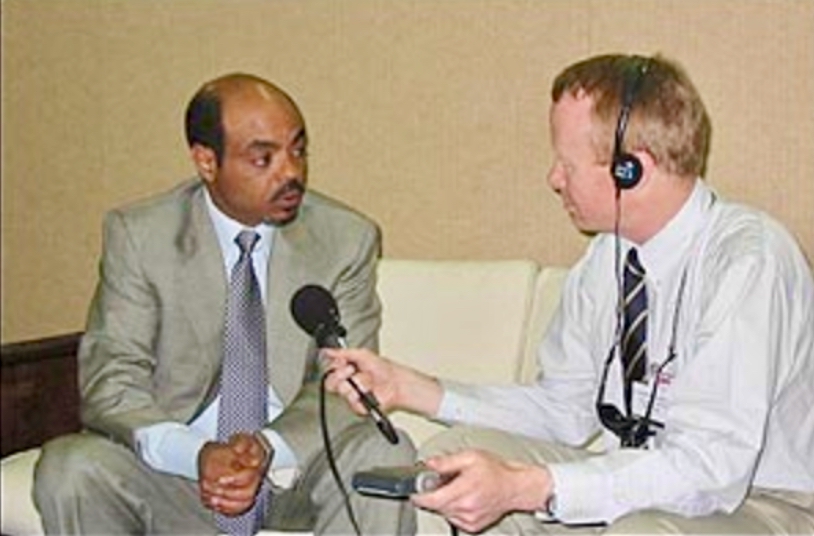
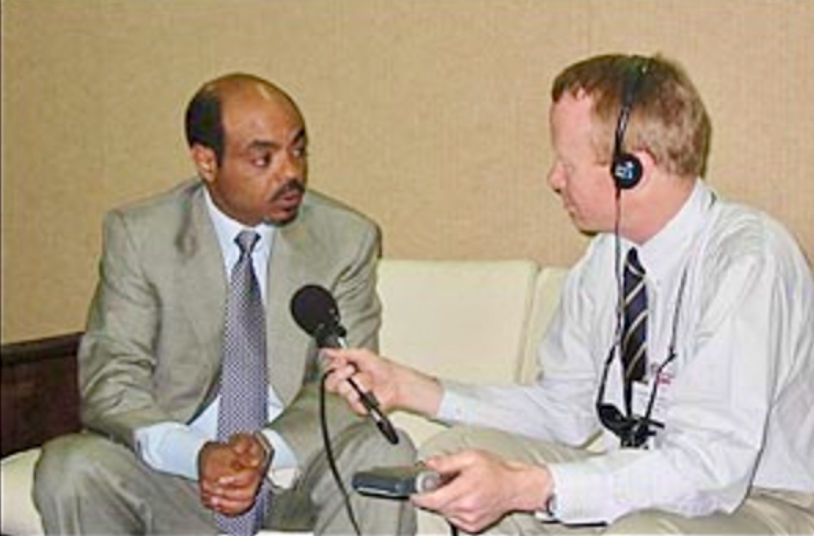
During the drought of 1990, Meles Zenawi, chairman of the executive committee of the TPLF, spoke with the BBC about handling the crisis as a rebel leader. He was also questioned on the death of one of the members of the Central Committee of the TPLF, Teclu Hawaz, who died in TPLF custody in the late 1980s, and on his position as a democratic Marxist.
This interview took place during the long years of war by the Eritrean and Tigrayan forces against the government in Addis Ababa, first led by the Emperor Haile Selassie, and then by the military committee that overthrew him, the Derg.
The Eritreans, led by the EPLF fell out with the Tigrayans in March 1985, at the height of a major famine. The EPLF closed access to drought relief via Sudan and the TPLF was forced to march 100,000 farmers over the mountains and plains of western Tigray into Sudan to save their lives.
By the time of this interview, however, the EPLF and TPLF had mended fences at a meeting in April 1988. The Eritreans were getting the upper hand against the Derg and would, in 1991, capture the Eritrean capital, Asmara. They also sent fighters to support the TPLF, who took Addis Ababa in the same year.
Meles Zenawi sat down with Colin Blane and Martin Plaut for an interview in February 1990, which ranged across a number of topics, including a fresh drought that was inflicting the people of Ethiopia and Eritrea.

