- Tuesday, October 27, 2026, 6:38 AM
- Source: The Spectator
- By Ameer Kotecha

That old chestnut, ‘slavery reparations’ – i.e. a practice almost every civilisation has engaged in, but which a barefaced band of progressives has decided Britain is uniquely responsible for – has reared its ugly head again.
The King begins his visit to the Caribbean today, taking in the Bahamas, Guyana, and Antigua and Barbuda where he will attend the Commonwealth Heads of Government Meeting.
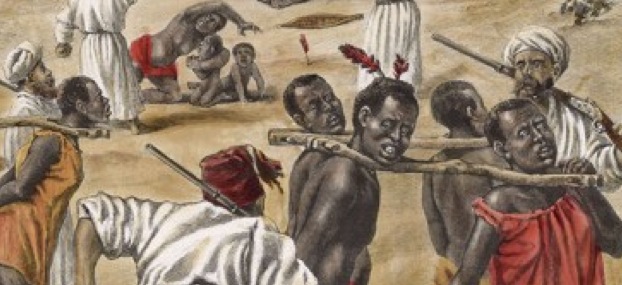
The Asante kingdom, in modern-day Ghana, was a major participant in the slave trade – a fact conveniently ignored by the current President of Ghana
Ahead of the visit, Commonwealth Secretary-General Shirley Ayorkor Botchwey has suggested that an apology by King Charles for slavery ‘wouldn’t hurt’, and that the time has come to discuss British reparations.
Let us leave aside the question of why anyone thinks we are in a position to dole out money for anything when, thanks to the incompetence of our governing class, we may soon be going cap in hand to the IMF (which might itself struggle to bail us out).
But let us confront the reparations question. Slavery was a terrible wrong. But while British abolitionism was historically exceptional, our participation in slavery was not. Of at least 41 million Africans enslaved and traded, Europeans accounted for 31 per cent (12.75 million), Arabs 53.6 per cent (21.96 million), the Sokoto Caliphate (in modern-day Nigeria) 9.76 per cent (4 million) and the Ottomans 3.14 per cent (1.3 million).
The Cambridge World History of Slavery estimates that in 1804 there were 45 million chattel slaves worldwide, of which 37 million were in Asia. As Nigel Biggar observes, that amounts in a single year, to almost 14 times the number traded by the British (3.258 million) over 135 years. Nor was British slavery uniquely brutal.
When the British sought to end the slave-trade in the 19th century, African rulers resisted. This is all rather awkward for the advocates of reparatory justice. The Asante kingdom, in modern-day Ghana, was a major participant in the slave trade – a fact conveniently ignored by the current President of Ghana, who is leading the campaign for reparations from Britain but whose ancestors were probably slave-owners themselves. Curiously, the Commonwealth Secretary-General, herself Ghanaian, is also rather quiet on the matter.
Nor has the All-Party Parliamentary Group for Afrikan Reparations (that is the trendy new spelling for ‘African’ by the way), led by the Labour MP Bell Ribeiro-Addy – who I found myself arguing against on the BBC’s Sunday Morning Live over the weekend – published anything about non-European slavery.
And what about Britain’s leading role in abolishing this wicked trade? David Eltis, perhaps the leading scholar of transatlantic slavery, points that in the 50 years following abolition the British government spent as much on suppression of the transatlantic slave trade as British merchants earned in profits in the preceding 50 years.
There is not the space here to do justice to the role of the Royal Navy’s West Africa Squadron, and the thousands of sailors who lost their lives intercepting slave ships and liberating Africans. Nor the diplomatic campaign Britain waged, that saw the department dedicated to abolition becoming the largest unit in our entire Foreign Office. Nor the 300,000 Brits that by 1791 were boycotting sugar consumption in protest against slavery, nor by 1833 the 1.5 million Britons that had signed petitions demanding abolition (equivalent to roughly one in six adults). This was, by some reckonings, the first mass human rights campaign in British, and possibly world, history.
But there is another line of argument I increasingly hear progressives making – perhaps in desperation – which is worth also confronting. It is that we do not give sufficiently prominent attention to black abolitionists. This is curious. For I recall that in the grand reception of my former employer, the Foreign Office, directly opposite a landmark painting of Queen Elizabeth II, hangs an enormous portrait of Ignatius Sancho, the prominent black writer and abolitionist. William Wilberforce meanwhile is relegated to a small, sculpted bust on the building’s exterior façade, barely noticeable to passers-by.
Yet even as the government rules out reparations, its argument risk conceding the principle. Consider our mealy-mouthed response to March’s landmark UN slavery resolution, on which we abstained rather than outright opposed. We couched our arguments in ‘intertemporality and non-retroactivity’ – asserting that prohibitions on slavery were not established under international law at the time of the trade – in a triumph of legal gymnastics that would have had Starmer proud. Nor, we said, did we want to create hierarchies of historical suffering that diminish other global tragedies. But it was rather a missed opportunity that amidst the lip service paid to trauma and solidarity, we chose not to mention the campaign we waged – intellectually, morally, diplomatically and militarily – to rid the world of slavery. And other national institutions remain hell-bent on giving away money we don’t have for a cause towards which we should feel no financial obligation. In the Church of England’s case, to the tune of £100 million (for starters) as part of its Project Spire.
The King, tactful diplomat as he is, will navigate these choppy waters on his visit. He will no doubt express sorrow and regret at our part in the slave trade. But he will not issue a formal apology on behalf of the Nation and nor should he – for to do so would only risk opening the door to legal liability and give added impetus to the absurd reparations movement.
We neither invented slavery nor were at all unique in engaging in it. But we did lead the world in bringing about its abolition. That is not a history for which we should be doling out cash; rather it is one of which we should be proud. And ‘historical justice’ cannot mean remembering only half the history.
Written by
Ameer Kotecha is CEO of the Centre for Government Reform. He was formerly a senior diplomat, serving as the head of the British consulate in Russia 2023-25. He is the author of Queen Elizabeth II’s official Platinum Jubilee Cookbook (Bloomsbury).

