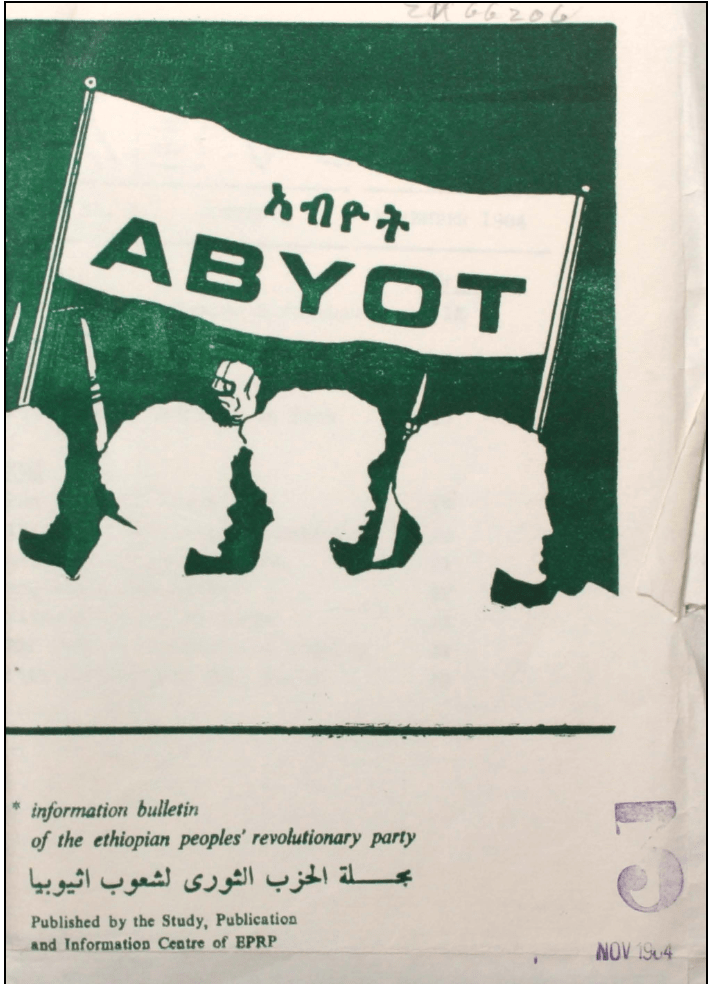
Emerging from the revolutionary ferment of the 1960s and 1970s, the Abyot Group forged a liberation framework that challenged the dominant vanguards of the Ethiopian Student Movement. This paper argues that Abyot’s central contribution was a pioneering Revolutionary Intersectionality – a theoretical synthesis that bypassed the rigid ‘stage theory’ of its rivals by integrating Maoist mass line principles with a decolonial critique of national oppression. While contemporary factions like MEISON and the EPRP prioritised a bifurcated queue of class struggle versus the ‘nationalities question’, Abyot’s leadership – specifically Getachew Maru, Abiyo Ersamo, and Endreas Michael – conceptualised ethnic identity as the primary legal and moral engine of feudal-capitalist exploitation. By triangulating archival fragments from the Institute of Ethiopian Studies (IES) with participants’ affective memories, this study reconstructs Abyot’s suppressed legacy. I demonstrate that their rejection of urban adventurism and their focus on the ‘internal colonialism’ of the South provide a vital, overlooked counter-narrative to the centralised official historiographies of the Ethiopian Revolution.
By Ashamo Gunture
Full Article Here

