Immediately after the 23 July UN Town Hall featured this question: “Who convinced you most in the Town Hall?”. According to the results of the survey, which was open to participants in the General Assembly Hall via QR code, 49 percent of respondents selected Rodrigues Birkett of Guyana in response to this question, followed by Grynspan with 14 percent, and Espinosa with ten percent.
Source: What’s In Blue
First Security Council Straw Poll on UN Secretary-General Candidates
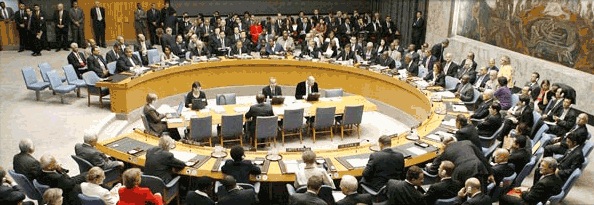
Tomorrow morning (30 July), Security Council members will participate in the first straw poll to select a candidate to recommend to the General Assembly as the next UN Secretary-General. Article 97 of the UN Charter states that the “Secretary-General shall be appointed by the General Assembly upon the recommendation of the Security Council”. Straw polls are informal ballots used to determine the viability of Secretary-General candidates. Tomorrow’s straw poll is expected to take place in the consultations room.
The seven current candidates are:
- Michelle Bachelet Jeria (Chile), who was nominated by Brazil, Chile, and Mexico on 2 February, with Chile withdrawing its nomination on 24 March;
- María Fernanda Espinosa Garcés (Ecuador), who was nominated by Ecuador on 11 May;
- Rafael Mariano Grossi (Argentina), who was nominated by Argentina on 26 November 2025;
- Rebeca Grynspan Mayufis (Costa Rica), who was nominated by Costa Rica on 3 March;
- Olara Otunnu (Uganda), who was nominated by Uganda on 24 July;
- Carolyn Rodrigues Birkett (Guyana), who was nominated by Guyana on 15 June; and
- Macky Sall (Senegal), who was nominated by Burundi on 2 March.
The Maldives had nominated Virginia Gamba de Potgieter (Argentina), on 11 March, but then withdrew her nomination on 25 March. (For background, see our April 2026 research report titled “Power, Process and Participation: The Search for the Next Secretary-General”.)
Security Council members agreed on the modalities for the straw polls in May through the negotiation of a non-paper, which has not been made public. Among other things, members apparently decided that attendance will be at the level of permanent representative plus two other delegates for each Council member, except for the President of the Security Council, who will be allowed three additional delegates in light of the presidency’s role in running the straw poll. The modalities provide for the appointment of two tellers to be appointed by the drawing of lots the day before each straw poll. Today (29 July), Bahrain and Pakistan were appointed as tellers. It seems that the tellers’ delegations will be allowed an additional delegate.
At tomorrow’s straw poll, there will be no difference between the ballots presented to the five permanent members (P5) and the ten elected members (E10). Council members are expected to receive one ballot per candidate, containing the candidate’s name followed by three options: “encouraged”, “discouraged”, and “no opinion expressed”. There will be no representatives of the Secretariat present, and no official record of the results will be kept, with the presidency expected to shred the ballots at the end of the straw poll. Council members are likely to transition at a later stage of the selection process to using colour-coded ballots that differentiate between P5 and E10 votes.
During the negotiations on the non-paper, consensus could not be achieved on publicly releasing the results of the straw polls. While Council members such as Denmark, Greece, and Latvia called for releasing the results, several members, including among the E10, opposed this option, arguing that the results should be kept confidential. Accordingly, the results of tomorrow’s informal vote will be announced by the Council’s President for the month of July, Ambassador Zénon Mukongo Ngay (the Democratic Republic of the Congo [DRC]), to Council members in the consultations room. The Council’s President is then expected to make a concise announcement to the press communicating that the straw poll has taken place, without revealing the results. The nominating states will be confidentially informed of the results of their candidate, as well as of the highest and lowest scores across candidates, without those scores being attributed to specific candidates.
During the process for the selection of the current Secretary-General, which took place in 2015 and 2016, although members had agreed not to release the straw poll results, they were quickly leaked. This was particularly uncomfortable for the Council presidents who could only provide very limited information to the public even though the results were widely known.
At tomorrow’s straw poll, Council members are expected to consider all seven current candidates. With the exception of Otunnu, whose candidature was announced on 24 July, all current candidates have participated in interactive dialogues with the General Assembly (21, 22 April; 15, 18 June), informal dialogues with Council members (30 June; 7, 9, 27 July), and in the 23 July UN Town Hall event organised by the President of the General Assembly (PGA), Annalena Baerbock, and broadcast live on Bloomberg and UNTV.
The inclusion of Otunnu in tomorrow’s straw poll—without him having first held dialogues with the General Assembly and the Security Council—has proven controversial. In 2016, all candidates, including late entrant Kristalina Georgieva who was nominated by Bulgaria on 28 September, participated in dialogues with the General Assembly, followed by an informal meeting with the Council, before being considered in the straw polls. (For background, see our April 2017 research report titled “The UN Secretary-General Selection and Appointment Process: Emerging from the Shadows”.)
In a 27 July letter to the Security Council, the PGA noted the importance of timely nomination of candidates to afford all UN member states the opportunity to hear the candidates in the General Assembly before the Security Council begins its selection process. While stressing that sufficient notice is needed to guarantee the meaningful participation in the dialogues of all stakeholders and equal and fair conditions for all candidates, Baerbock announced that she aims to organise interactive dialogues with candidates whose nomination was received after 23 July “at the earliest opportunity”, subject to factors such as the candidates’ availability and the availability of meeting rooms. Should this not be possible, the interactive dialogues will be held on the week of 24 August at the latest. The PGA then encouraged the Council to include in its consideration of candidacies only the nominees who have already been heard by the General Assembly.
On 27 July, following the Council’s informal dialogue with Espinosa, Council members apparently informally discussed the inclusion of Otunnu in tomorrow’s straw poll. It seems that, although at least one member raised concerns that this approach might encourage potential additional candidates not to participate in dialogues with the General Assembly and the Security Council prior to their inclusion in the straw polls, several members, particularly among the P5, argued in favour of Otunnu’s inclusion in tomorrow’s informal vote. On 28 July, in response to a question at the Security Council press stakeout, Mukongo Ngay said that “the members of the Security Council have decided that [Otunnu] should be included in the straw poll” even if he had not yet participated in the dialogues, adding that as soon as the candidate is in New York, he “will pass those steps”.
It seems that, although some Council members might be uncomfortable with including in tomorrow’s informal vote a candidate who has yet to meet with the General Assembly and the Council, and might have preferred to further discuss the Council’s approach, these members ultimately recognise that the dialogues are currently not mandatory steps for a candidate to be considered in a straw poll.
This state of affairs is rooted in dynamics that played out during the negotiations on the key documents establishing the modalities for the current selection process, such as resolution 79/327 of 5 September 2025 on the revitalisation of the General Assembly, the November 2025 joint letter by the President of the Security Council and the PGA that marked the start of the selection and appointment process, and the May non-paper. The P5, sometimes joined by other member states, generally opposed formulations that would have formalised a requirement for all candidates to participate in dialogues with the General Assembly, establishing a mandatory sequence of steps for the candidates to follow, or setting a deadline for the submission of candidate nominations, which they perceived as encroaching on the Council’s role and prerogatives. In contrast, member states seeking to consolidate the transparency gains achieved during the 2015/2016 process—notably the introduction of General Assembly hearings with candidates—and to ensure that the General Assembly’s role is not limited to merely endorsing the Council’s recommendation, instead attempted to standardise the process and make it more predictable.
This has resulted in compromise language being included in these documents. For instance, resolution 79/327 says that the PGA will convene “webcast interactive dialogues with all candidates” in accordance with paragraph 42 of resolution 69/321 of 22 September 2015, which specified, among other things, that such dialogues should be “without any prejudice to any candidate who does not participate”. Similarly, the joint letter says that, while the presidents of both bodies will offer nominees opportunities for informal dialogues or meetings, “any such interaction will be without prejudice to those who do not participate”. While the joint letter recognises that early presentation of candidates helps the organisation of General Assembly dialogues and the Council’s deliberations, it states that this “should not preclude” other candidates “making themselves known throughout the process, as appropriate”.
During the negotiations on the modalities non-paper—which included in an Annex the text of a letter to be sent to the PGA informing her of the Council’s plan to start the straw polls—Denmark, Greece, and Latvia apparently proposed language that would have suggested the existence of a sequencing in candidates’ engagement. It seems that this proposed formulation stipulated that “following the interactive dialogues in the General Assembly”, candidates could present their views to the Council “preferably before” the start of the straw polls. They apparently stated that this would have reflected recent past practice where candidates have engaged with the Council after their dialogue with the General Assembly. The reference suggesting this succession in the order of the dialogues was apparently not acceptable to some members, who nonetheless accepted indirect references to “existing practice” and to “previous practice”. In this regard, the term “previous practice” appeared in the letter sent on 29 May by that month’s Council President (China) to the PGA following Council members’ agreement on the non-paper to inform the PGA of the expected start date of the straw polls.
On 28 July, the PGA sent a follow-up letter to the Council, saying that, while the possibility was offered to Otunnu to participate in an interactive dialogue on 29 July, he was not able to participate. In her letter, the PGA reiterated the “expectation of the wider membership that any candidate should first be heard by the General Assembly in an interactive dialogue before being considered by the Security Council in its straw polls”. At the time of writing, Council members were negotiating a letter in response to the PGA.
The inclusion of a candidate who has not participated in a dialogue with the General Assembly in tomorrow’s straw poll has drawn reactions beyond the Council and the office of the PGA. In a 29 July letter to the Security Council, the Accountability, Coherence and Transparency (ACT) Group cited the “expectation of the wider UN Membership that in line with the consistent existing practice, as a first step all candidates should participate in the interactive dialogue with the General Assembly” and expressed concern that this approach risks creating different conditions for candidates and undermines the fairness, transparency, and inclusivity of the process. It seems that the civil society campaign 1 for 8 Billion is also working on a letter calling on all candidates to go through the same process and be subjected to the same level of scrutiny.
While tomorrow’s straw poll will provide an indication of the candidates’ prospects at the Council, an informal survey conducted by Bloomberg immediately after the 23 July UN Town Hall featured three questions, including: “Who convinced you most in the Town Hall?”. According to the results of the survey, which was open to participants in the General Assembly Hall via QR code, 49 percent of respondents selected Rodrigues Birkett in response to this question, followed by Grynspan with 14 percent, and Espinosa with ten percent.

