
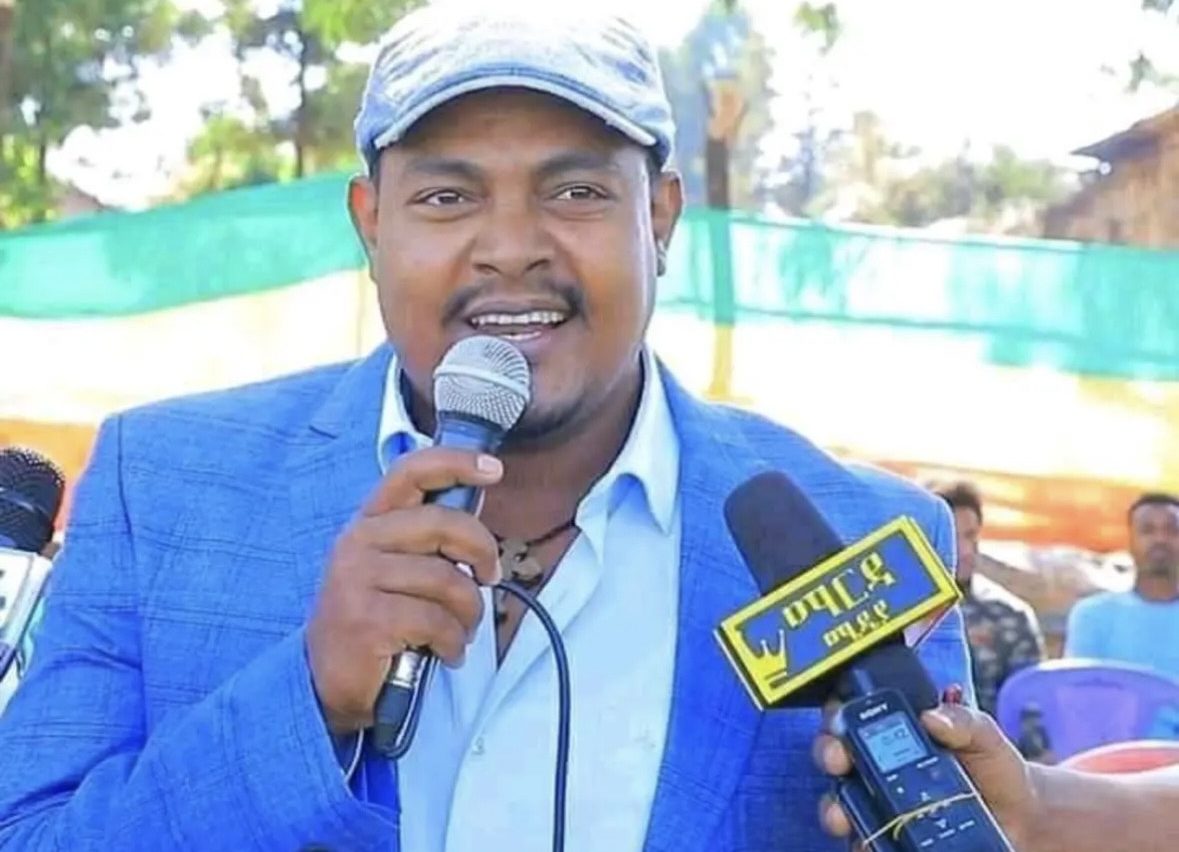
Amid the multiple insurgencies in Ethiopia, Fano militia leader Zemene Kassie claims to have united the key opposition militants in his uncompromising campaign against Prime Minister Abiy Ahmed’s federal government in Addis Ababa.
Source: Africa Report
By Laura Angela Bagnetto Political Editor
[For context, see FANO forms wide alliance to overthrow PM Abiy]
Published yesterday at 17:30 pm (GMT +1)Share
“We are fighting for the total removal of Abiy Ahmed and his regime. Because as long as Abiy is in that spot, as long as he is the prime minister of Ethiopia, there will not be any room for political settlement, solutions or dialogue,” says Zemene Kassie, chairman of Amhara Fano National Movement (Fano), speaking from the Amhara region.
Uniting opposition forces
Zemene says the fighting has united many of the federation’s regions together against the government in Addis Ababa. He heads a transitional council created with organisations spanning Ethiopia: from Amhara, Afar, Benishangul, Gambella, Gumuz, Ogaden, Oromia, Tigray and the ONLF (Ogaden National Liberation Front) from the Somali region.
Created in October 2025 to build a national alliance with Fano, Zemene says the council will “establish a democratic government in which the equality, freedom and prosperity of each and every citizen of Ethiopia is going to be secured”.
READ MOREFano’s fight for survival has gridlocked Abiy Ahmed’s government in Ethiopia
Fano was founded by Amhara nationalist fighters and started as a loose militia network. Initially, the Addis Ababa government saw it as less of a threat than the opposition factions in Oromia and Tigray. While the Tigrayan People’s Liberation Front (TPLF) has been designated as a terrorist organisation by Addis Ababa, Fano has not been added to the list.
Some analysts question Zemene’s claim of high-level cooperation between the regional opposition groups against Addis.
Clashes between groups?
When fighting broke out in Oromia on 8 August with local militia, such as the Oromia Gadaa Commando forces, Armed Conflict Location & Event Data (ACLED) analyst Jalale Getachew Birru noted that “elements of the Oromo Liberation Army (OLA) – also known as the Oromo Liberation Front (OLF-Shane) – led by Jaal Mose clashed with Fano militias.”
He added that his sources said the Jaal Mose fighters were protecting civilians from Fano fighters. “This marks a tactical shift in which OLA/OLF-Shane fighters coordinated with government security forces for the first time,” Jalale says.
READ MOREFears of renewed civil war as clashes erupt in western Tigray
Zemene rejects this completely, insisting there was no clash between Fano and OLA in Wollega. “This is what Abiy’s regime is aspiring to. But this is impossible,” he says, adding that the clash was between Fano and Abiy’s Gadaa commandos, an elite force.
The government tries to create confusion by calling its sponsored militias the same name as some of Fano’s allies, says Zemene. “Abiy has other local militias known by the name of Shane working with him. OLA and Shane are not the same.”
Change of heart
Amhara and Tigrayan people are working together, says Zemene. That would have been nigh-on impossible four years ago.
During the 2020-2022 Tigray war, Fano militia fought alongside federal forces against the nationalist TPLF. But in the post-war fallout, friction between Abiy and the ethno-nationalist militia erupted into fighting. Now there are clashes between Fano and federal forces in 11 zones in the Amhara region.
READ MOREEthiopia: What we know about warnings of a TPLF offensive ‘in the coming days’
“We have a very good relationship with the Tigrayan forces. And we support their struggle,” says Zemene.
Dialogue must be open
Fano says its planned transitional government would include a wide range of civic organisations and political parties. The committee is open to “genuine” dialogue, says Zemene, alongside international institutions such as the African Union, UN, EU and European states.
He adds that the key obstacle to peace is the federal prime minister. “Abiy is not the one that you can trust, and the international community knows this,” says Zemene. Above all, the Fano leader says the goal of the committee is a “civilian and democratic government”.
READ MOREEthiopia’s Fano militias launch US lobbying campaign
“Important public institutions have to survive this war, and they should continue, but the fate of Abiy, his colleagues, cliques and members of his regime will be decided during the transitional arrangement period.”
Eritrea in the mix?
During the Tigray war, Eritrea worked with federal forces and allies, including Fano, to fight against the Tigrayan forces. But this time, Zemene says he is not in contact with Eritrea.
READ MORETsimdo: The mysterious coalition putting Ethiopia on edge
“We do not have a direct relationship, and [Eritrea] does not have direct support for us,” Zemene says. “As far as the geopolitical ups and downs in the Horn of Africa are concerned, we will have some sort of relationship … They will come to us, and we will welcome them.”
Drones vs infantry
Zemene accuses the federal government of using drones from the UAE and Turkiye to attack Amhara and Tigray. According to the European Council on Foreign Relations (ECFR) report, ‘Deadly skies: Drone warfare in Ethiopia and the future of conflict in Africa’, the drones have killed civilians, hitting schools, monasteries and public infrastructure.
We can beat them. You will see
“Drones are at the centre of Abiy’s genocide, and war on Amhara people and others, including the Tigrayan people,” says Zemene.
Media outlet HumAngle investigated the Ethiopian military’s use of Turkish TB2 drones, which “uncovered a surge in military misfires propelled by poorly trained local operators, a lack of due diligence and accountability across the war theatres”.
READ MOREEthiopia’s Tigray rebels say drone hits Mekelle residential area
Zemene is confident that the Fano militia will prevail.
“Abiy’s infantry is becoming defeated by our movement,” he says. “We know the huge impact the drones have on our struggle, on our civilian population, on our public infrastructure. But, at the end of the day, it is not drones but the infantry that is going to decide the battlefield. We can beat them. You will see.”
- Laura Angela BagnettoPolitical Editor

