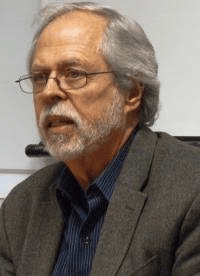
Written By Dawit Mesfin
London, 14 Sep 2026
My two previous articles on the life and contributions of Dan Connell to the Eritrean struggle for independence, as well as his subsequent criticism of the political system that has evolved under the presidency of the unelected Isaias Afwerki, require some clarification at the outset.
First and foremost, my reflections on Dan Connell were not intended as an obituary. At 82, Dan is very much with us, and I sincerely hope he has many productive years ahead – perhaps even the opportunity to produce another book or two reflecting on his experiences in Eritrea, particularly the difficult and, at times, deeply troubling years that followed independence. Such a contribution would be valuable given the depth of his engagement with Eritrea during its most difficult years.
My decision to revisit Connell’s life and work was prompted by reading the revised edition of Against All Odds, which remains my favourite of his books. It is significant not only as an account of Eritrea’s protracted struggle for independence, but also for its personal perspective on the political movements and forces that shaped that struggle.
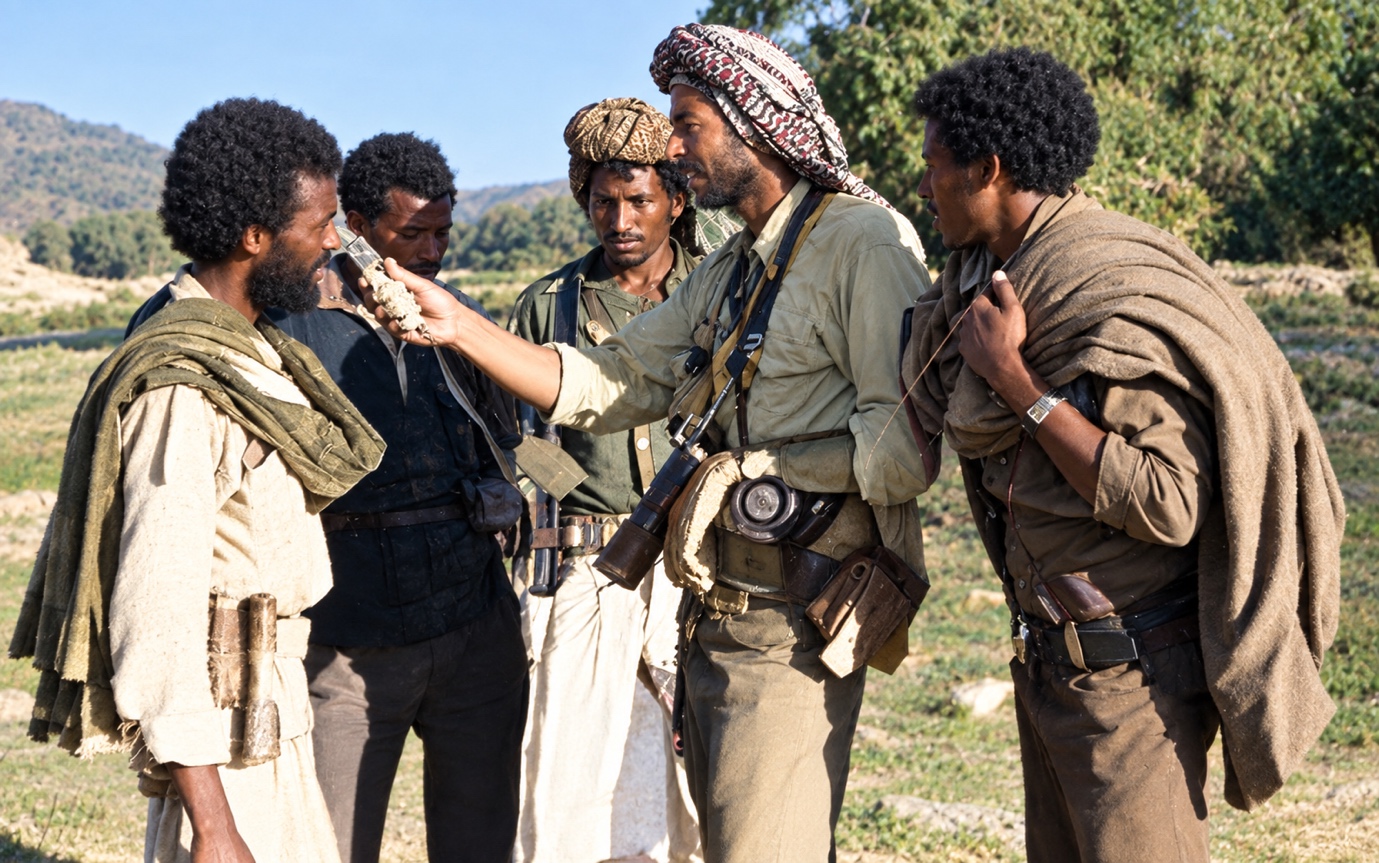
Yes, his recollections of his first encounters with Ascalu Menkerios, Dr. Nerayo Teklemichael, Comrade Fana, the Vanguards – the youth brigade – and Ethiopian POWs invite a deeper reflection on the historical distance between those formative moments and the present. Each of these figures carries a substantial story of his or her own, embedded in the wider currents of a turbulent period. His decision to name and remember them does more than recall personal encounters; it rescues otherwise fleeting moments from oblivion and inscribes them into the historical record. In this sense, memory becomes an act of preservation, giving permanence to individuals and encounters that might otherwise have disappeared into the passage of time.
I recognise that some passages in my earlier writings may have appeared critical of Connell’s decision to support the EPLF while giving comparatively limited attention to its rival, the ELF. That observation was not intended as a personal reproach, nor does it diminish my recognition of Connell’s contribution to the Eritrean cause. Rather, it raises a broader historical question about the political and social forces that influenced Eritreans themselves during the liberation struggle.
In particular, I sought to draw attention to what I regard as a significant and insufficiently examined aspect of our history: the manner in which many of us Eritreans – particularly those from the highland communities and Christian backgrounds – came to identify increasingly with the EPLF while becoming alienated from, or rejecting, the ELF. This was more than a rivalry between two political organisations; it reflected and deepened divisions within Eritrean society whose consequences remain relevant to our understanding of the country’s history.
I continue to believe that, had the EPLF–ELF conflict been addressed and resolved through a more equitable and inclusive political process, the subsequent trajectory of the armed struggle might have been significantly different. It is possible, though by no means demonstrable, that a more cohesive liberation movement could have altered the balance of political and military forces sufficiently to bring the struggle to a conclusion earlier – perhaps even by several years. Whether independence could realistically have been achieved as much as a decade earlier remains necessarily speculative, given the many other regional, geopolitical, and military factors that shaped the conflict. Nevertheless, this counterfactual deserves serious consideration, not as a claim about what would inevitably have happened, but as a way of examining the consequences of political division within the liberation movement. Most importantly, it raises a profoundly human question: how many lives might have been spared between 1980 and 1990 had those internal divisions been resolved through political accommodation rather than prolonged armed confrontation?
My purpose, therefore, is neither to diminish Dan Connell’s contribution nor to reopen old political divisions for their own sake. It is to encourage a more critical and dispassionate engagement with Eritrea’s history – one that recognises the sacrifices and achievements of those who fought for independence while also acknowledging the divisions, political choices, and miscalculations that shaped its outcome.
A mature understanding of our history requires intellectual honesty and a willingness to confront uncomfortable questions, even when doing so challenges narratives to which we have long been accustomed.
My third observation concerns my own portrayal of the ‘Friends of Eritrea’ as though they operated independently within the diaspora. A good friend rightly reminded me that many of these Western supporters were not working in isolation; they were assisted, advised, and often guided by deeply committed Eritreans whose knowledge of the country and its politics was indispensable.
The association of Lionel Cliffe and Basil Davidson with Dr Bereket Habte Selassie illustrates this dynamic. Dr Bereket is a resourceful and indomitable scholar whose experience spans several of Eritrea’s political administrations and whose understanding of its history and political complexities proves invaluable. His role is representative of a much wider network of Eritrean intellectuals, activists, and organisers who helped translate the aspirations of the liberation movement into a language and framework that could be understood and supported internationally.
Thousands of Eritreans in the diaspora contributed in less visible but no less consequential ways. Some organised communities, cultivated relationships with influential Western constituencies, kept the Eritrean question in the public domain, and mobilised substantial financial support for the liberation struggle. Their contribution was not merely logistical; they constituted an important reservoir of political knowledge, international access, and organisational expertise.
This dimension deserves greater recognition because the relationship was never simply one of Westerners helping Eritreans. It was, rather, a reciprocal partnership in which Western advocates and Eritrean interlocutors complemented one another. The former brought international platforms and influence; the latter supplied intimate knowledge, political context, networks, and legitimacy.
The tragedy is that the regime established after independence failed to recognise the value of this accumulated human capital. It not only distanced itself from many of the foreign ‘Friends of Eritrea’, but also marginalised a generation of capable Eritreans who had worked alongside them. In effect, the new state alienated precisely those individuals who had demonstrated their ability to mobilise the diaspora, sustain international engagement, and marshal resources for Eritrea.
That was more than political exclusion. It was a serious squandering of intellectual, diplomatic, and organisational capital at a moment when an independent Eritrea most needed it.
Shifting Gears
As mentioned above, in its determination to insulate itself from “outside interference,” the regime gradually severed many of the channels through which Eritrea might have remained connected to the wider world. It distanced itself from the “Western friends of Eritrea,” restricted the work of aid agencies, alienated much of the country’s educated elite, and marginalised citizens whose aspirations might have developed beyond the boundaries prescribed by the regime. In this way, it sought not simply to control the state, but to narrow the range of possibilities available to Eritrean society – to transform the country into what might almost be described as one extended EPLF family, in which loyalty to the regime became the principal measure of belonging.
I can see, in retrospect, how this atmosphere also shaped me personally. Over time, I began to curtail my own expectations. What initially felt like a temporary postponement of plans gradually became an adjustment to a shrinking horizon of possibility. I learned, almost imperceptibly, to expect less – not because my aspirations had disappeared, but because the space in which they could be pursued was steadily being taken away.
If I were to give voice to the resentment I have carried, quietly and for so long, toward the regime of Isaias Afwerki, I might put it this way: Eritrea did not merely bring my life to a standstill; it gradually displaced the life I had imagined for myself – the research I wanted to pursue, the intellectual questions I wanted to explore, and even the ordinary freedom of simply being allowed to live a normal life. Much of this loss did not happen dramatically. It happened through the repeated postponement of possibility, until diminished expectations could begin to feel like reality.
And yet, my experience is only a small part of a much larger story. I think of the young people whose lives were consumed by the regime’s deceptions and who ultimately paid with their lives; the elderly left stranded after losing their children; the families and communities scattered across borders; and the countless others whose lives have been irrevocably altered or lost.
What happened to me, therefore, cannot be understood simply as a personal grievance. It was part of a wider process in which the possibilities of an entire generation were narrowed, deferred, or extinguished – the loss not only of lives, but of futures that were never given the chance to unfold.
It took me longer than I care to admit to recognise that, like many of my fellow Eritreans, I had become useful to a system whose purposes were not necessarily my own. I had invested so much of myself in an idea of Eritrea that, somewhere along the way, the idea began to consume the life it was supposed to give meaning to. What remains is an unsettling sense of absence: the feeling of having surrendered something irretrievable without fully knowing, at the time, what it was. Increasingly, I think of how Eritrea consumed our youth and, in the end, seemed to leave only the bones.
Sometimes this past returns to me through music. When I listen to Sinatra singing I’ve Got You Under My Skin, I am struck by the intimacy of the song – the sense of a private confession, tender yet almost desperate, as though he were admitting to an attachment from which he knows he cannot easily escape. It takes me back to the time when Eritrea, too, was something deeply personal to me: not merely a country or a political cause, but an emotional presence woven into my sense of self. I find myself reaching back into those memories, perhaps searching for something that can still be salvaged from them.
Then the music shifts. Jagger’s swagger in Under My Thumb enters, and I recoil. Its darker psychological register becomes an unsettling counterpoint to Sinatra’s vulnerable surrender. Where Sinatra evokes intimacy and entanglement, Jagger evokes control – the cold confidence of having gained the upper hand. The juxtaposition is disturbing precisely because both songs seem to illuminate different aspects of the same emotional landscape: attachment that becomes possession, intimacy that turns into domination, and affection that, over time, can harden into resentment.
Somewhere between Sinatra and Jagger lies my own conflicted relationship with Eritrea. There is nostalgia, but also anger; tenderness, but also betrayal; attachment, but also the painful recognition of what that attachment has cost. I cannot simply discard the memories, because they belong to a part of who I was. Nor can I romanticise them, because I now see more clearly what was lost in the process.
Perhaps that is why the metaphor stays with me. Eritrea once got under my skin. I carried it there – intimately, almost willingly. But somewhere along the way, what had once felt like belonging became something more constricting, more difficult to escape.
Eritrea went from getting under my skin to holding me under its thumb.
Against All Odds: A Window into Our Past
I do not need to catalogue Dan Connell’s contribution to Eritrea, nor attempt to measure the debt of gratitude so many of us owe him. Instead, I would ask my readers to do something simpler, and perhaps more important: read Against All Odds, and then allow the book to take you wherever the journey leads. I am firmly of the view that all of us – and young Eritreans in particular – should read the revised edition, not as the final word on our history, but as an invitation to enter into conversation with it.
Young Eritreans should read the book precisely so that they can question it, challenge it, test it against other accounts, and ultimately make up their own minds. I read it myself, and I confess that it took me on something of a roller-coaster ride. There were moments of recognition, moments of discomfort, and moments when I found myself returning to questions I thought I had already answered.
Most of all, the reading put faces and human beings behind the word “liberation.” It gave flesh and memory to a word that had too often been reduced to a political abstraction. It made it harder to hide behind the familiar language of “victory to the masses!” and easier to see the people – their hopes, sacrifices, fears, contradictions, and dreams – who were supposed to give that word its meaning. It also helped me understand, and perhaps articulate more honestly, why independence mattered to me and to our people with such profound intensity.
I believe Against All Odds can offer young Eritreans a window into the lives of their parents’ and grandparents’ generation – a glimpse into the world they inherited, the choices they made, and the hopes that carried them through difficult times. More importantly, it may help them see that Eritrea’s history cannot be contained within today’s familiar political binaries of “pro-government” and “anti-government.” Our history is more complicated, more human, and more unfinished than those categories allow.
And perhaps that is where the real value of reading lies. A book like Connell’s does not simply tell us what happened; it leaves us with questions. What was independence meant to achieve? What did we hope freedom would look like? What became of those hopes? And what, after all these years, do we owe to the generations who sacrificed for them?
Those are questions I hope young Eritreans will not inherit as answers, but as a responsibility to think, to question, and to imagine anew what independence was – and what it might still mean.
For me, reading Dan Connell’s Against All Odds was, in many ways, a journey into betrayal.
Betrayal
The word seemed to leap from between the lines. Chapter after chapter, I found myself confronting not only the extraordinary sacrifices made in the name of liberation, but also the ways in which that trust was eventually exploited. The deeper I read, the more I began to see betrayal not as a single act, but as a pattern – a promise made, embraced, and then quietly withdrawn.
Due to constraints of time and space, I will focus on three sectors of our society, outlining how each was betrayed and providing an example to illustrate each case. The three forms of betrayal I will examine, based on my interpretation of Connell’s book, are: (a) the ‘Mothers of Italy’; (b) ‘mass organisations’; and (c) foreign-based academics. Of course, there are other segments of our society that have also experienced betrayal, which I will not elaborate on through specific examples, including ‘former fighters’, ‘business people’, ‘the youth’, and others.
Perhaps the deepest betrayal was of people like me: those of us who believed the deceitful EPLF. We believed that the EPLF, having defeated an occupying power, would turn its energies toward building a democratic Eritrea. We believed that the sacrifices of the struggle would open the door to a freer society. We believed, perhaps too readily, that those who had asked us to sacrifice for liberation would also trust us with freedom. Yet the hope of democratization was not simply disappointed; it was gradually yanked away from us, almost before we had learned what it meant to hold it.
Then there were the women I think of as our “Mothers of Italy” – women who gave what they had, and often everything they had, because they believed they were not merely giving to a political cause, but investing in the future of their children and their country. They gave without measure, trusting that what they surrendered would one day return to them in the form of a better future. Their generosity was treated as though it were inexhaustible, a well that could always be drawn from, no matter how deep the sacrifice.
And when, at last, there was little left to give, many of them were quietly pushed to the margins. The urgency with which their sacrifices had once been solicited faded, and so, too, did the memory of what they had given. Their devotion became part of a past that others could afford to forget.
Now they are old and tired. One by one, they have died in Italy, far from the land that remained alive within them. They carried Eritrea in their memories, in their silences, in the stories they told and the ones they could no longer bear to tell. And when life finally loosened its hold on them, many longed for one last return – not to Italy, where so much of their lives had been spent, but to Eritrea, where their souls still believed they belonged. They wished to be laid to rest there, beneath the soil of the country they had carried with them all their lives.
As an example, I remember the thousands upon thousands of mothers who used to gather in Piazza Indipendenza, Piazza della Repubblica, and around Stazione Termini two times a week. One of these mothers was Mamma Zufan, whom I knew from back home.
She was the only one I knew who managed to return to Eritrea permanently after independence, following her retirement. Her return was encouraged by her brother, a former EPLF fighter. After many attempts, Mamma Zufan eventually managed to build a house in Asmara. She lived on her Italian pension for several years until her death, after which her brother, the former fighter, inherited the house. I will leave aside the sad episodes she had to endure during her time in Asmara.
There was betrayal, too, in the fate of the mobilised masses. Ordinary Eritreans were asked to subordinate their own aspirations to the demands of the cause. They postponed their lives, surrendered opportunities, and endured hardship because they believed they were helping to build something larger than themselves – a homeland in which, at last, they would have a place.
Yet after independence, the very people whose sacrifices had given the struggle its strength were too often expected to step aside. The dreams for which they had sacrificed became inconvenient; their voices, once summoned in the name of the nation, grew less welcome; and their contribution was gradually recast as something that belonged to the past.
It was as if, having carried the struggle to the threshold of independence, they were suddenly told that the future they had helped to create was no longer theirs to shape.
I feel a particular affection for Asres Tewelde, an old friend and good neighbour from the years when I lived in Mannheim. We may have travelled different political paths since then. I am certain that, when I began publicly criticising Isaias Afwerki and his leadership, Asres must have found it difficult to reconcile my views with his own convictions. Perhaps, in his eyes, I had become an adversary of a cause to which he had given so much of himself.
Asres was deeply committed to EPLF and its ‘mass organisation’ in Mannheim and served it with vigour and loyalty. Like many of his generation, I suspect, he remains attached to that commitment – not least because convictions formed over a lifetime become intertwined with livelihood, identity, friendship and memory.
People like Asres – experienced, dependable, and with a pair of safe hands – should, under different circumstances, have had the opportunity to serve their country through its public institutions. Eritrea has had many such people whose experience, loyalty, and sense of duty could have been put to much better use. Instead, Asres and many other loyal servants were left behind by the regime to fend for themselves, while ex-combatants came to appropriate the country and its institutions for themselves.
Overcome with anger at what he regarded as my ‘disrespect’ toward Isaias Afwerki, Asres went berserk when I joined a so-called G-13 to confront the president with a letter we had written on 3 October 2000, which came to be known as the ‘Berlin Manifesto’. In it, we laid out our grievances over what we saw as his mismanagement of the country. Asres responded in kind. Together with a group of Eritreans from Mannheim, he wrote a long letter of his own and had it published in Haddas Eritra, the government newspaper, denouncing me.
Yet I have never held a grudge against Asres. Perhaps I understand his position too well. He has continued to serve the PFDJ – the post-independence name of the EPLF – for all these years, with little, at least from where I stand, to show for that long service and loyalty.
Time has a way of softening even the sharpest edges of old quarrels. Perhaps one day, in the unhurried way of old men, we will meet again in Asmara – me on crutches, Asres leaning on a walking cane. We might sit together at Bar Torino, as Asmarinos do, and let the years between us fall away for a while.
We would probably still disagree about much of what happened, and perhaps neither of us would be willing to surrender his version of the past. But I hope that, beneath the arguments and the disappointments, we would recognise something older and more enduring: the two friends and neighbours we once were, before politics and history pulled us in different directions.
And what of the Eritrean academics and professionals who had hoped to return and serve the country they had helped sustain from afar? To discover that they were systematically prevented from entering Eritrea was another form of betrayal – one that carried a particular cruelty. These were people who had educated themselves, built careers and acquired knowledge in the hope that, one day, they could bring it all home. A liberated country should have opened its doors to them. Instead, for almost all, those doors remained closed.
One academic from the United States comes to mind as I write this. I cannot disclose his name – or even the city in which he lived – for I do not have his wife’s permission, and she remains fearful that the “long EPLF tentacles” might reach her even in exile. Years after independence, he left behind his life, his wife and children, and travelled to Eritrea, convinced that the country he had long dreamed of serving would finally have a place for him. His motives were sincere; what proved misplaced was his faith in the new order.
Like a canary lowered into a mine already thick with invisible fumes, he entered an environment whose dangers were not immediately apparent. For a time, the regime found a use for him. Then, for reasons that remain unclear, he was imprisoned. According to friends who have continued to make inquiries about his fate, he remains there, held incommunicado.
His story is particularly painful because it speaks to a larger pattern. He was among those who returned home believing that independence would finally open a space in which they could contribute to the country they had carried with them through years of exile and longing. Instead, some discovered that the homeland to which they returned had changed the terms of belonging. The desire to serve was no longer necessarily a passport to participation; in some cases, it could become a source of vulnerability.
The betrayal, then, was not simply that promises were broken. It was more profound: the very meaning of sacrifice was altered. Those who had postponed their lives, surrendered opportunities, and endured hardship for the sake of a future they imagined as more open, democratic and humane discovered that the future had already been defined for them by others. Their sacrifices remained part of the official history, but their aspirations no longer necessarily had a place within it.
And so those who had given so much were left with a question that is both personal and political: what, in the end, had they given it all for?
Returning to Dan Connell
This is perhaps why Connell’s book unsettled me so deeply. It compelled me to reconsider the distance between the Eritrea we imagined and the Eritrea that emerged; between promise and outcome; between liberation and freedom; between sacrifice and recognition; and, above all, between the trust that people placed in a movement and what that movement ultimately did with that trust.
“Betrayal” is a painful word. Yet there are moments when a painful word is also the most honest one available to describe what happened to a generation that believed. The word does not, in itself, explain the historical process that produced that outcome, but it does capture something of the profound rupture between expectation and experience.
I would like to conclude, therefore, by acknowledging a debt of gratitude to Dan Connell. Whatever the disagreements and disappointments that have marked Eritrea’s journey, I remain grateful to someone who cared deeply enough to listen, to ask difficult questions, and to bear witness. Connell believed in the possibilities of Eritrea and, perhaps more importantly, in the possibilities of Eritreans. His engagement with the country was never merely academic; it was grounded in a sustained concern for its people, their aspirations, and their struggle.
That is ultimately what I most want to acknowledge. One need not agree with every judgement Connell has made, or with every interpretation he has offered of Eritrea’s history, to recognise the value of his contribution. At a time when Eritrea’s story has too often been simplified, distorted, or forgotten, Connell helped ensure that it was taken seriously and that the experiences and voices of Eritreans reached beyond the country’s borders. For that, and for the friendship, solidarity, and intellectual companionship he has extended to so many of us over the years, I remain deeply grateful.
Comment
“Dawit Mesfin raises one of the most difficult questions in Eritrea’s history: why did many Eritreans, particularly those from Christian highland communities, increasingly identify with the EPLF while distancing themselves from or rejecting the ELF? I think it has to do with Abyssinian Christian highland culture versus decentralised lowland culture, in simple terms.
This is not a question of betrayal. It is a question of trust: how so many people, including intellectuals educated at prestigious universities, placed such deep faith in the EPLF that they failed to scrutinize its early warning signs, repeatedly told by ELF members, even ordinary Christian highlanders like Gebrehiwet Wedi Himberti, Gebremedhin Zegergish and others who remained in the ELF. The authoritarian system that became unmistakable in 2001 did not appear overnight. Its foundations had been laid much earlier. Even Western journalists and scholars like Dan failed to capture those signs.
I once asked a senior EPLF cadre, a member of its Central Committee who left his studies at a prestigious university to join the movement, what drew him to it. He recalled meeting a Christian highlander from Osman Sabbe’s PLF during a visit to the United States. The visitor told him that Sabbe feared “the communists, Ramadan, and Isaias.” The cadre’s reaction was immediate: “That is the organization I must join.”
I asked him how an educated man could make such a consequential choice on the strength of one person’s account, without questioning it or examining the organization more closely. Did he trust the story partly because its teller was a Christian Highlander? He had no answer. His silence stayed with me. It points to a question we still need to confront: how did identity and hope lead us to trust too much in a movement whose character we had every reason to examine?” Regards Mohamed
 Martin Plaut