Authoritarian Collaboration Fueled Transnational Repression in 2025
Source: Freedom House
Six new governments—those of Afghanistan, Benin, Georgia, Kenya, Tanzania, and Zimbabwe—were identified for the first time as using transnational repression tactics.
Governments in East Africa also increasingly worked together to target activists across borders. In May, Kenyan Foreign Affairs Minister Musalia Mudavadi admitted that domestic law enforcement had assisted Ugandan agents in the November 2024 rendition of Ugandan opposition figure Kizza Besigye, whose party was preparing for the 2026 Ugandan elections. Besigye had been in Kenya to attend a book launch of a local activist when he disappeared. Initially the Kenyan government had denied helping with his abduction, but eventually admitted its role. Officials defended the joint operation by pointing to Nairobi’s “national interest” and the trade relationship between the two countries.14 Besigye is currently on trial facing allegations of treason in Uganda.
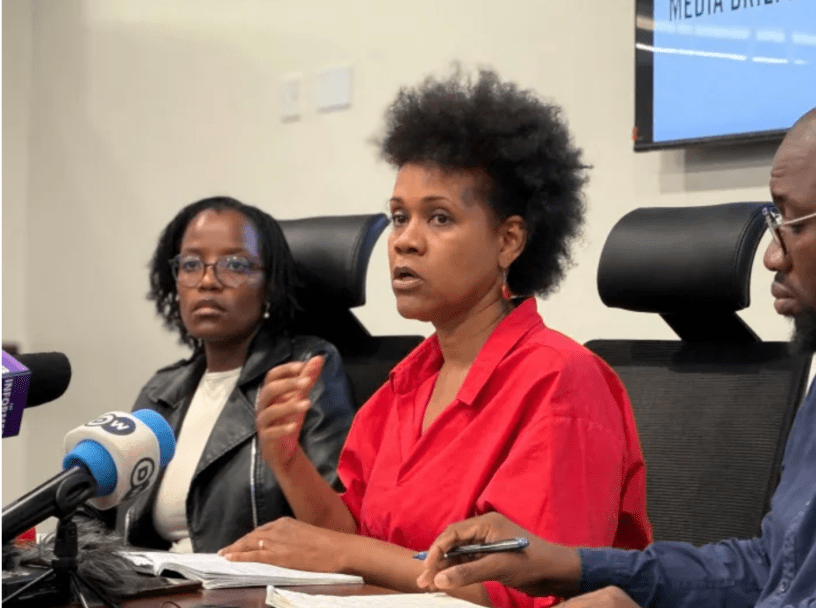
The Tanzanian government joined the ranks of perpetrators of transnational repression in 2025. In January, armed men briefly abducted Maria Sarungi Tsehai, a critic of Tanzanian President Samia Suluhu Hassan, in Nairobi. They assaulted her and tried to access her phone.15 Tsehai is a whistleblower and freedom of expression activist who fled Tanzania in 2020 due to threats against her. Her political movement, Change Tanzania, accused Tanzanian security agents in the cross-border attack. In October, President Hassan was re-elected following a deeply flawed contest marked by widespread violence against peaceful protesters.
In July, Mwabili Mwagodi, an outspoken participant in the 2024 Gen Z protests in Kenya, briefly disappeared in Dar es Salaam, Tanzania, shortly after criticizing Kenyan security forces online.16 This came only two months after Tanzanian authorities assaulted and then deported several Kenyan and Ugandan activists and former government officials who had arrived in Tanzania to monitor the trial of opposition leader Tundu Lissu.17
Developments in 2025 made it clear that Kenyan, Tanzanian, and Ugandan law enforcement and intelligence agencies are increasingly coordinating to silence dissent. This kind of cross-border intimidation and authoritarian collaboration is dangerous because it limits opportunities for civic solidarity and can prop up embattled incumbents.

Tanzanian activist Maria Sarungi Tsehai speaks at a press conference in Nairobi following her brief abduction in January 2025. (Photo by Eva-Maria Krafczyk/dpa/Alamy Live News)
WASHINGTON—Thirty governments reached beyond their borders in 2025 to assassinate, assault, kidnap, detain, deport, and threaten their critics, according to a new report released by Freedom House. The report, Collaboration and Resistance: Tracking Transnational Repression in 2025, recorded 126 new incidents of physical transnational repression, with collaboration between autocrats in Southeast Asia and similar collaboration in East Africa responsible for the majority of cases. Authorities in China, Vietnam, and Russia were the top perpetrators of transnational repression in 2025. Six governments—those in Afghanistan, Benin, Georgia, Kenya, Tanzania, and Zimbabwe—were identified for the first time as having used tactics of transnational repression.
“More and more governments are attempting to silence critics who have fled their home countries to seek freedom. This disturbing trend should be a wake-up call for policymakers around the world,” said Jamie Fly, CEO of Freedom House. “Our research shows that authoritarians are increasingly working together to target individuals abroad, and their tactics are growing more sophisticated. Democracies must do more to combat this authoritarian abuse of their sovereignty and their freedoms.”
Key Findings:
- Authoritarian collaboration fueled transnational repression in Southeast Asia and East Africa. Over half of the incidents—69 of 126—recorded last year occurred in these two regions. In Asia, the collaboration was driven by geopolitical pressure and economic incentives from Beijing. In Africa, collaboration stemmed from authorities’ shared desire to suppress mobilization by activists during tense political moments, such as the lead-up to elections.
- Detention and deportation were the most common tactics. With 49 incidents, detention was the most ubiquitous tactic of transnational repression last year. It was followed closely, with 48 incidents, by unlawful deportation. In at least 11 cases of detention or unlawful deportation, perpetrator governments were able to use Interpol notices against exiled dissidents, indicating that the organization’s reforms have not yet fully addressed avenues for abuse available to member governments.
- Democracies have taken action to counter transnational repression, but gaps remain. Democratic governments are making an effort to protect people from extraterritorial violence and working together through multilateral forums to create strategies to counter this threat. However, dissidents and exiled activists remain at risk of physical harm in democracies, and some host countries facilitate transnational repression via their immigration systems. This problem can become more acute when immigration enforcement is ramped up while due process protections are weakened.
Between 2014 and 2025, Freedom House recorded a total of 1,375 direct, physical incidents of transnational repression in its database across 107 countries that host exiled dissidents and diaspora communities. The incidents, captured from media, reports from civil society groups and international organizations, and other public reporting, likely represent only a small fraction of the total number of cases that occur. Since 2014, at least 54 governments—or over a quarter of all countries— have tried to silence dissidents abroad. The governments of China, Turkey, and Russia rank as the most prolific perpetrators of transnational repression overall since 2014.
“The only way to stop transnational repression is to collectively push back against autocrats,” said report coauthor Yana Gorokhovskaia. “Democratic governments should use sanctions and visa bans against governments and officials engaging in transnational repression, while also engaging directly with the diaspora communities most at risk.”
The report provides a number of recommendations to democratic governments to counter transnational repression:
- Adopt and codify a government-wide definition of transnational repression that can be used across departments and agencies and in official communications. The definition should recognize that transnational repression is committed by states and their proxies against individuals living abroad who share a national connection to the origin state, and hinders fundamental rights such as freedom of expression, belief, and association.
- Apply sanctions and visa bans against foreign government officials who facilitate transnational repression via forced returns.
- Interpol member states should consider increasing their funding to the organization’s oversight bodies—the Notices and Diffusion Task Force and the Commission for the Control of Interpol’s Files—so that they can enhance their capacity to detect and expunge politically motivated requests from Interpol systems.
- Continue to engage directly with diaspora communities by creating online resources, providing information on ways to report transnational repression, and connecting communities with local law enforcement. Governments should also establish feedback mechanisms to gauge the efficacy of their outreach strategies.
- Ensure that immigration enforcement does not facilitate transnational repression.
This data is the latest in Freedom House’s ongoing effort to document cases of transnational repression around the world. In 2021, Freedom House released the first comprehensive global survey of transnational repression, Out of Sight, Not Out of Reach, and in subsequent years released the follow-up reports Defending Democracy in Exile: Policy Responses to Transnational Repression and Still Not Safe: Transnational Repression in 2022. A Light That Cannot Be Extinguished: Exiled Journalism and Transnational Repression was released in December 2023, while Addressing Transnational Repression on Campuses in the United States was released in January 2024.

